Pick the right waterproof wood-look flooring and your crew can move faster, reduce callbacks, and give clients a durable finish that works from rental units to whole-home remodels. For Bay Area projects where moisture, pets, tenant turnover, and slab conditions all matter, LVP and SPC flooring give contractors a practical wood-look option without the maintenance concerns of real hardwood.
At Sincere Home Decor’s Santa Clara Deluxe Showroom, trade customers often compare waterproof flooring samples alongside cabinets, vanities, tile, and countertops so selections can be coordinated in one visit. That matters when a project schedule is tight and the homeowner wants the floor color to work with every visible finish.
Why Waterproof Wood-Look Flooring Keeps Showing Up on Bay Area Jobs
Waterproof plank flooring has become a dependable choice for remodels where appearance, price control, and jobsite speed need to line up. It gives clients the visual warmth of wood while handling daily spills, coastal humidity, pets, and high-traffic entry zones better than many traditional materials.
For contractors and property managers, the bigger value is consistency. A good LVP or SPC line can cover kitchens, hallways, bedrooms, laundry-adjacent areas, and rental turnover projects with fewer transitions and less product anxiety.
Quick Takeaway: Waterproof wood-look flooring is popular because it solves design and durability problems at the same time.
LVP vs. SPC: What the Trade Should Know
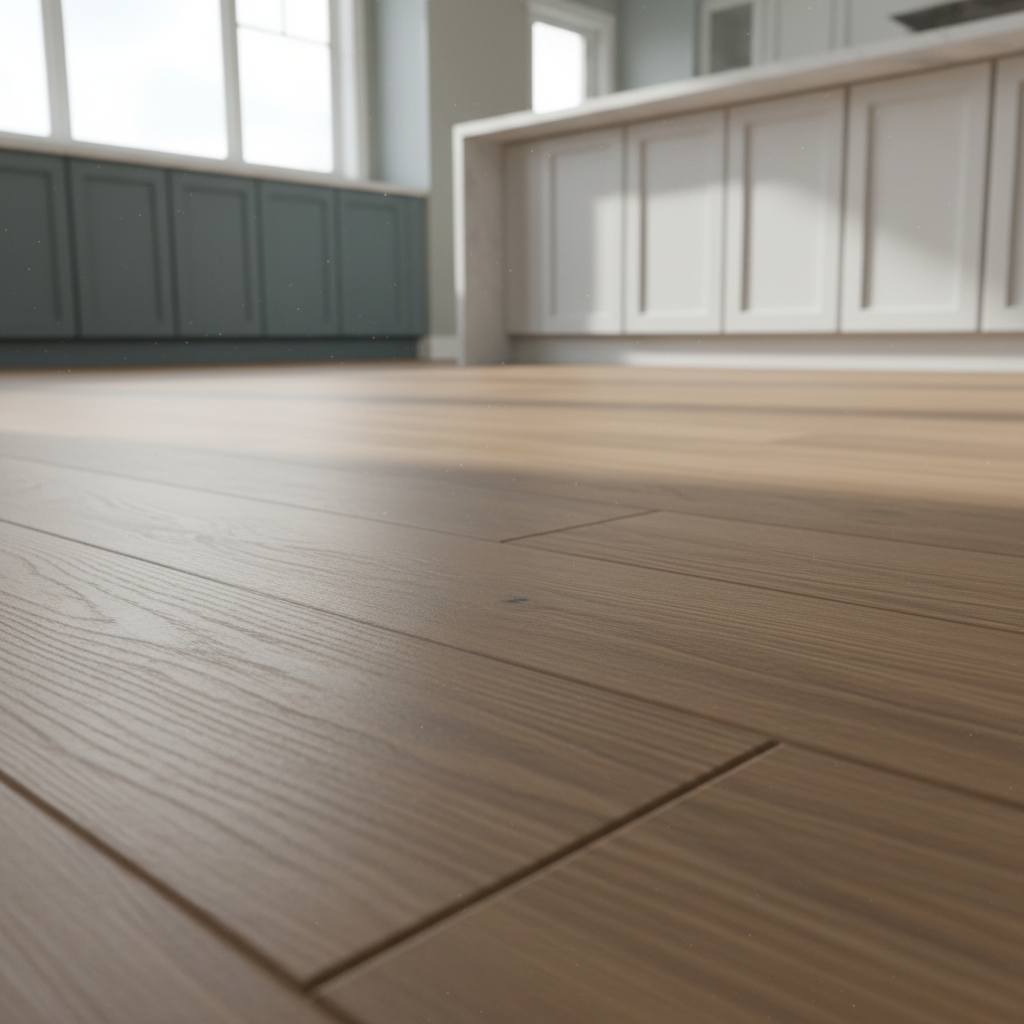
LVP and SPC are both waterproof wood-look flooring categories, but they are not identical. The core construction affects rigidity, feel underfoot, sound, and how forgiving the floor is over minor subfloor imperfections.
LVP generally refers to luxury vinyl plank with a vinyl-based core. SPC stands for stone polymer composite, a denser rigid-core product that is often chosen for dimensional stability and a firm feel.
Comparison Table: LVP, SPC, and Laminate
- LVP: softer feel underfoot, waterproof construction, good for residential remodels, bedrooms, living areas, and many rental upgrades.
- SPC: rigid core, waterproof construction, strong choice for kitchens, high-traffic corridors, multifamily units, and slab installations when approved by product specs.
- Laminate: wood-look surface with a fiberboard core, usually not fully waterproof unless specifically rated, best when moisture exposure is limited.
- Real hardwood: premium natural material, not waterproof, more sensitive to moisture, scratches, and maintenance expectations.
For many Bay Area remodels, SPC becomes the default when the job involves concrete slab, rolling loads, rental traffic, or a client who wants a firmer floor. LVP can still be the better fit when comfort and warmth underfoot are the higher priority.
Quick Takeaway: SPC is typically the more rigid choice, while LVP often feels slightly softer and warmer underfoot.
Explore current waterproof flooring options here: Waterproof Flooring at Sincere Home Decor.
Where Waterproof Flooring Makes the Most Sense
Not every room needs the same flooring strategy. The right recommendation depends on the client’s lifestyle, the building type, and how long the finish needs to hold up before the next refresh.
Best-fit project types
- Condo and townhouse remodels where consistent flooring helps small spaces feel larger.
- Rental units and property management turns that need durable surfaces and simple maintenance.
- Family homes with pets, kids, and frequent kitchen traffic.
- Flip projects where neutral wood tones help buyers visualize their own furniture.
- Commercial-adjacent spaces such as offices, waiting areas, and light-use workspaces, when product ratings allow.
For serious-renovation homeowners, waterproof wood-look flooring is often the bridge between design goals and real-life maintenance. It lets them get a cohesive, wood-inspired look without worrying about every dropped ice cube or muddy shoe.
Quick Takeaway: The strongest use cases are projects where the client wants wood warmth with less maintenance risk.
Color and Plank Size: The Details Clients Notice First
Most clients start with color before construction. That is normal, but the trade should guide them toward tones that fit the property, lighting, and cabinet plan.
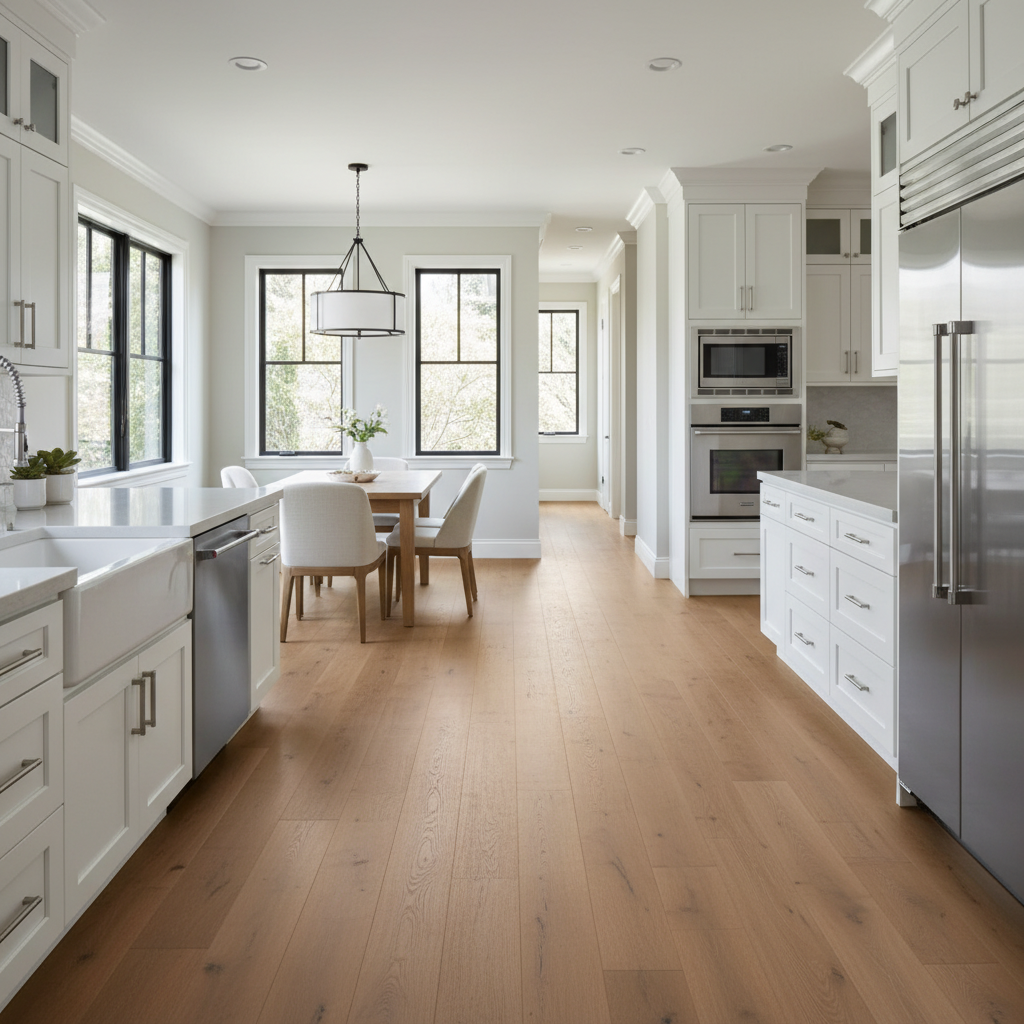
In the Bay Area, natural oak, light beige, soft taupe, and medium brown planks tend to work across a wide range of interiors. Very gray floors can feel dated in warmer cabinet schemes, while very dark floors show dust, pet hair, and construction debris more easily.
Practical selection rules
- Use light oak tones to brighten smaller condos or older homes with limited natural light.
- Use medium neutral brown for traditional homes, rental units, and broad resale appeal.
- Pair warm floors with white, cream, natural wood, or taupe cabinetry.
- Check gray floors carefully against cabinet samples, countertop samples, and wall tile.
- Consider wider planks for open layouts and narrower visual patterns for smaller rooms.
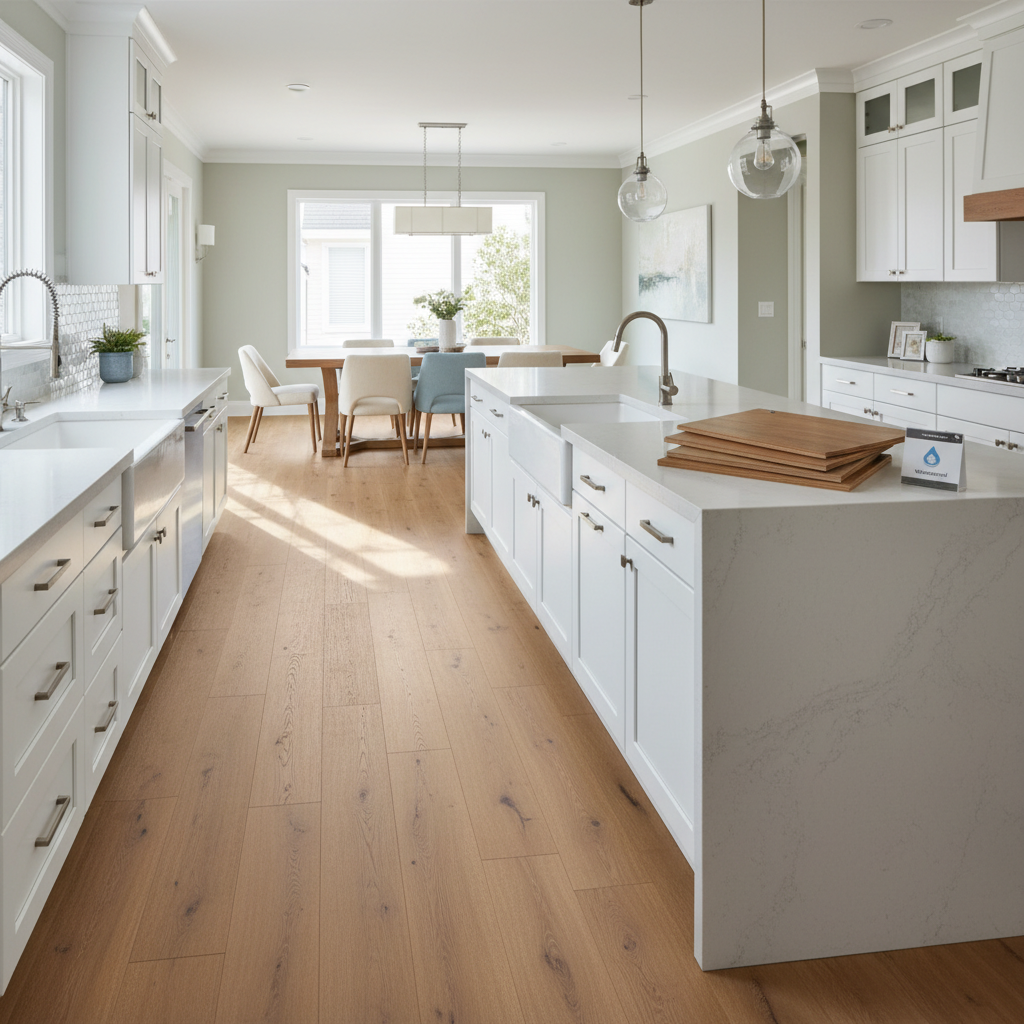
For coordinated finish packages, many contractors review flooring with kitchen cabinets and countertop materials during the same showroom visit. Seeing samples together helps prevent undertone conflicts that are hard to explain after installation.
Quick Takeaway: Floor color should be selected with cabinets and countertops nearby, not in isolation.
Installation Planning: Questions to Settle Before Ordering
Product selection is only half the decision. Before ordering, confirm installation method, subfloor condition, transitions, stair details, baseboards, and moisture requirements with the installer and the manufacturer’s written specifications.
For slab homes, multifamily units, and older buildings, subfloor prep can affect the final look as much as the product itself. A rigid plank does not make an uneven floor disappear. It may simply reveal the problem differently.
Pre-order checklist for contractors
- Confirm square footage, waste factor, direction of plank layout, and transition locations.
- Review subfloor flatness requirements before promising a floating installation.
- Check whether the project needs underlayment, sound rating documentation, or HOA approval.
- Confirm trim strategy: baseboards, quarter round, reducers, stair noses, and end caps.
- Verify acclimation, temperature, and expansion gap requirements from the product instructions.
- Order enough material from the same lot when possible for consistent color and pattern.
Quick Takeaway: The right flooring choice still depends on disciplined jobsite prep and clear trim planning.
How to Guide Clients Without Overcomplicating the Sale
Clients can get overwhelmed when they see too many plank colors at once. A tighter process helps. Start with the use case, eliminate the wrong constructions, then narrow color by cabinet and countertop direction.
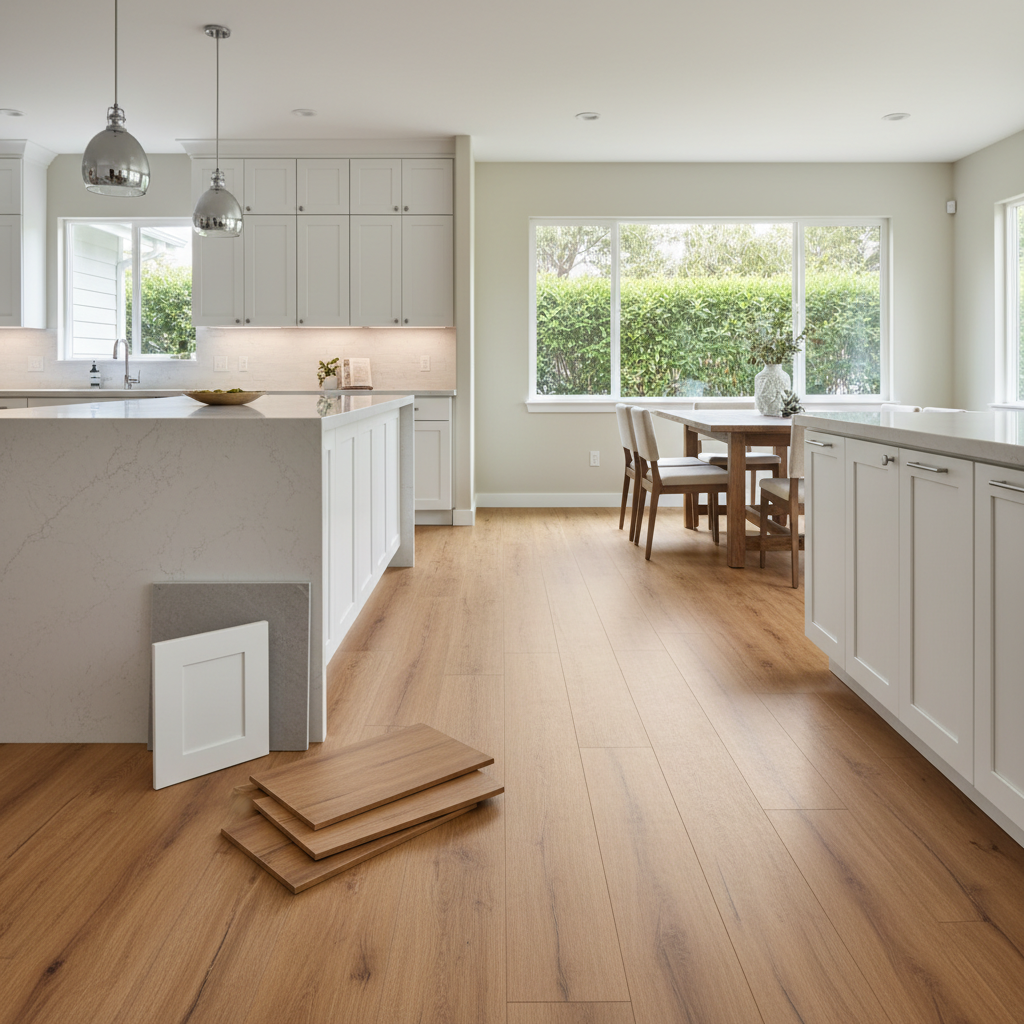
For trade professionals, a clean showroom workflow also keeps meetings productive. Bring cabinet door samples, countertop selections, measurements, photos of natural light, and any HOA flooring requirements. If the project involves multiple rooms, bring a simple floor plan showing transitions and stair areas.
A simple three-step showroom workflow
- Step 1: Confirm project type, traffic level, moisture exposure, and installation surface.
- Step 2: Choose the construction category, usually LVP or SPC, based on performance needs.
- Step 3: Select two or three colors that coordinate with the full finish package.
Sincere Home Decor has supported Bay Area remodelers since 1988, with in-stock and semi-custom products under one roof. At the Santa Clara Deluxe Showroom, English, Spanish, and Mandarin-speaking staff can help trade customers compare samples and prepare clients for a smoother selection process.
Quick Takeaway: A focused selection process saves time and helps clients feel confident without sorting through every sample on the wall.
Trade professionals can also review account options here: Apply for Trade Pricing.
When to Visit the Oakland Pro Warehouse or a Deluxe Showroom
For pickup logistics and contractor workflow, the Oakland Pro warehouse with distribution center near Jack London Square is often the practical stop. For client-facing selection meetings, a deluxe showroom such as Santa Clara or South San Francisco may be better suited for comparing flooring with vanities, cabinets, tile, and countertop samples.
The best location depends on the task. Use the warehouse for efficiency and the showroom for decisions that need finish coordination. Many trade customers use both during a project cycle.
Quick Takeaway: Warehouses help with fulfillment, while showrooms help with better finish decisions.
FAQ
Is SPC better than LVP for every project?
No. SPC is often preferred when rigidity and dimensional stability are priorities, but LVP may feel softer and more comfortable underfoot. The better choice depends on the subfloor, traffic level, installation requirements, and client expectations.
Can waterproof wood-look flooring be used in kitchens and bathrooms?
Many waterproof LVP and SPC products are suitable for kitchens and powder rooms when installed according to manufacturer instructions. Full bathrooms require extra attention to perimeter details, transitions, and product guidelines, especially around standing water.
Should flooring be selected before or after cabinets?
For most remodels, flooring, cabinets, and countertops should be reviewed together before final ordering. This helps align undertones, plank width, and overall style so the finished space feels intentional.
Plan Your Flooring Package With Sincere Home Decor
Bring measurements, photos, cabinet samples, and project requirements to your nearest Sincere Home Decor showroom. Our team can help you compare waterproof flooring options, coordinate finish packages, and keep your next remodel moving with fewer selection delays.
Visit the Santa Clara Deluxe Showroom, stop by the Oakland Pro warehouse near Jack London Square, or apply for trade pricing before your next flooring order.