
Choosing the right bathroom vanity size upfront helps contractors protect schedule, designers avoid awkward proportions, and homeowners get storage that actually works after move-in. At Sincere Home Decor’s South San Francisco Deluxe Showroom, trade customers often compare in-stock vanities, semi-custom cabinet options, and integrated tops side by side before finalizing a bath layout.
Featured image specification: 16:9 real photograph of a 48- to 60-inch bathroom vanity display with integrated top, sourced from showroom photography or supplier-provided asset. Caption and alt text: Warm wood bathroom vanity with integrated white top in showroom display.
Start With the Room, Not the Vanity Catalog
A vanity that looks balanced in a supplier photo can feel too wide in a Bay Area hall bath or too small in a primary suite. Before choosing door style, color, or top material, confirm the width, depth, plumbing centerline, door swing, and clearances around the toilet and shower.
For trade pros, this is where a quick field sketch saves callbacks. Note the finished wall-to-wall measurement, not the rough framing dimension, and allow for tile thickness, baseboard, casing, and any out-of-plumb walls.
Quick Takeaway: Measure the finished space first, then shop the vanity that fits the room and workflow.
- Powder rooms often work best with 24-inch to 36-inch vanities.
- Hall baths commonly use 36-inch to 48-inch vanities.
- Primary baths often call for 60-inch to 72-inch vanities.
- Depth matters: 18-inch compact vanities can help tight layouts, while 21-inch depths feel more traditional.
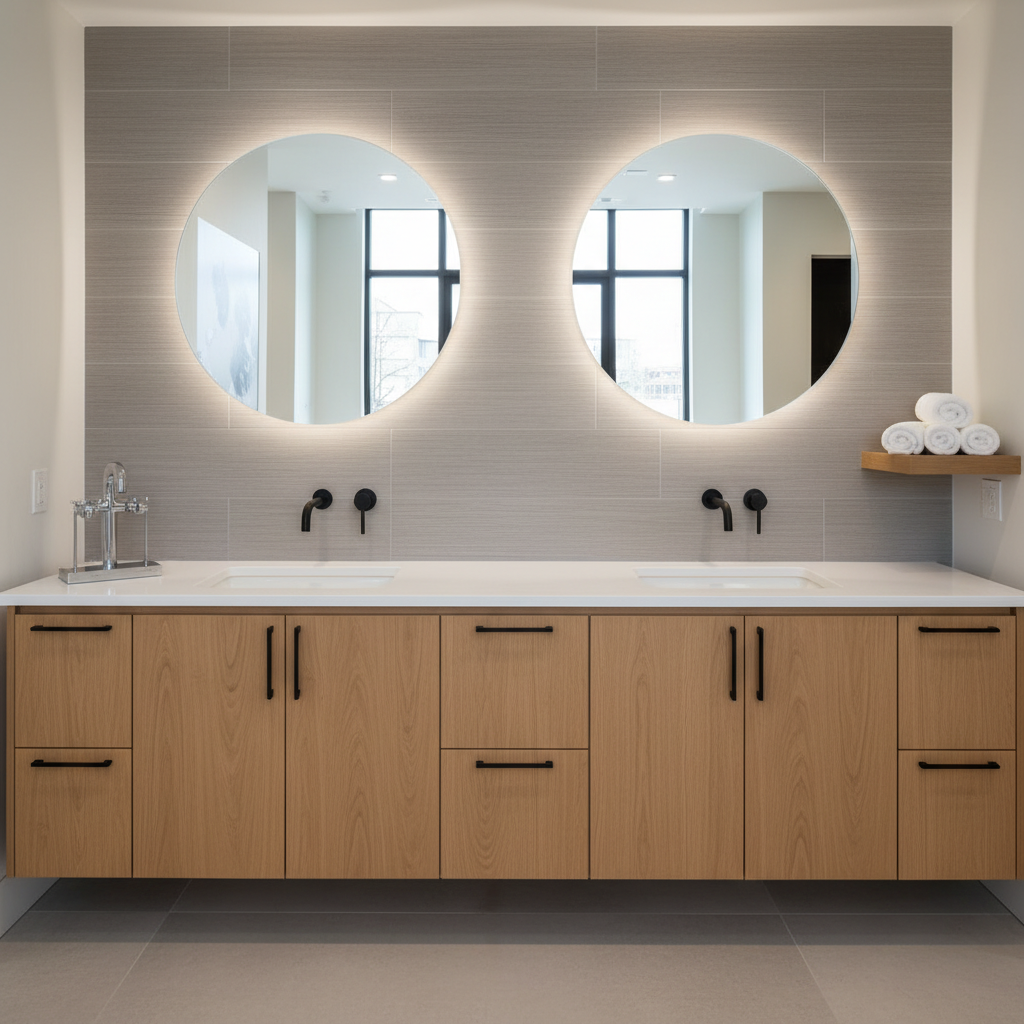
Vanity Widths That Work for Common Remodel Scopes
For rental turnovers, flips, and multi-unit remodels, the best vanity is usually the one that balances availability, durability, and simple installation. For custom residences, the sizing conversation often shifts toward symmetry, drawer function, and how the vanity relates to tile and mirrors.
A 30-inch vanity can rescue a tight powder room, but it may not offer enough counter space for a daily-use bath. A 48-inch vanity is a strong middle ground for a hall bath because it can provide drawers, usable counter area, and a single sink without crowding the room.
Quick Takeaway: The most profitable vanity choice is not always the largest one; it is the size that installs cleanly and fits how the bathroom will be used.
Skimmable size comparison
- 24 inches: Best for very small powder rooms; limited storage and counter space.
- 30 to 36 inches: Good for guest baths, ADUs, and compact hall baths.
- 42 to 48 inches: Flexible for daily-use hall baths with better drawer options.
- 60 inches: Common for double-sink layouts, though single-sink versions offer more counter space.
- 72 inches: Best for larger primary baths where plumbing, mirrors, and lighting alignment have already been planned.
For product browsing, start with Sincere’s bathroom vanities selection, then confirm exact specifications with the showroom team before ordering for a project.
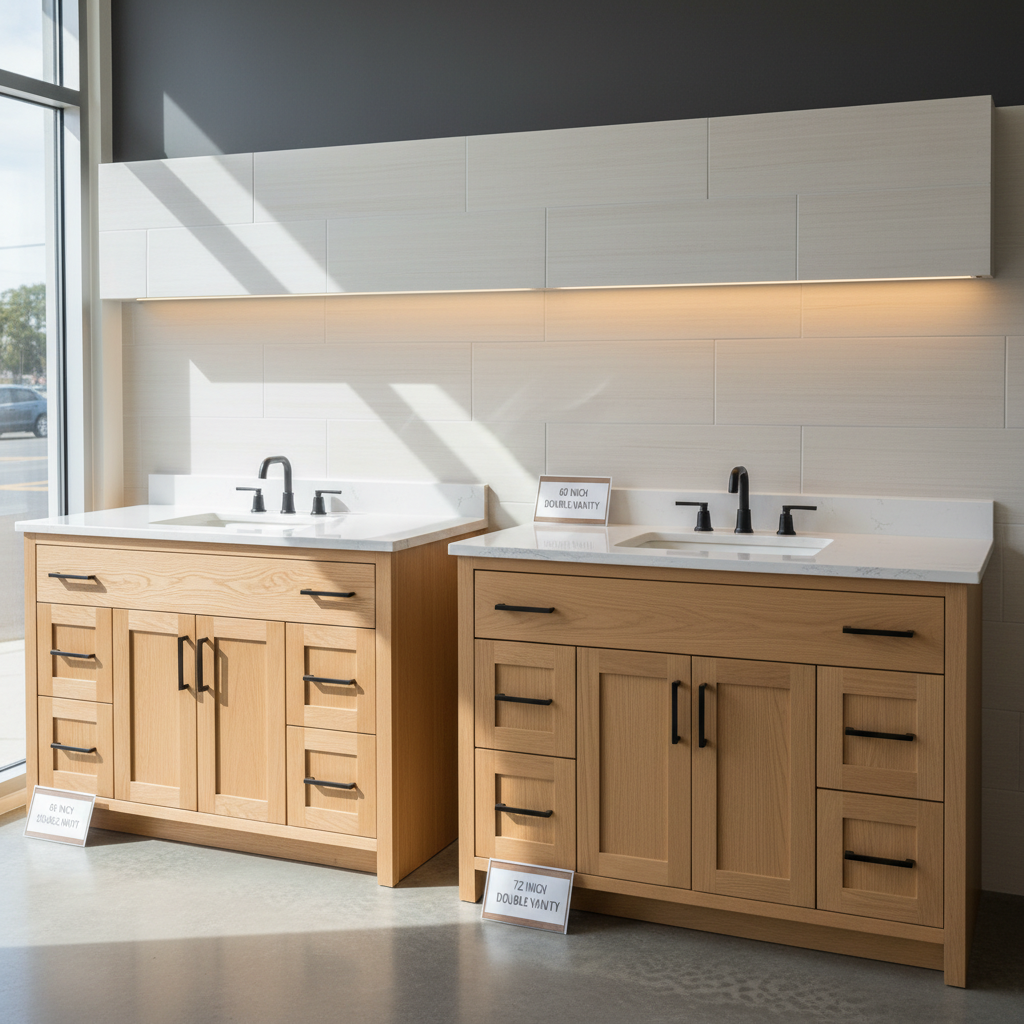
Integrated Tops, Separate Tops, and Material Choices
Vanity tops affect both the finished look and the installation sequence. Integrated tops combine the sink and counter surface into one unit, which can simplify ordering and create a clean, low-maintenance appearance.
Separate vanity tops offer more design flexibility, especially when the project calls for a specific countertop look, sink shape, or backsplash treatment. Sincere Home Decor carries countertop materials for selection, though countertop fabrication and installation should be coordinated with your fabricator or installer.
Quick Takeaway: Integrated tops are efficient for repeatable remodels; separate tops give designers more control over the finished bath palette.
Top option comparison
- Integrated ceramic or porcelain-look top: Clean appearance, simple maintenance, useful for quick-turn projects.
- Quartz-look integrated top: Popular for modern baths, consistent color, often pairs well with painted or wood vanities.
- Separate countertop slab or prefab top: More customization, requires coordination with sink, faucet holes, and fabrication details.
- Natural stone-look surfaces: Adds variation and character, but selection should account for sealing and maintenance expectations.
If the bathroom includes a broader surface package, pair vanity planning with Sincere’s countertop options so the bath, kitchen, and laundry selections feel coordinated across the property.
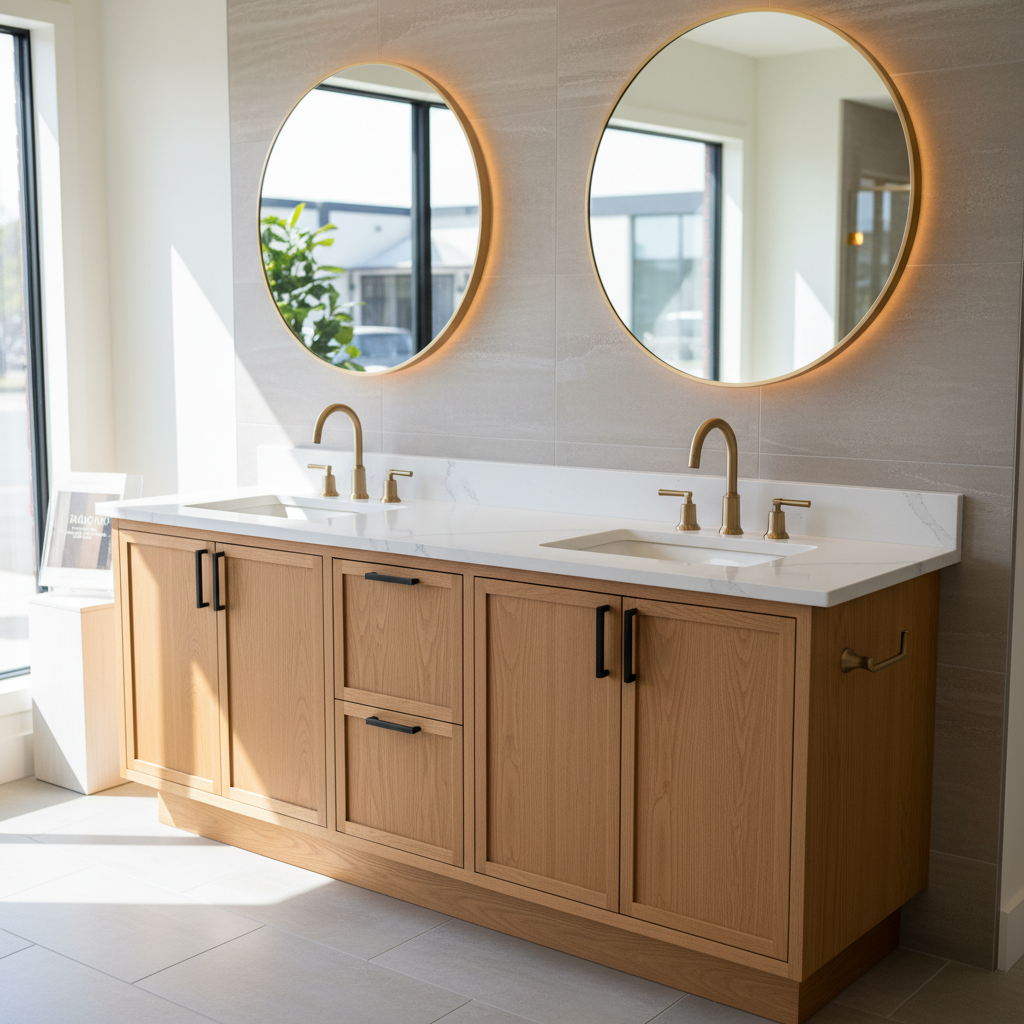
Storage Details Contractors and Designers Should Check
Vanity storage is where layout mistakes show up fast. A drawer stack may look ideal until it conflicts with plumbing, or a full-width sink base may leave the homeowner with less usable storage than expected.
For older Bay Area homes, always confirm drain location and shutoff placement before assuming a modern drawer vanity will fit. In some projects, a door-and-drawer combination is the safer choice because it allows more flexibility around existing plumbing.
Quick Takeaway: Drawer function should be checked against plumbing before the vanity is ordered, not during installation.
- Confirm whether drawers are full-depth, U-shaped, or shortened for plumbing clearance.
- Check if the sink is centered or offset before aligning mirrors and tile layouts.
- Review toe-kick height when matching other cabinetry in the home.
- Ask about soft-close hardware for higher-use bathrooms and rental durability.
- Verify cabinet finish samples under showroom lighting and natural light when possible.
Trade customers can also ask about account support through Sincere’s trade pricing and contractor resources. The team works with contractors, designers, property managers, and flippers who need repeatable specifications across multiple jobs.
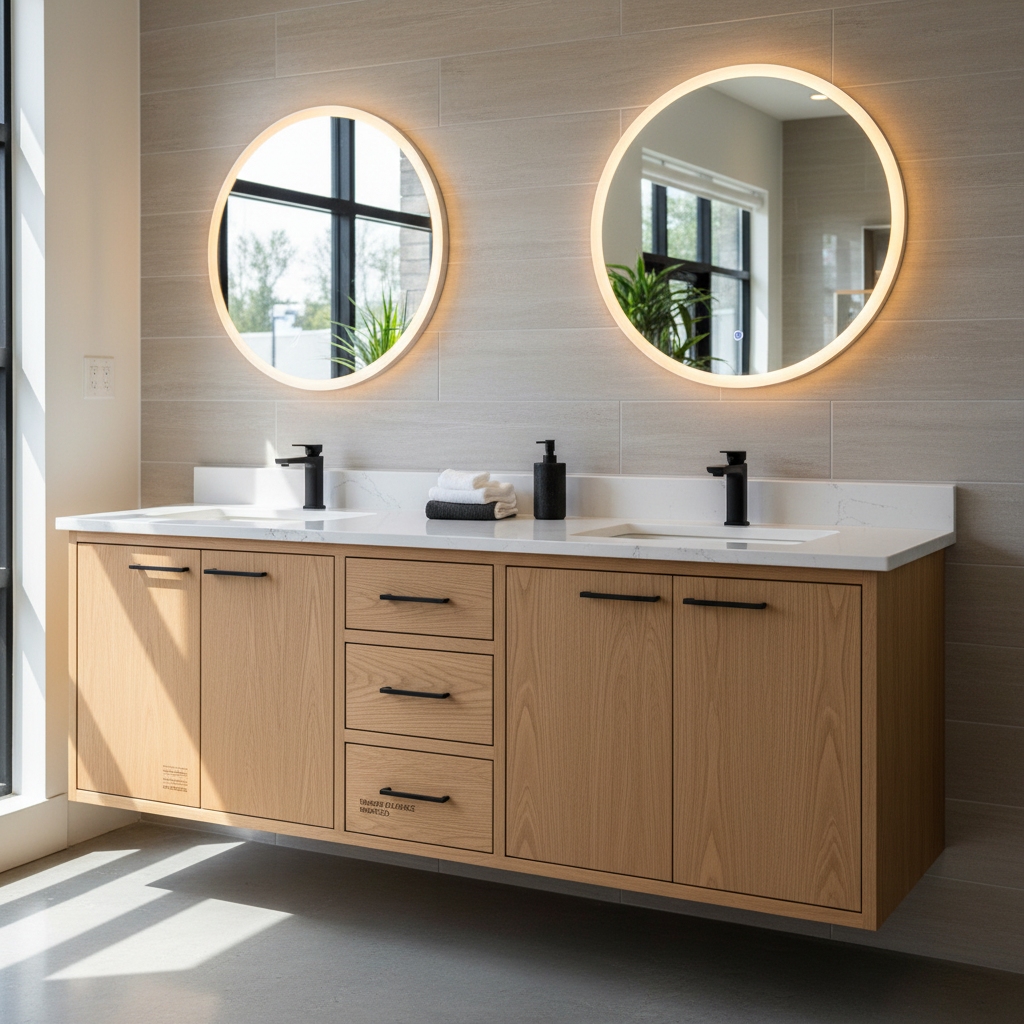
Finish Pairings for Bay Area Bathrooms
Across the Bay Area, bath palettes are moving toward warm neutrals, softer wood tones, and practical surfaces that still feel designed. In South San Francisco remodels, many homeowners want compact baths to feel brighter without turning everything stark white.
In Oakland projects near older homes and mixed-use properties, deeper wood vanities and simple slab fronts can bridge traditional architecture with cleaner modern finishes. Santa Clara remodels often lean toward crisp, low-maintenance combinations that work well for busy family households.
Quick Takeaway: Choose the vanity finish with the tile, flooring, and countertop in view so the bathroom reads as one complete room.
- Warm white vanity with light tile: Bright, classic, and easy to stage for resale.
- Natural oak or walnut-look vanity with white top: Warm, modern, and versatile.
- Gray vanity with marble-look top: Familiar and neutral, but best softened with warmer flooring or tile.
- Deep espresso or charcoal vanity: Works best when the room has strong lighting and lighter surrounding surfaces.
For additional planning ideas, pair vanity selection with a related flooring read such as waterproof flooring options, especially for bath-adjacent hallways, ADUs, and rental units.
When to Choose In-Stock vs. Semi-Custom
In-stock vanities are useful when schedule control matters. They help contractors move quickly, reduce waiting time, and keep smaller remodels from getting stuck at the finish stage.
Semi-custom options make sense when the bath needs a specific width, finish, door profile, or cabinet configuration. This is especially helpful for primary suites, designer-led remodels, or properties where the vanity needs to coordinate with kitchen cabinets or built-ins.
Quick Takeaway: Use in-stock vanities for speed and repeatability; use semi-custom when the layout or design requires tighter control.
Decision guide
- Choose in-stock when the opening fits a standard width and the project timeline is tight.
- Choose semi-custom when you need a specific finish, drawer layout, or matching cabinetry.
- Choose integrated tops when you want a simpler ordering path.
- Choose separate tops when the designer needs more control over surface selection.
Sincere Home Decor has been family-run since 1988, with English, Spanish, and Mandarin-speaking staff available across its Bay Area locations. The advantage for trade customers is practical: in-stock and semi-custom selections can be reviewed under one roof with people who understand remodel timelines.
FAQ
What is the most common bathroom vanity size?
For hall bathrooms, 36-inch and 48-inch vanities are among the most practical choices. They provide usable storage without overwhelming many standard Bay Area bath layouts.
Is a double-sink vanity always better for a primary bathroom?
No. A 60-inch double-sink vanity can work well, but a single-sink 60-inch vanity often provides more counter space and storage. The better choice depends on daily use, plumbing location, and room width.
Should I buy the vanity before choosing tile and flooring?
It is better to select the vanity, tile, and flooring together whenever possible. Reviewing finishes side by side helps avoid undertone conflicts and makes the finished bathroom feel more intentional.
Plan the Vanity Before the Job Gets Tight
The right vanity makes a bathroom easier to install, easier to use, and easier to present at handoff. Bring measurements, photos, and any plumbing notes to the South San Francisco Deluxe Showroom, or visit the Sincere Home Decor location nearest your project.
Contractors, designers, flippers, and property managers can ask about trade pricing, while homeowners planning a serious renovation can book a designer consultation for help comparing sizes, finishes, and top options.