A well-specified vanity keeps a bathroom remodel moving: fewer layout surprises, cleaner countertop coordination, and a finish package that feels intentional to the client. For contractors, designers, and property managers, the right vanity choice can reduce field adjustments while giving homeowners the storage, style, and durability they expect.
At our Santa Clara Deluxe Showroom, trade customers often compare vanity widths, drawer layouts, and top options side by side before finalizing a bath package. That hands-on step is especially useful when the project has multiple bathrooms, tight wall conditions, or a client who wants a clean, built-in look without fully custom cabinetry.
Start With the Vanity Width, Not the Finish
Finish is what clients notice first, but width is what determines whether the installation feels easy or awkward. Before choosing white oak, painted shaker, walnut, or high-gloss slab, confirm the wall-to-wall measurement, door swing, toilet clearance, and any existing plumbing location that needs to remain.
Quick Takeaway: Pick the vanity size around the room’s clearances first, then narrow the door style, finish, and top material.
Common vanity widths for remodel planning include:
- 24 inches: Best for powder rooms, ADUs, and compact hall baths.
- 30 to 36 inches: A flexible choice for secondary bathrooms and rentals.
- 48 inches: Good for single-sink primary baths with more counter space.
- 60 inches: Often used for double sinks or a generous single-sink layout.
- 72 inches and larger: Better for spacious primary suites and higher-end remodels.
For trade work, the most important question is not only “What fits?” It is also “What can be repeated?” If a property has several similar bathrooms, a standard vanity width can simplify ordering, delivery, replacement parts, and punch-list work.
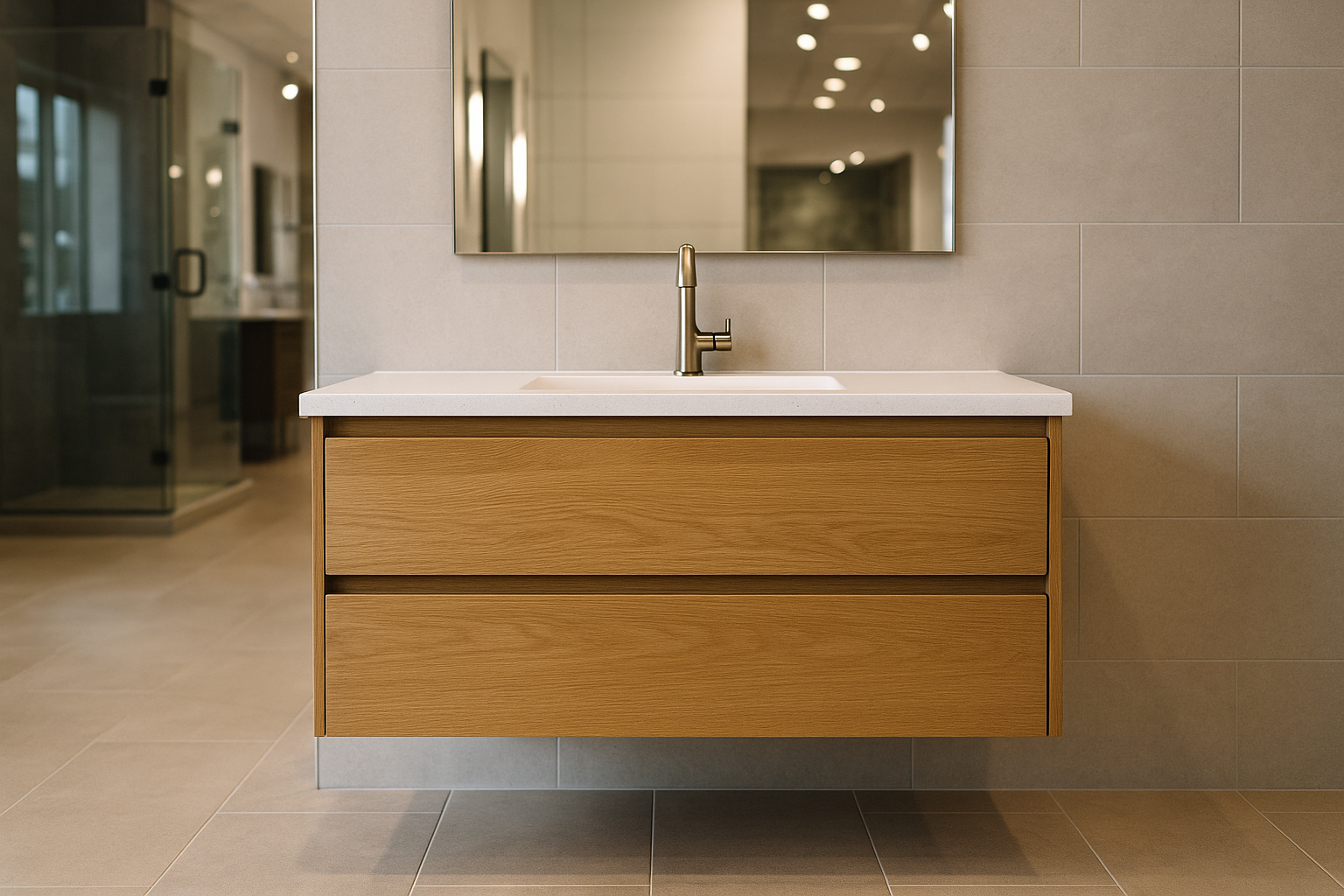
Image placement: Vanity sizing reference with tape measure on cabinet face. Source: showroom. Suggested caption: Measuring vanity width before selecting finishes and tops.
Depth and Height Matter More Than Many Clients Realize
Most homeowners think in terms of width, but depth and height often make the difference between a bathroom that photographs well and one that functions well. A deeper vanity gives more storage and counter space, but it can pinch circulation in a narrow bath.
Quick Takeaway: Use standard depth where the room allows it, and choose reduced depth only when clearances are tight.
A standard vanity depth is often around 21 inches, while compact models may sit closer to 18 inches. In older Bay Area homes, especially smaller bathrooms in Oakland and South San Francisco, reduced-depth vanities can help maintain comfortable movement around the toilet, shower, and entry door.
Height is another practical call. Comfort-height vanities can feel more current and ergonomic for primary bathrooms, while lower heights may make sense in family baths used by children. If the project includes a vessel sink, remember that the finished rim height may rise above the cabinet height.
Before ordering, confirm these field conditions:
- Baseboard and casing thickness near the vanity run.
- Door swing and drawer pull clearance.
- Distance from toilet centerline to vanity edge.
- Existing supply and drain rough-in location.
- Mirror, medicine cabinet, and backsplash height coordination.
For vanities, Sincere Home Decor focuses on cabinetry, tops, flooring, tile, and related finish materials. We do not sell rough plumbing, lighting, electrical, appliances, paint, or HVAC, so trade pros should coordinate those scopes with their own licensed partners.
Freestanding, Wall-Mounted, or Built-In: Which Vanity Type Fits the Job?
The vanity construction type affects both installation workflow and the finished look. A freestanding vanity is often the most straightforward path for a quick remodel, while a wall-mounted vanity creates a lighter, more contemporary profile. Built-in vanities can deliver the most tailored appearance when the room has the right dimensions.
Quick Takeaway: Match the vanity type to the job’s timeline, wall conditions, and client expectations before selecting a finish.
Comparison table: vanity type, best use, and trade note.
- Freestanding vanity: Best for standard remodels and rentals. Trade note: Usually faster to place and level, with a familiar installation sequence.
- Wall-mounted vanity: Best for modern bathrooms and smaller rooms that need visual openness. Trade note: Requires proper wall blocking and careful height planning.
- Built-in vanity: Best for primary baths, designer-led projects, and wall-to-wall layouts. Trade note: Field measurements are critical, especially with fillers and side splashes.
Wall-mounted vanities are popular with clients who want an airy hotel-inspired look. For contractors, the key is confirming framing support early. If the wall is already open, adding blocking is far easier than solving the problem after tile and drywall are complete.
Freestanding vanities remain a strong choice for property managers and flippers because they balance speed, cost control, and broad appeal. A clean shaker profile or simple slab-front design can work across many Bay Area property types without feeling overly specific.
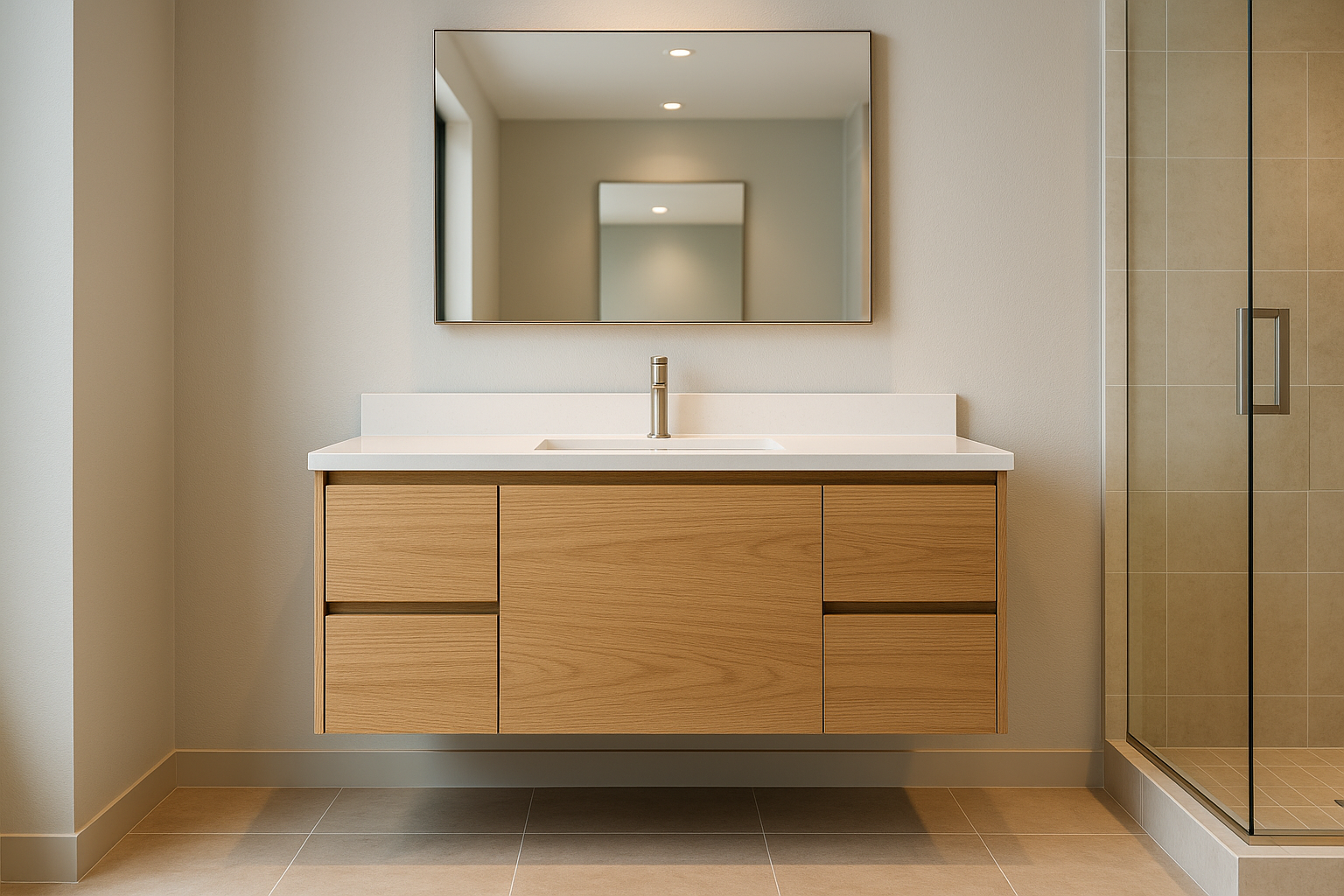
Image placement: Side-by-side vanity display comparing wall-mounted and freestanding styles. Source: showroom. Suggested caption: Comparing vanity construction styles for different remodel timelines.
Material Choices: Cabinet Box, Door Style, and Finish Durability
Bathroom vanities live in a tougher environment than many clients realize. Steam, daily splashes, cleaning products, and tight ventilation can all wear on finishes over time. That makes material selection more than a design decision.
Quick Takeaway: In bathrooms, prioritize moisture-aware construction and easy-clean finishes before chasing a delicate look.
For many remodels, painted shaker vanities are still a safe, versatile option. They pair well with porcelain tile, quartz-look tops, and both traditional and transitional bath designs. Flat-panel wood-look vanities lean more contemporary and are often requested for primary bathrooms or ADU upgrades with a modern rental profile.
Popular vanity finish directions include:
- Soft white or warm white for small bathrooms that need brightness.
- Natural oak or light wood tones for a warm, spa-like look.
- Gray or greige for neutral rental and resale projects.
- Deep navy, charcoal, or espresso for powder rooms and statement baths.
If a client is renovating a kitchen and bath together, consider coordinating the vanity finish with the cabinet package rather than matching everything exactly. Sincere Home Decor carries in-stock and semi-custom options under one roof, including kitchen cabinetry you can review at Sincere Home Decor Kitchen Cabinets.
That coordination helps designers create a whole-home palette, while contractors benefit from a more organized product selection process. For clients who speak English, Spanish, or Mandarin, our multilingual showroom staff can help clarify finish, sizing, and ordering details.
Integrated Tops vs. Separate Countertops
The vanity top decision affects lead time, appearance, maintenance, and job sequencing. Integrated tops are popular because the sink and counter surface arrive as a coordinated unit. Separate countertops offer more design flexibility, especially when the client wants a specific slab look or a custom edge detail.
Quick Takeaway: Use integrated tops for speed and simplicity; use separate tops when design flexibility matters more.
Comparison table: vanity top approach, best use, and planning note.
- Integrated vanity top: Best for quick remodels, rentals, and streamlined bath packages. Planning note: Confirm faucet hole configuration and drain location before ordering.
- Separate countertop and sink: Best for designer-led bathrooms and custom-feeling primary suites. Planning note: Requires more coordination with fabrication and installation partners.
- Vessel sink on vanity top: Best for powder rooms or style-focused spaces. Planning note: Confirm finished sink height and faucet reach.
Integrated tops can reduce decision fatigue for homeowners because the sink shape, deck, and backsplash are already coordinated. They also help trade pros keep the bathroom finish schedule more predictable.
Separate countertop selections give clients more control over color, veining, thickness, and edge profile. Sincere Home Decor offers countertop materials for selection at Sincere Home Decor Countertops, but we do not provide countertop fabrication or installation. Contractors should coordinate templating, fabrication, and install with their countertop trade partners.
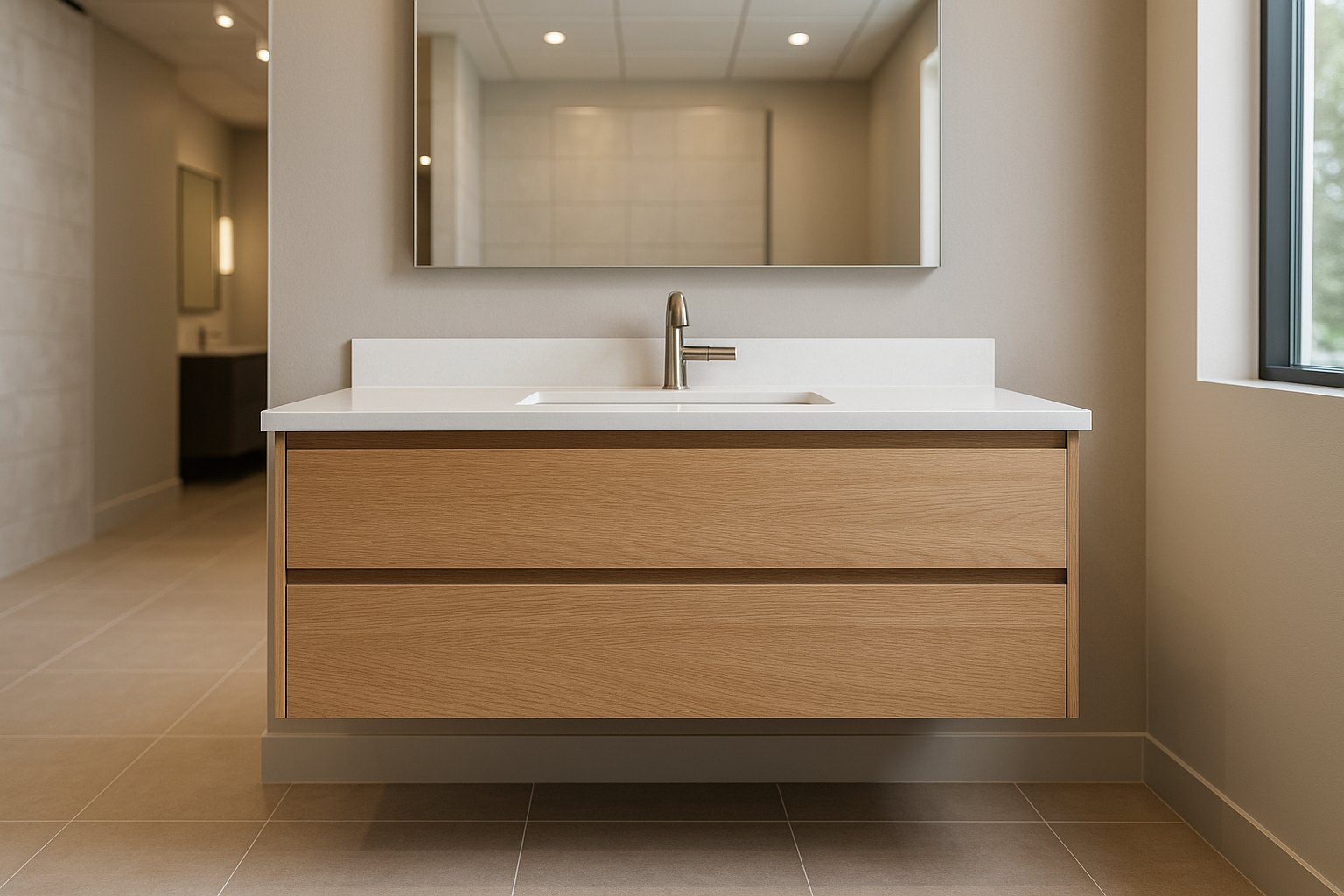
Image placement: Close-up of integrated vanity top with sink and faucet holes. Source: supplier or showroom. Suggested caption: Integrated vanity tops simplify sink and surface coordination.
Storage Layout: Drawers, Doors, and Plumbing Clearance
A vanity can look right in the showroom and still frustrate the installer if the drawer layout conflicts with plumbing. This is where trade planning pays off. Before signing off on a drawer-heavy vanity, review the drain location, trap clearance, supply lines, and any shutoff access requirements.
Quick Takeaway: Drawer storage is client-friendly, but plumbing clearance must be checked before the order is placed.
Drawer vanities are popular because they make everyday items easier to reach. Doors can be more forgiving around plumbing, especially in older homes where the rough-in may not be centered. Some vanities combine a false top drawer, working lower drawers, and side storage to balance function with install flexibility.
For property managers, durability and replaceability often matter more than a complex storage layout. A simple two-door vanity with a durable top can be easier to maintain across multiple units. For designers, deeper drawers and hidden organizers can help a primary bath feel more polished.
Helpful ordering notes to capture before purchase:
- Finished floor height if new tile or waterproof flooring is being installed.
- Wall condition behind the vanity, especially for floating models.
- Required filler space at side walls.
- Sink location, including centered or offset bowl preferences.
- Hardware finish if pulls or knobs are included.
If the bath remodel includes new flooring, review waterproof options at Sincere Home Decor Waterproof Flooring. Coordinating vanity height with finished flooring avoids awkward toe-kick gaps and helps the final installation feel cleaner.
How Trade Pros Can Streamline Vanity Selection
Vanity selection is easier when the showroom visit is treated like a project checkpoint, not a casual browsing trip. Bring the rough measurements, photos, client style direction, and any known plumbing constraints. That allows the showroom team to narrow the options quickly.
Quick Takeaway: A prepared showroom visit can turn a broad vanity search into a clear purchase path.
For contractors and designers, the most efficient workflow is to pre-sort the project by budget, lead time, and installation complexity. In-stock vanities can help with tighter schedules, while semi-custom options give more flexibility for finish, size, and configuration.
At Sincere Home Decor, our family-run team has supported Bay Area remodels since 1988. Trade customers can visit the Santa Clara Deluxe Showroom to compare vanity displays, or use our other Bay Area locations when the job is closer to South San Francisco or Oakland.
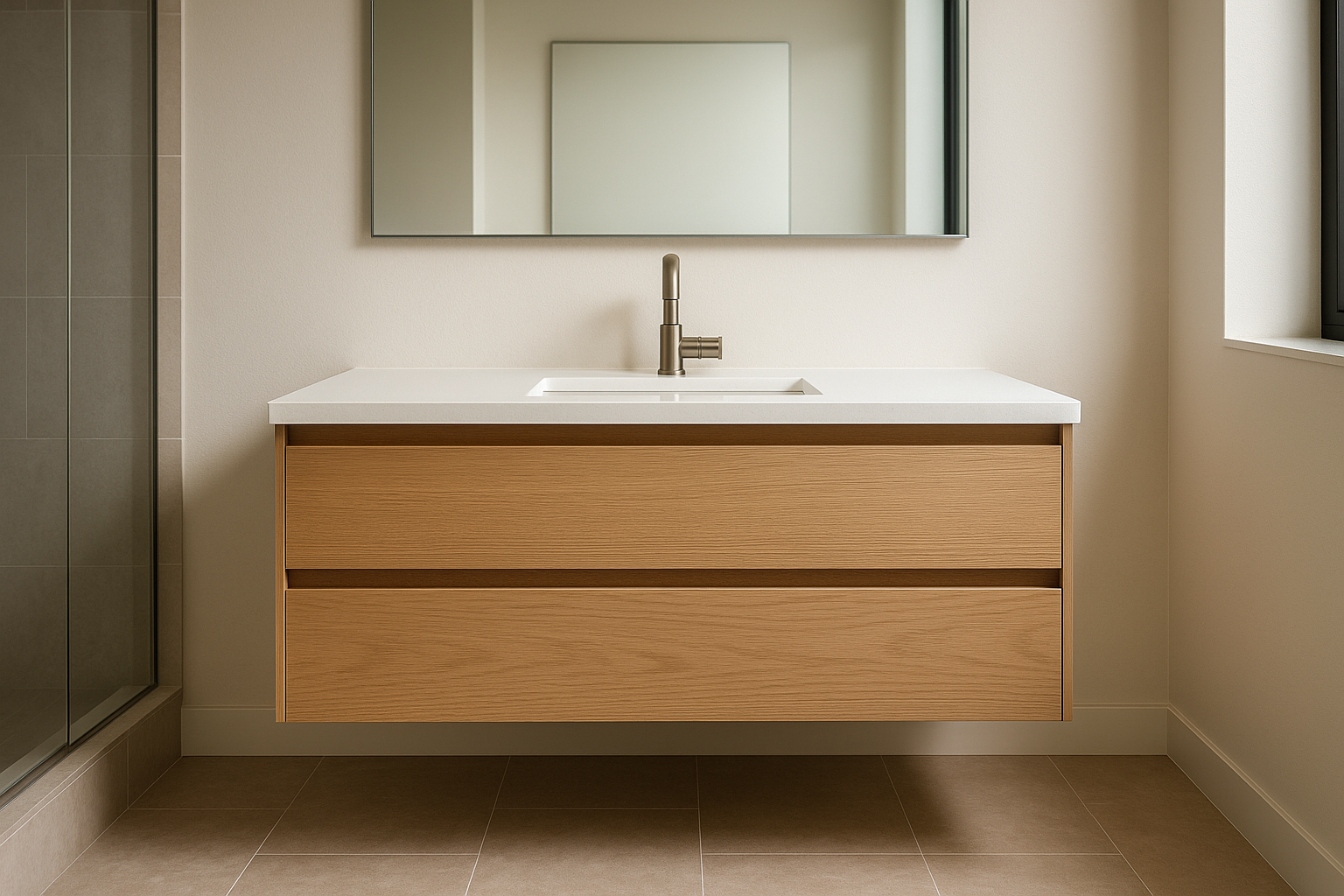
Image placement: Trade customer reviewing vanity finishes with showroom staff. Source: showroom. Suggested caption: Reviewing vanity finishes and sizing details before ordering.
Useful internal resources:
- Browse Bathroom Vanities for available vanity styles and configurations.
- Apply for Trade Pricing if you are a contractor, designer, flipper, or property manager.
- Read the related waterproof flooring guide for bath-friendly flooring planning.
FAQ: Bathroom Vanity Planning
What vanity size is best for a small bathroom?
For many small bathrooms, a 24-inch or 30-inch vanity works well. If the room is narrow, consider reduced depth to preserve walking clearance and door swing. Always confirm the toilet clearance and plumbing location before ordering.
Are integrated vanity tops a good choice for rental or flip projects?
Yes, integrated tops are often practical for rentals, flips, and schedule-sensitive remodels because the sink and counter surface are already coordinated. They can reduce selection time and simplify ordering, but faucet hole layout and backsplash needs should be confirmed early.
Can Sincere Home Decor help contractors choose vanities for multiple bathrooms?
Yes. Trade pros can bring measurements, photos, and project requirements to a showroom, and our team can help compare in-stock and semi-custom vanity options. Visit the nearest Sincere Home Decor showroom, apply for trade pricing, or book a designer consultation to plan the package.