For contractors and remodelers, the right waterproof wood-look flooring can reduce callbacks, speed up installs, and give clients the warm wood aesthetic they keep asking for without the maintenance concerns of real hardwood. LVP and SPC both work well in Bay Area kitchens, baths, ADUs, rentals, and whole-home refreshes, but the best choice depends on subfloor conditions, project budget, acoustic needs, and expected wear.
At Sincere Home Decor’s Oakland Pro warehouse with distribution center near Jack London Square, trade customers often compare waterproof flooring side by side because the differences are easier to judge in person: plank rigidity, click profile, attached pad, finish texture, and color variation. Here is a practical guide to help you specify with more confidence before the material hits the jobsite.
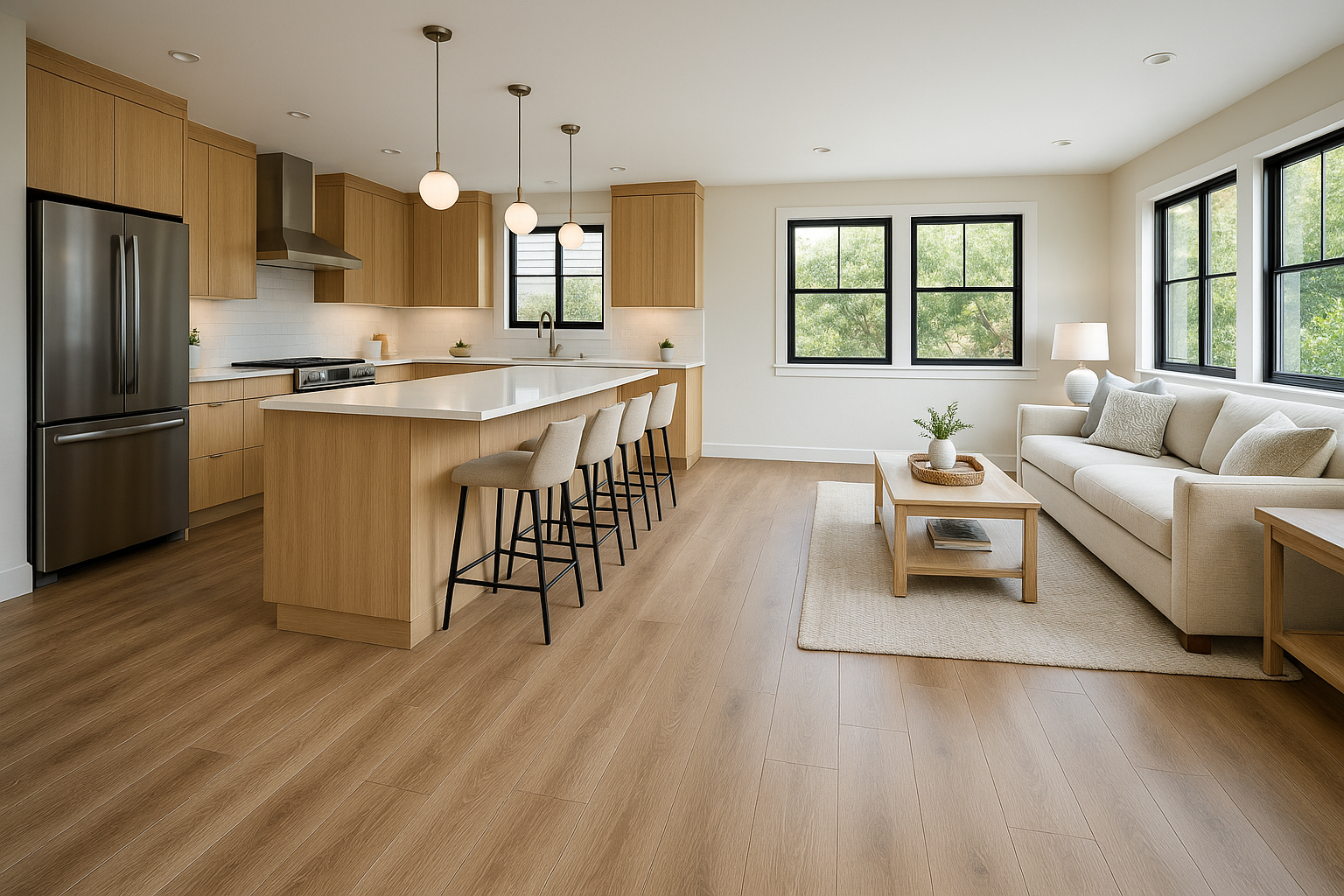
Caption: Warm waterproof flooring tones for kitchens, baths, and ADUs
Why Waterproof Wood-Look Flooring Keeps Winning Remodel Bids
Waterproof flooring has become a go-to choice because it solves multiple problems at once. It gives clients a wood-inspired look, handles everyday spills, and works in spaces where traditional hardwood is harder to recommend.
For trade pros, the appeal is also logistical. Many LVP and SPC products are designed for floating installation, can be installed over common subfloors with proper prep, and are available in practical color families that coordinate with cabinets, vanities, tile, and countertops.
Quick Takeaway: Waterproof wood-look flooring is popular because it balances design, durability, and installation efficiency in one material category.
It is especially useful for Bay Area projects where open floor plans connect kitchens, dining rooms, hallways, and living areas. One continuous surface can make smaller homes, condos, and ADUs feel cleaner and more cohesive.
- Good fit for kitchens, laundry areas, powder rooms, and rental units
- Useful for occupied remodels where install speed matters
- Pairs well with shaker, slab, and slim-profile cabinet styles
- Available in warm oak, neutral beige, greige, walnut, and weathered tones
To browse flooring categories before visiting, start with Sincere Home Decor’s waterproof flooring selection.
LVP vs. SPC: The Jobsite Differences That Matter
LVP and SPC are often discussed together, but they do not feel or perform exactly the same. LVP, or luxury vinyl plank, typically has a vinyl core that can feel slightly more flexible underfoot. SPC, or stone polymer composite, has a denser rigid core that can offer stronger dimensional stability.
Quick Takeaway: LVP can feel softer and more forgiving, while SPC is usually more rigid and stable across busy residential and light commercial spaces.
Scannable Product Comparison
- LVP: Softer feel underfoot, flexible core, often comfortable for bedrooms and living spaces, may need more attention to subfloor flatness depending on product specs.
- SPC: Rigid core, dense feel, strong click stability, helpful for kitchens, rentals, multifamily units, and higher-traffic zones.
- Attached Pad Options: Can help with minor sound reduction and walking comfort, but always confirm HOA or multifamily acoustic requirements before specifying.
- Wear Layer: A thicker wear layer can be helpful for rentals, pets, rolling chairs, and high-use entries.
- Plank Size: Wider and longer planks create a more upscale look but can make subfloor prep more important.
The right answer is not always the most expensive plank. A clean install, appropriate transition planning, and realistic maintenance expectations matter just as much as the product label.
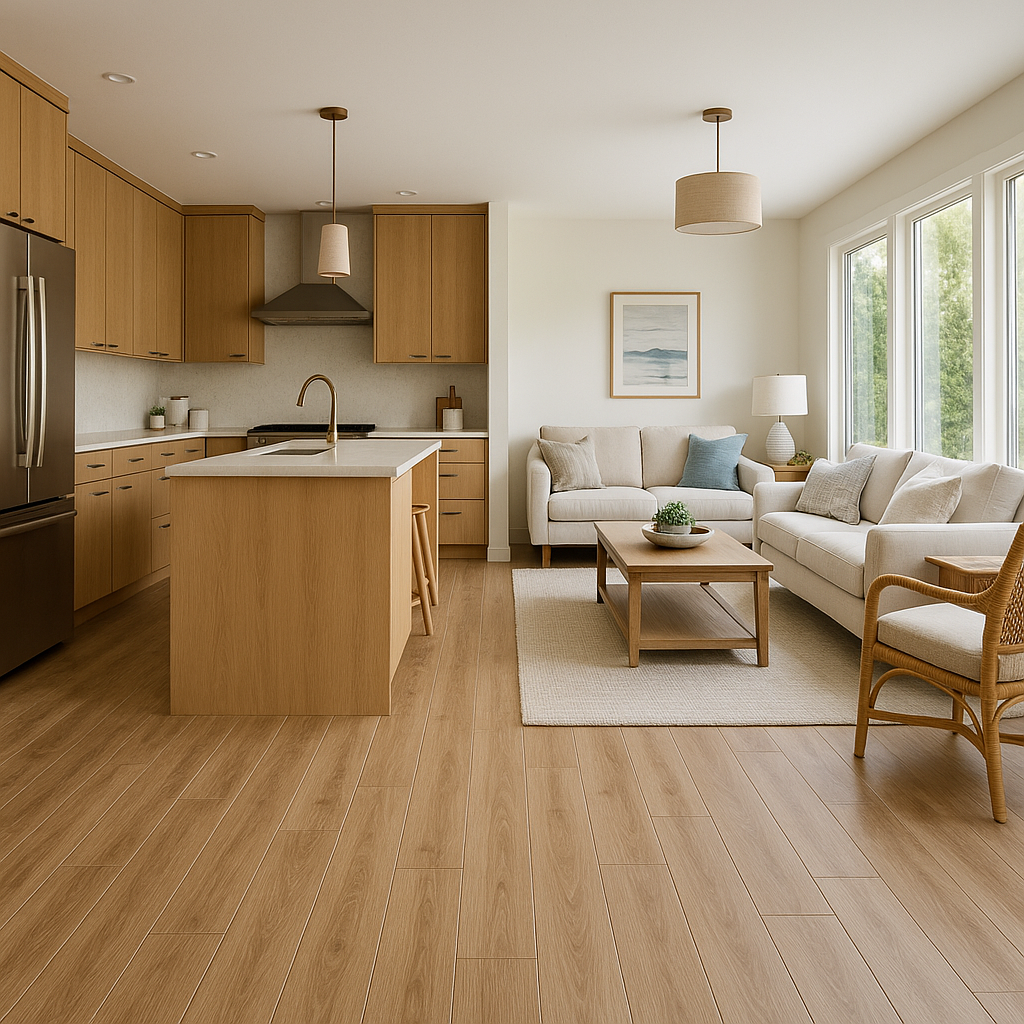
Caption: Subfloor prep is the quiet detail behind a cleaner flooring install
Color and Texture Choices That Fit Bay Area Homes
Bay Area clients are moving away from overly gray flooring and asking for warmer, more natural wood looks. Light oak, honey beige, soft taupe, and muted walnut tones tend to work well across many property types because they pair easily with white, natural wood, navy, black, and greige cabinetry.
At the Santa Clara Deluxe Showroom and the Oakland Pro warehouse near Jack London Square, it is common for contractors and designers to bring cabinet door samples or tile pieces when selecting flooring. Seeing undertones together prevents the classic mismatch: a warm cabinet next to a cool gray plank that looked fine online but feels off in the room.
Quick Takeaway: The safest flooring colors for resale and long-term appeal are warm neutrals with realistic grain, not extreme gray, orange, or high-contrast patterns.
- For modern kitchens: Try light oak or natural beige with low-gloss texture.
- For rentals: Choose mid-tone planks that hide dust, scuffs, and daily wear.
- For small condos: Use longer planks and softer grain to reduce visual clutter.
- For traditional homes: Consider muted walnut or brown oak with subtle variation.
Texture matters too. Embossed surfaces can make waterproof planks look more realistic, but deep texture may collect more dirt in busy households. For property managers, a balanced texture with a matte finish is often easier to maintain.
Planning the Install: Details That Prevent Callbacks
Waterproof flooring is not a shortcut around prep. Most product issues that show up after installation relate to subfloor flatness, expansion spacing, moisture conditions, or transitions rather than the plank itself.
Quick Takeaway: Treat waterproof flooring like a finish material, not a cover-up material. Prep and layout are still the difference between a clean job and a callback.
Pre-Install Checklist for Trade Pros
- Confirm subfloor flatness against the manufacturer’s installation requirements.
- Check moisture conditions where required, especially over concrete slabs.
- Plan transitions at exterior doors, bathrooms, stairs, and adjoining tile.
- Undercut door jambs cleanly for a finished look.
- Leave proper expansion gaps and follow room-size limits.
- Open several boxes during layout to blend plank color and pattern variation.
In kitchens, coordinate flooring sequence with cabinet installation plans. Many floating floors should not be pinned under heavy fixed cabinetry, so the flooring plan should be discussed before the schedule is locked. For cabinet planning, review Sincere Home Decor’s kitchen cabinet options alongside flooring samples.
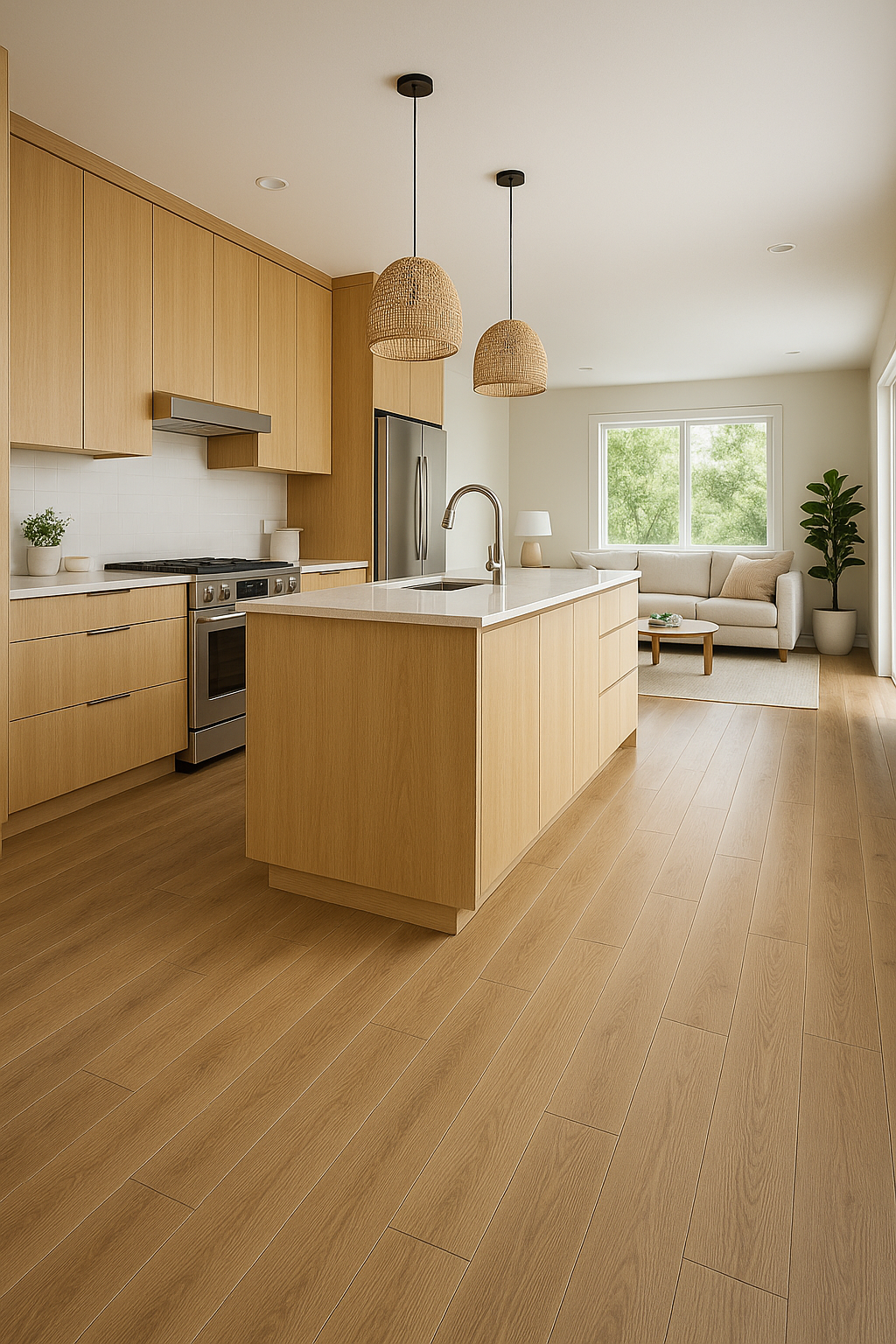
Caption: Coordinate flooring undertones with cabinets before ordering
Where Waterproof Flooring Makes the Most Sense
Waterproof wood-look flooring works especially well in projects that need durable style without the cost or sensitivity of hardwood. It is a strong fit for quick-turn remodels, owner-occupied kitchens, ADUs, and rental properties where maintenance needs to stay simple.
Quick Takeaway: Use waterproof plank flooring where clients want wood visuals, easy maintenance, and better moisture tolerance in everyday living spaces.
- ADUs: Continuous flooring can make compact layouts feel larger and more intentional.
- Kitchen remodels: Wood-look planks soften cabinet-heavy rooms and coordinate with many countertop styles.
- Multifamily units: SPC options can support durability goals when paired with the correct acoustic underlayment strategy.
- Flips: Neutral plank flooring helps create broad buyer appeal without over-personalizing the design.
- Family homes: Waterproof surfaces help with spills, pets, shoes, and daily traffic.
For bathrooms, confirm product suitability and installation details before specifying. Waterproof flooring can perform well in many bath-adjacent areas, but wet-room conditions and standing water are different design problems. If the project also includes vanity updates, Sincere’s bathroom vanity selection can help coordinate finishes across the space.
How Sincere Supports Contractors and Designers
Sincere Home Decor has been family-run since 1988, with four Bay Area locations and teams who work with trade customers every day. The Oakland Pro warehouse with distribution center near Jack London Square is especially useful for contractors who need practical product guidance, order coordination, and access to in-stock and semi-custom options under one roof.
Quick Takeaway: A showroom visit helps align design selections with real availability, job timelines, and trade workflow before the client signs off.
Our multilingual staff can assist in English, Spanish, and Mandarin, which helps keep homeowners, installers, and project managers aligned during selection. For trade accounts, ask about contractor workflow support and visit the trade pricing page to learn more.
Bring dimensions, photos, cabinet or tile samples, and any HOA requirements if the project is in a condo or multifamily building. The more context you bring, the easier it is to narrow flooring options quickly.
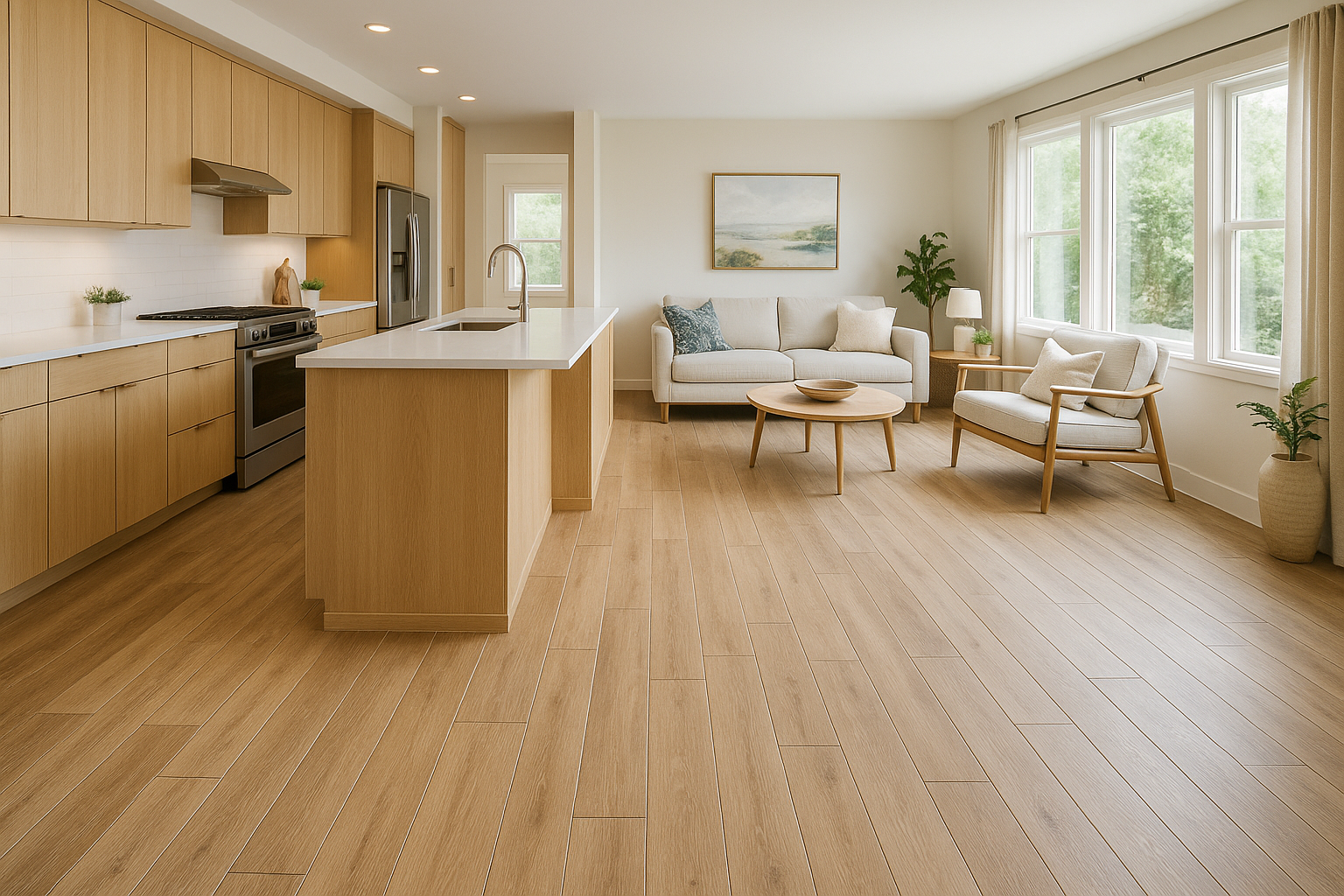
Caption: Review plank color, texture, and availability in person
FAQ
Is SPC better than LVP for kitchens?
SPC is often a strong choice for kitchens because its rigid core can provide good stability in busy areas. LVP can also work well, but the best choice depends on the product specification, subfloor conditions, and installation requirements.
Can waterproof flooring be installed throughout an entire home?
Yes, many waterproof plank products are used throughout kitchens, living rooms, hallways, bedrooms, and ADUs. Always confirm expansion limits, transition requirements, and manufacturer instructions before planning a continuous installation.
Should contractors send clients to the showroom before ordering?
Yes. Online photos rarely show true undertone, plank texture, or sheen. Visiting a showroom such as the Oakland Pro warehouse near Jack London Square helps clients approve the material with more confidence before ordering.
Plan Your Next Flooring Selection
If you are specifying waterproof wood-look flooring for a remodel, rental refresh, ADU, or kitchen project, visit your nearest Sincere Home Decor showroom to compare LVP and SPC in person. Contractors can also apply for trade pricing or book a designer consultation to coordinate flooring with cabinets, vanities, tile, and countertops.