
The High-Impact Detail Trade Professionals Often Overlook
For contractors and property managers, the final 5% of a kitchen or bath renovation often dictates the client’s perceived value of the entire project. While cabinets and countertops represent the bulk of the budget, hardware is the tactile interface of the room. It is the first thing a potential buyer or tenant touches. Selecting the right hardware goes beyond aesthetics; it is about durability, ergonomics, and ensuring the installation reflects the quality of the cabinetry underneath.
At Sincere Home Decor, we have helped Bay Area professionals navigate these details since 1988. Whether you are visiting our Santa Clara Deluxe Showroom or our distribution centers, understanding the technical nuances of hardware—from center-to-center measurements to finish durability—is essential for a seamless hand-off to your client.
Quick Takeaway
Hardware is the ‘jewelry’ of the room, but it functions as the primary mechanical interface. High-quality pulls can elevate entry-level kitchen cabinets, while poor choices can make semi-custom builds feel unfinished.
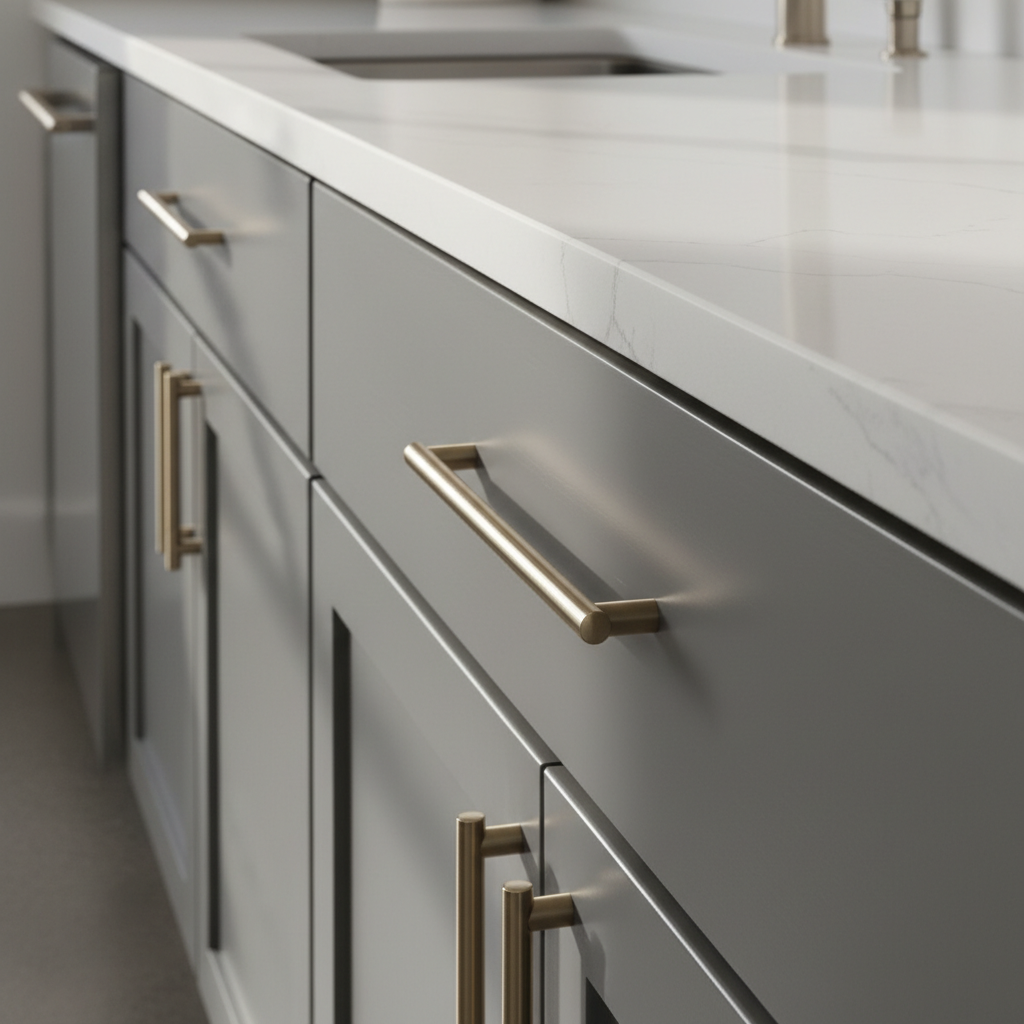
Navigating Finish Trends at Our Santa Clara Showroom
Finish selection is often where homeowners get stuck, but for trade professionals, the focus should remain on longevity and coordination. Current trends in the South Bay and Peninsula favor mixed metals, but the execution must be intentional. Satin nickel remains a staple for rental properties due to its ability to hide fingerprints and water spots, whereas matte black and champagne bronze are dominating high-end flips and designer-led renovations.
When visiting our Santa Clara Deluxe Showroom, professionals often bring samples of their chosen countertops to ensure the hardware undertones don’t clash with the stone veining. For example, a cool-toned marble-look quartz pairs better with polished chrome or matte black than it does with warm brass. Our multilingual staff, fluent in English, Spanish, and Mandarin, can help your clients visualize these combinations using our floor displays.
Quick Takeaway
Avoid matching every metal perfectly. Instead, aim for a cohesive palette where the cabinet hardware complements the faucet and lighting fixtures without necessarily mirroring them.
Pulls vs. Knobs: The Functional Comparison
The debate between knobs and pulls isn’t just about style—it’s about leverage and accessibility. For large pantry doors or heavy drawers loaded with cast-iron cookware, a pull is a technical necessity. For smaller upper cabinets, a knob provides a minimalist profile that doesn’t distract from the door style. Designers often use a ‘hybrid’ approach: knobs on doors and pulls on drawers to signify different functional zones.
- Knobs: Best for traditional aesthetics and small cabinet doors. They require only one drill hole, making them easier to replace later.
- Pulls: Offer better grip and ergonomics. Essential for ADA-compliant designs or aging-in-place renovations.
- Finger Pulls: Mounted to the top edge of the door for a handle-less, ultra-modern look found in many contemporary Bay Area condos.
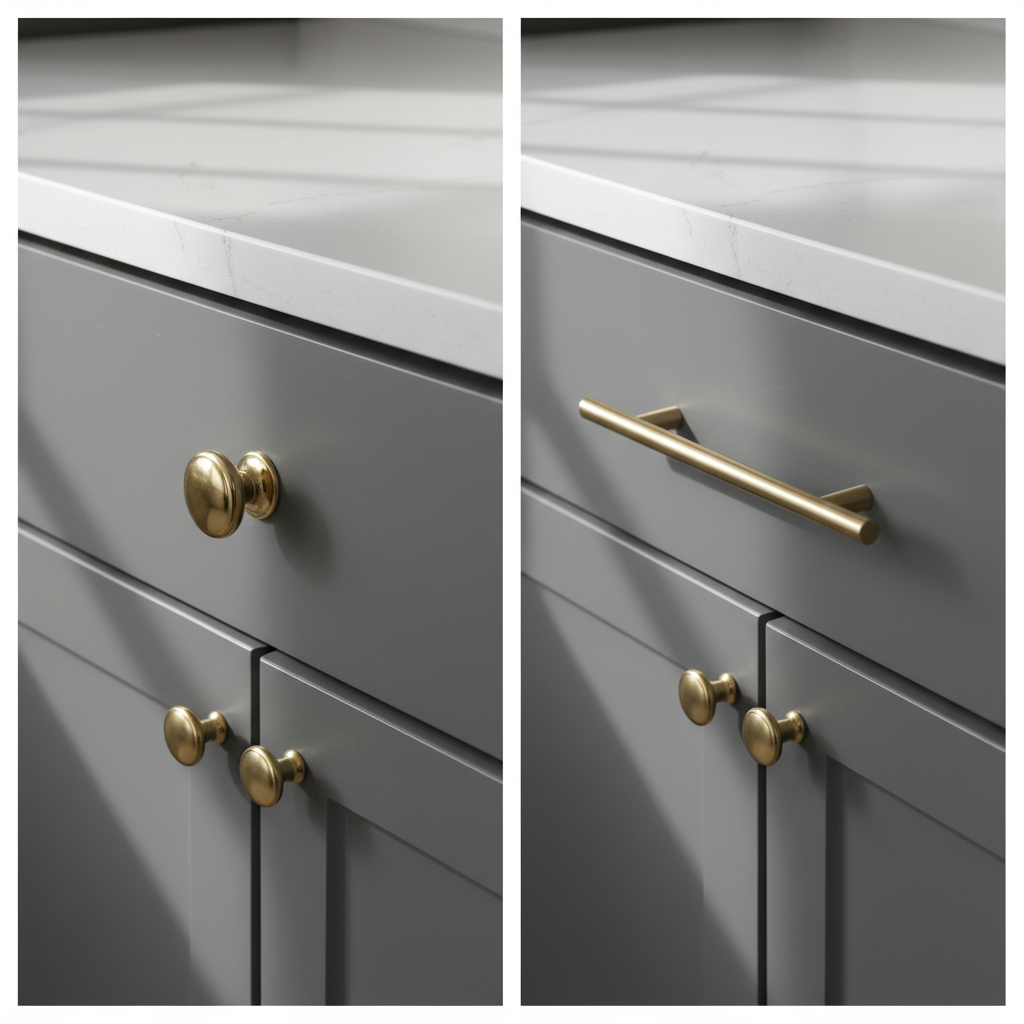
Hardware Comparison Table
- Hardware Type | Best Application | Pros | Cons
- Standard Knobs | Upper Cabinets | Budget-friendly, easy install | Less leverage for heavy drawers
- Bar Pulls | All Drawers/Base Cabinets | High leverage, modern look | Can catch on clothing if ends protrude
- Cup Pulls | Farmhouse/Traditional Drawers | Classic aesthetic, very sturdy | Harder to clean inside the ‘cup’
- Appliance Pulls | Integrated Panels | Designed for heavy tension | Significantly higher price point
Technical Specifications for Pro Installations
For the contractor, the ‘center-to-center’ measurement is the most critical spec. Standardizing these measurements across a project allows for faster installation and fewer errors. While 3-3/4 inch (96mm) and 5-1/16 inch (128mm) are the industry standards, we are seeing a shift toward longer, oversized pulls that span 50% to 75% of the drawer width for a high-end, custom look.
Proper placement is equally vital. On shaker-style doors, hardware is typically centered on the stile (the vertical frame). On slab doors, placement is often dictated by the ‘rule of thirds’ to maintain visual balance. If you are working with our semi-custom cabinet lines, ensure your installers are using jigs to maintain consistency across the entire kitchen floor plan.
Quick Takeaway
Always order 5% extra hardware. Finish batches can vary slightly, and having replacements on hand for future repairs is a value-add for your property management clients.
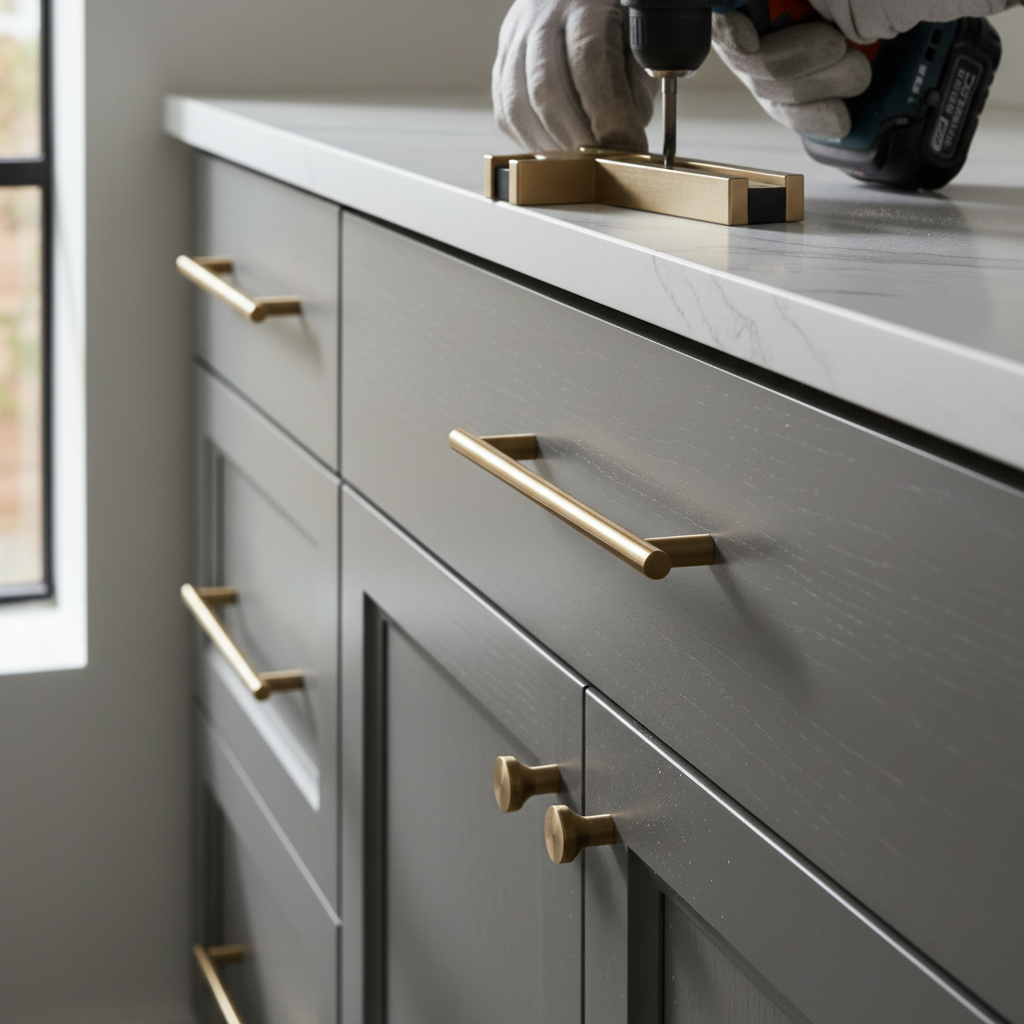
Beyond the Surface: Hinges and Soft-Close Systems
While the handles are what clients see, the internal hardware is what they feel. Sincere Home Decor prioritizes soft-close hinges and drawer glides as a standard for our quality cabinet lines. For flippers and builders, this is a non-negotiable feature that justifies a higher asking price. A drawer that slams shut immediately devalues a renovation in the eyes of a modern buyer.
We stock both in-stock and semi-custom options that feature 6-way adjustable hinges. This allows your crew to perfectly align door gaps (reveals) even if the walls or floors aren’t perfectly plumb—a common issue in older Oakland and South San Francisco homes. If you are updating bathroom vanities, the same rules apply: high-quality internal hardware prevents the ‘rattle’ associated with cheap, big-box store units.
Quick Takeaway
Never compromise on soft-close. It is the most requested ‘luxury’ feature that has now become a baseline expectation in the Bay Area market.
FAQ: Common Hardware Questions
Can I mix different hardware finishes in the same kitchen?
Yes. A common professional strategy is to use one finish for the perimeter cabinets and a contrasting finish for the island. For example, matte black pulls on white perimeter cabinets paired with brushed gold pulls on a navy blue island creates a sophisticated, tiered look.
What size pull should I use for oversized drawers?
For drawers wider than 24 inches, you should either use one long pull (at least 1/3 the width of the drawer) or two smaller pulls. Single long pulls are currently more popular in modern designs as they offer a cleaner silhouette and one-handed operation.
Is there a difference between ‘solid brass’ and ‘brass finish’?
Significant. Solid brass is heavy, durable, and can be refinished, while ‘brass finish’ is usually a coating over zinc or aluminum. For high-traffic areas or luxury rentals, solid metal hardware is recommended to prevent the finish from wearing off over time.
Visit Sincere Home Decor for Trade Pricing
Whether you are finishing a single-family home or managing a multi-unit complex, the right hardware choices streamline your project and satisfy your clients. Our family-run business has been a trusted partner for Bay Area pros for over three decades, offering the perfect balance of in-stock convenience and semi-custom flexibility.
Visit our Santa Clara Deluxe Showroom or any of our other three locations today to browse our extensive hardware collections and speak with our expert design consultants. Trade professionals are encouraged to inquire about our volume pricing and dedicated account support.