
Balancing Aesthetics and Durability in Bay Area Renovations
Successful interior design for high-traffic Bay Area homes relies on the strategic layering of textures and tones. When professionals specify materials, the goal is to create a visual narrative that remains cohesive from the floor up to the cabinetry. Achieving this balance requires more than just matching colors. It involves understanding how light interacts with different surfaces and how materials like wood, stone, and tile complement one another in a functional space. At our South San Francisco Deluxe Showroom, we often see trade professionals looking for that perfect bridge between a client’s aesthetic vision and the practical realities of the job site.
The primary challenge in mixing materials is avoiding a disjointed look where the floor competes with the cabinetry for attention. By selecting a lead material first, usually the cabinets or the flooring, you establish a baseline for the rest of the palette. This approach ensures that every subsequent selection supports the primary design intent. Our family-run team, serving the region since 1988, focuses on providing the technical specifications and inventory needed to execute these complex designs seamlessly.
Quick Takeaway
Identify one ‘hero’ material—either the cabinetry or the flooring—and select all other surfaces to provide a supporting texture or tonal contrast rather than introducing a second competing pattern.
The Foundation: Aligning Flooring and Cabinetry
Flooring serves as the visual anchor for any room. In modern Bay Area projects, we see a strong preference for waterproof flooring that mimics natural hardwood. To coordinate these with cabinetry, consider the undertone of the wood grain. If you are using a warm-toned white oak floor, pairing it with cool-toned grey cabinets can create a sophisticated tension. Conversely, matching warm wood cabinets with warm floors requires a significant difference in value—light floors with dark cabinets or vice versa—to prevent the room from feeling monolithic.
For contractors working on multi-unit developments in Oakland, durability is as critical as design. Our Oakland Deluxe Showroom near Downtown stocks a variety of luxury vinyl and engineered options that provide the look of natural materials with the resilience required for rental properties. When these floors meet the base cabinets, the transition should be intentional. Using a toe kick that matches the cabinet finish rather than the floor often provides a cleaner, more integrated look that designers prefer.
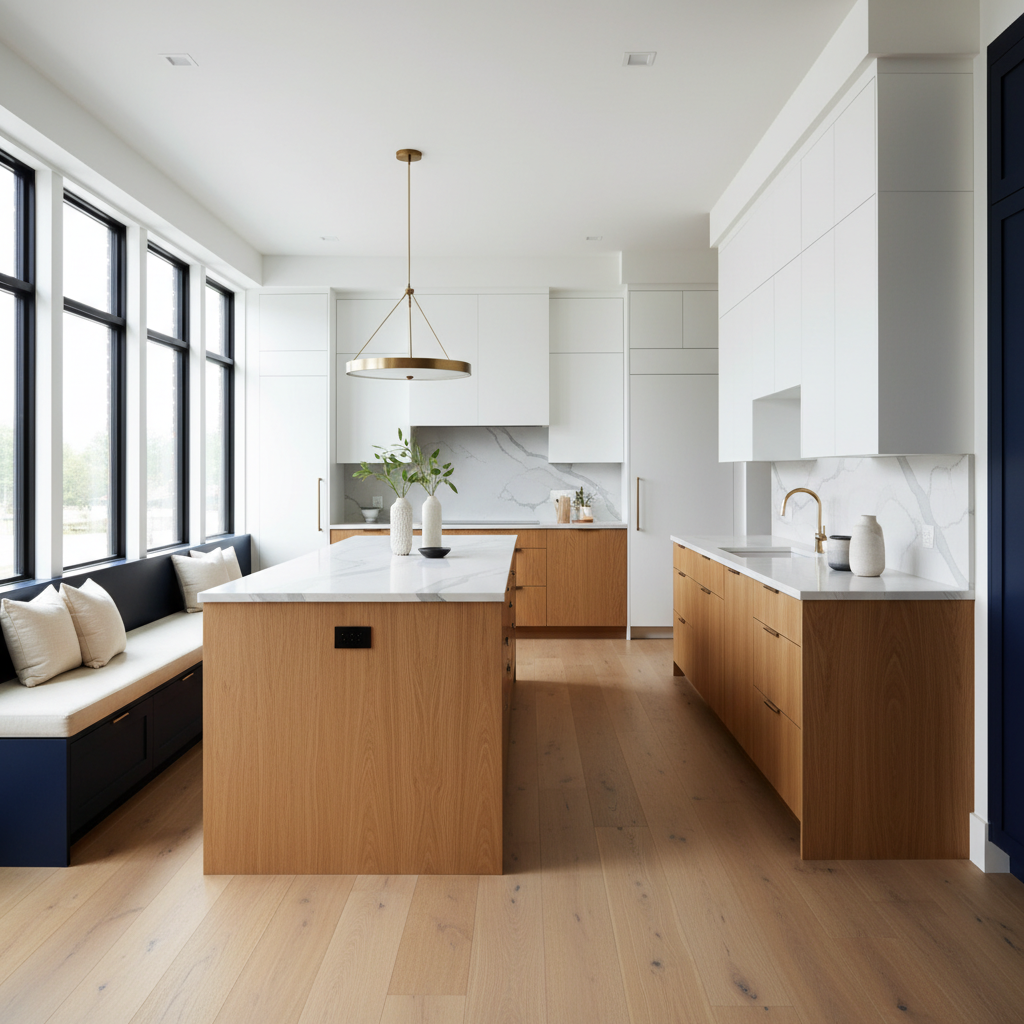
[IMAGE #1 — A clean transition between light oak flooring and dark navy cabinetry. Source: Showroom project]
Countertop Transitions and Visual Weight
The countertop serves as the horizontal plane that breaks up the vertical surfaces of the kitchen cabinets. This is where material mixing becomes most tactile. High-performance quartz remains a top choice for trade professionals due to its non-porous nature and consistency. When selecting a countertop at our Santa Clara Deluxe Showroom, we recommend bringing a sample of your flooring and cabinet door to see the materials under professional showroom lighting. This prevents the common mistake of choosing a ‘white’ counter that looks yellow next to ‘white’ cabinets.
Texture plays a significant role in how these materials interact. A polished countertop paired with matte-finished cabinets provides a play of light that adds depth to a small kitchen. For a more industrial or contemporary feel, honed or leathery finishes on stone surfaces offer a tactile quality that pairs well with high-gloss cabinetry. The goal is to create enough contrast to define the separate elements while maintaining a unified color story.
Comparison: Material Coordination for High-Traffic Areas
- Polished Quartz: Best for dark kitchens needing light reflection; pairs well with matte wood grain.
- Honed Natural Stone: Offers a sophisticated, organic feel; ideal for high-end custom builds.
- Solid Surface: Provides a seamless look; excellent for minimalist or ultra-modern designs.
Bridging the Gap with Tile and Backsplashes
The backsplash is the final piece of the material puzzle. It acts as the vertical connector between the countertop and the upper cabinets. Porcelain and ceramic tile offer the most versatility for introducing new textures or patterns without overwhelming the space. If the cabinets and counters are relatively neutral, the backsplash is an opportunity to introduce a subtle geometric pattern or a handmade ‘Zellige’ style texture that catches the light.
In many Oakland property management projects, neutral palettes are preferred for their broad appeal. A classic subway tile in an offset pattern remains a staple, but varying the grout color can change the entire aesthetic. A dark grout with white tile provides a crisp, architectural look, while matching grout creates a soft, continuous surface. Our staff, fluent in English, Spanish, and Mandarin, can help specify the correct quantities and trim pieces needed for a professional finish on any tile installation.
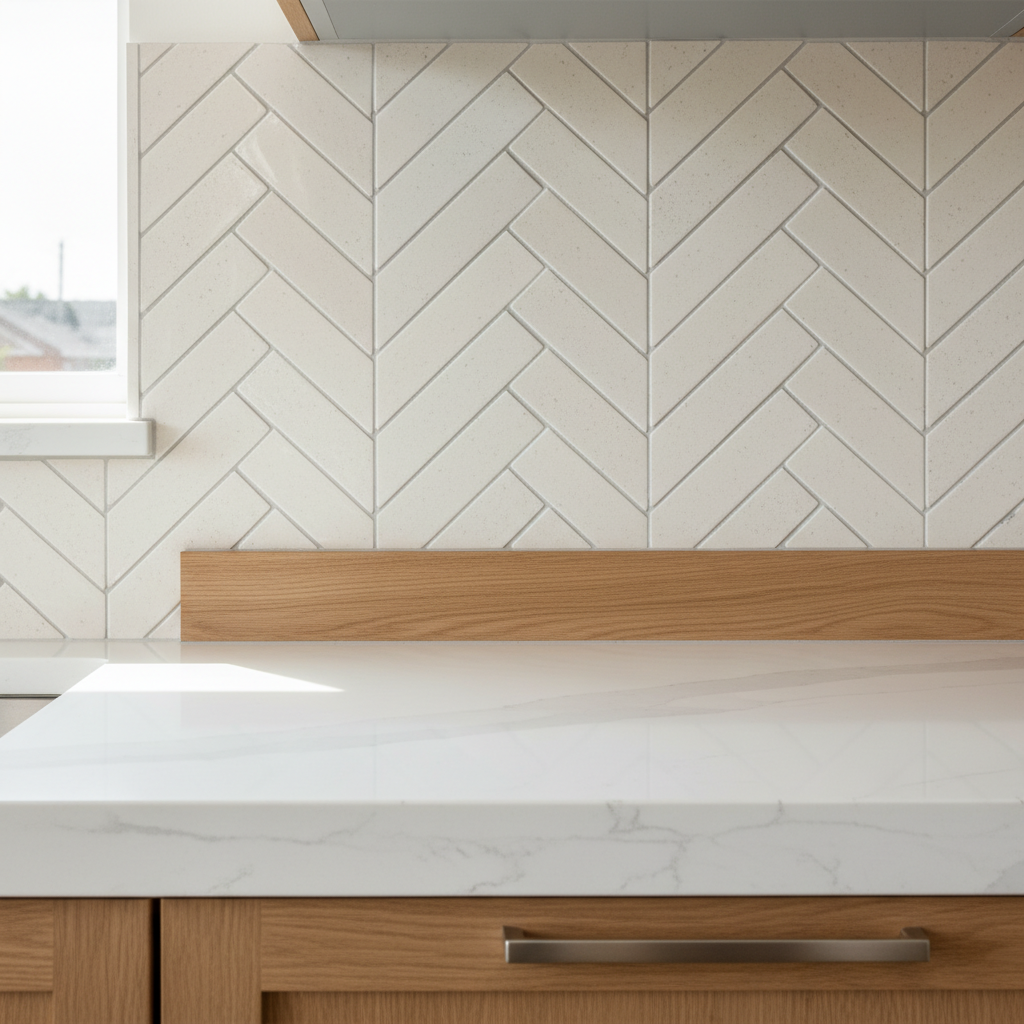
[IMAGE #2 — Close-up of a herringbone tile backsplash meeting a quartz counter. Source: Supplier asset]
Quick Takeaway
Use the backsplash to tie the room’s color palette together by choosing a tile that contains flecks or tones from both the countertop and the cabinetry.
Selecting the Right Cabinetry for the Mix
Cabinetry occupies the most visual real estate in a kitchen or bathroom. Whether you are looking for in-stock options for a quick flip or semi-custom MasterBrand cabinets for a high-end remodel, the door style dictates the formal or informal nature of the material mix. Shaker-style doors are versatile enough to work with almost any flooring or counter, while flat-panel slab doors demand a more precise coordination of textures to avoid looking clinical.
For those visiting our South San Francisco location, exploring the latest MasterBrand collections reveals a shift toward mixing wood stains with painted finishes within the same layout. An island in a natural wood finish can act as a piece of furniture, contrasting beautifully with painted perimeter cabinets. This technique allows designers to incorporate multiple materials while maintaining a central design theme. By utilizing our bathroom vanities in similar finishes, you can carry this cohesive material palette throughout the entire home.
Practical Considerations for Professionals
For the trade professional, the logistics of material mixing are just as important as the aesthetics. Ordering from a single source like Sincere Home Decor ensures that lead times are coordinated. We provide both in-stock and semi-custom solutions, allowing you to manage your project timeline effectively. Having four Bay Area locations means your crew can easily access the materials and expert advice needed to keep a project on schedule.
When working on property flips or management, the focus shifts to ‘standardizing’ a mix that works across multiple units. We recommend a core palette of three materials: one floor, one cabinet, and one countertop. This simplification reduces waste and makes future maintenance more manageable. Our pro warehouse in Oakland near Jack London Square is designed specifically to handle the distribution needs of these larger-scale projects.
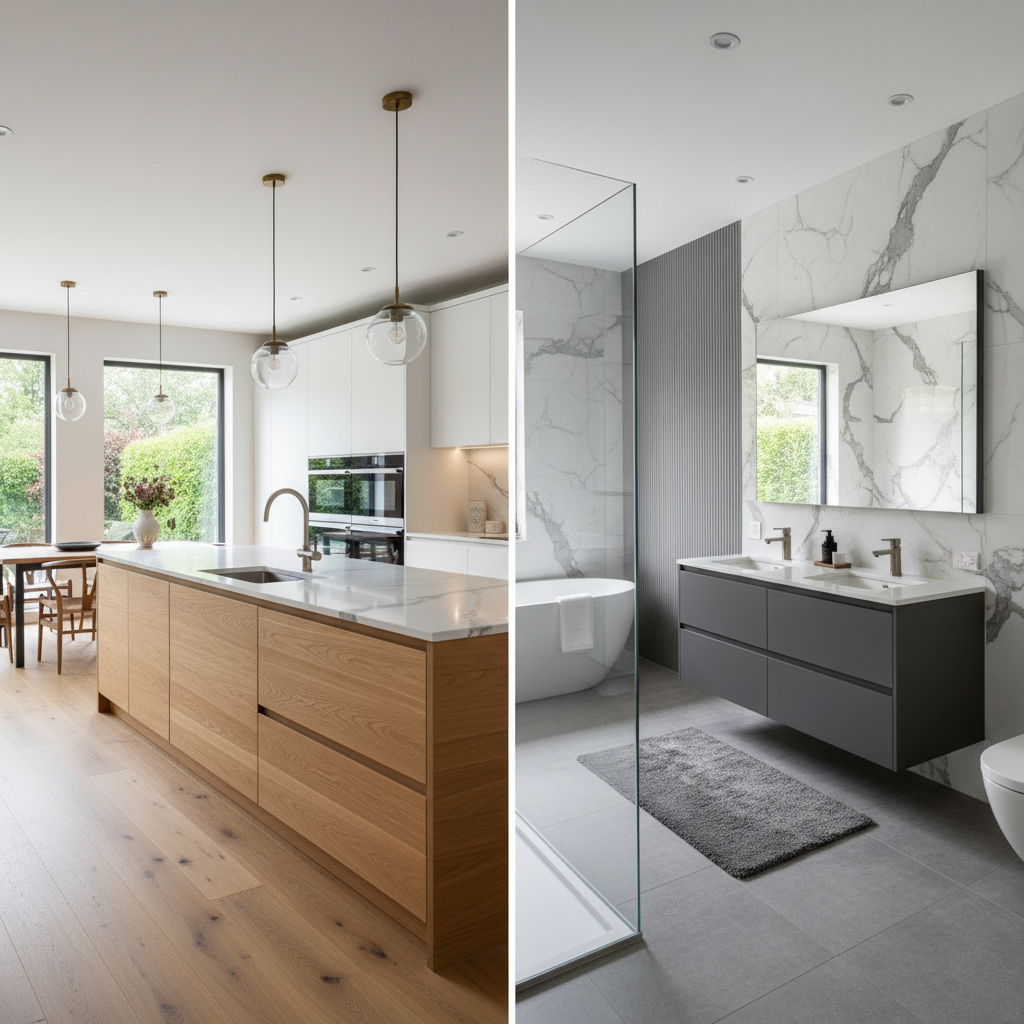
[IMAGE #3 — A bathroom showcase illustrating the mix of marble-look tile and grey vanities. Source: Showroom photo]
Material Coordination Reference Table
| Cabinet Finish | Countertop Recommendation | Flooring Pairing |
|---|---|---|
| White Paint | Grey Veined Quartz | Medium Oak Wood |
| Natural Walnut | Solid White Stone | Light Grey Large Format Tile |
| Navy or Charcoal | Calacatta Marble Look | Natural Pine or Maple |
| Light Oak | Dark Charcoal Granite | White or Cream Porcelain |
Finalizing the Design Concept
Coordinating materials is the final step in elevating a renovation from standard to exceptional. By paying close attention to undertones, varying textures, and choosing a clear focal point, you create a space that feels intentional and high-end. We invite you to visit one of our showrooms to see these combinations in person. Our team is ready to assist you in selecting the materials that will make your next project a success.
Whether you are a seasoned contractor or a homeowner embarking on a serious renovation, having a partner who understands the local market and stocks the latest trends is invaluable. Sincere Home Decor remains a family-owned business dedicated to serving the Bay Area with quality products and professional expertise. Contact us today to discuss your project requirements or to learn more about our trade pricing programs.
Frequently Asked Questions
How do I avoid making a kitchen look too busy when mixing materials?
Stick to a maximum of three primary materials. If you have a patterned floor, keep your cabinets and countertops neutral. If you choose a bold countertop, keep the backsplash and flooring simple and understated.
Should the floor be darker or lighter than the cabinets?
There is no strict rule, but contrast is key. If they are too similar in tone without enough texture difference, they can bleed together. Generally, a darker floor provides a grounded feeling, while a lighter floor can make a small space feel more expansive.
How can I coordinate hardware with mixed materials?
Hardware acts as the ‘jewelry’ of the room. If you are mixing wood and painted surfaces, a consistent hardware finish—like matte black or brushed brass—can help unify the different cabinet styles and tie the room together.