
Cutting two site visits from a remodel schedule can protect margin, keep subs moving, and make a client feel like the project is under control. For contractors, flippers, designers, and property managers, the right showroom workflow turns product selection from a bottleneck into a repeatable system.
At Sincere Home Decor, our Oakland Pro warehouse with distribution center near Jack London Square is built for that kind of pace. You can source in-stock and semi-custom materials under one roof, coordinate with a team that understands trade timelines, and keep common finish decisions from slowing down demolition, rough layout, and closeout.
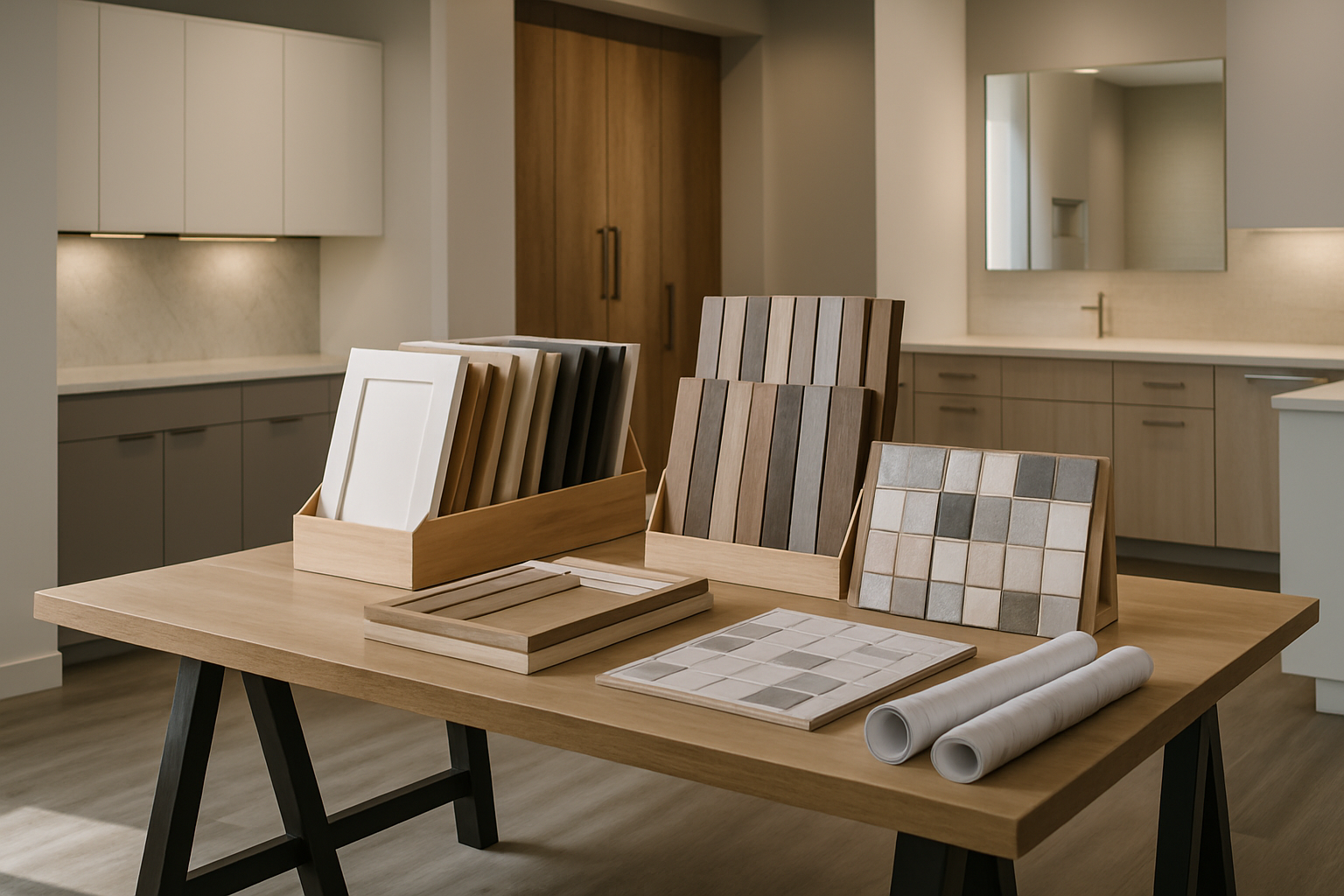
Caption: Contractor-ready sample station for fast kitchen and bath selections
Build a Selection System Before the Client Walkthrough
Quick Takeaway: Bring the client into a narrowed, job-specific set of choices instead of opening the full showroom at once.
The most efficient trade pros do not start with “what do you like?” They start with the project type, budget band, lead-time tolerance, and maintenance needs, then curate options before the client weighs in.
For a rental turnover, that may mean waterproof flooring, durable tile, and a cabinet line that can be reordered consistently. For an owner-occupied kitchen, the shortlist may lean more toward semi-custom cabinet configurations, vanity coordination, and a tighter finish palette.
- Project type: flip, rental refresh, primary residence, ADU, or multi-unit upgrade
- Decision-makers: owner, investor, designer, property manager, or HOA contact
- Timeline risk: immediate need, flexible start, phased scope, or reorder-sensitive work
- Finish direction: warm neutral, soft contemporary, transitional, coastal, or high-contrast
- Material priorities: durability, cleanability, storage, resale appeal, or long-term continuity
A simple pre-visit shortlist helps the showroom team point you toward the right cabinet, flooring, tile, and vanity categories without burning time on products that do not fit the job.
Use Trade Pricing as a Planning Tool, Not Just a Line Item
Quick Takeaway: Better pricing matters, but predictable pricing is what helps you quote with confidence.
Trade pricing works best when it supports repeatable estimating. If you know which cabinet lines, flooring categories, and tile formats you use most often, your showroom partner can help you build a practical good-better-best menu for common scopes.
That menu does not need to be complicated. A property manager may need one durable bathroom package, one upgraded vanity package, and one standard kitchen cabinet layout. A designer may need three cabinet finish families and two flooring families that photograph well across different homes.
Start with your most common jobs and create internal defaults:
- Base rental bath: vanity, waterproof flooring, wall or floor tile, and coordinating trim pieces
- Investor kitchen: cabinet package, sink base planning, flooring, and backsplash tile
- Owner kitchen: semi-custom cabinet options, finish samples, tile, and countertop material selection
- ADU package: compact storage, easy-care flooring, and neutral tile selections
For cabinet-heavy projects, review current options on the Kitchen Cabinets page before your showroom visit. If your team qualifies for contractor support, connect through the trade pricing program so quotes, reorders, and account details stay easier to manage.
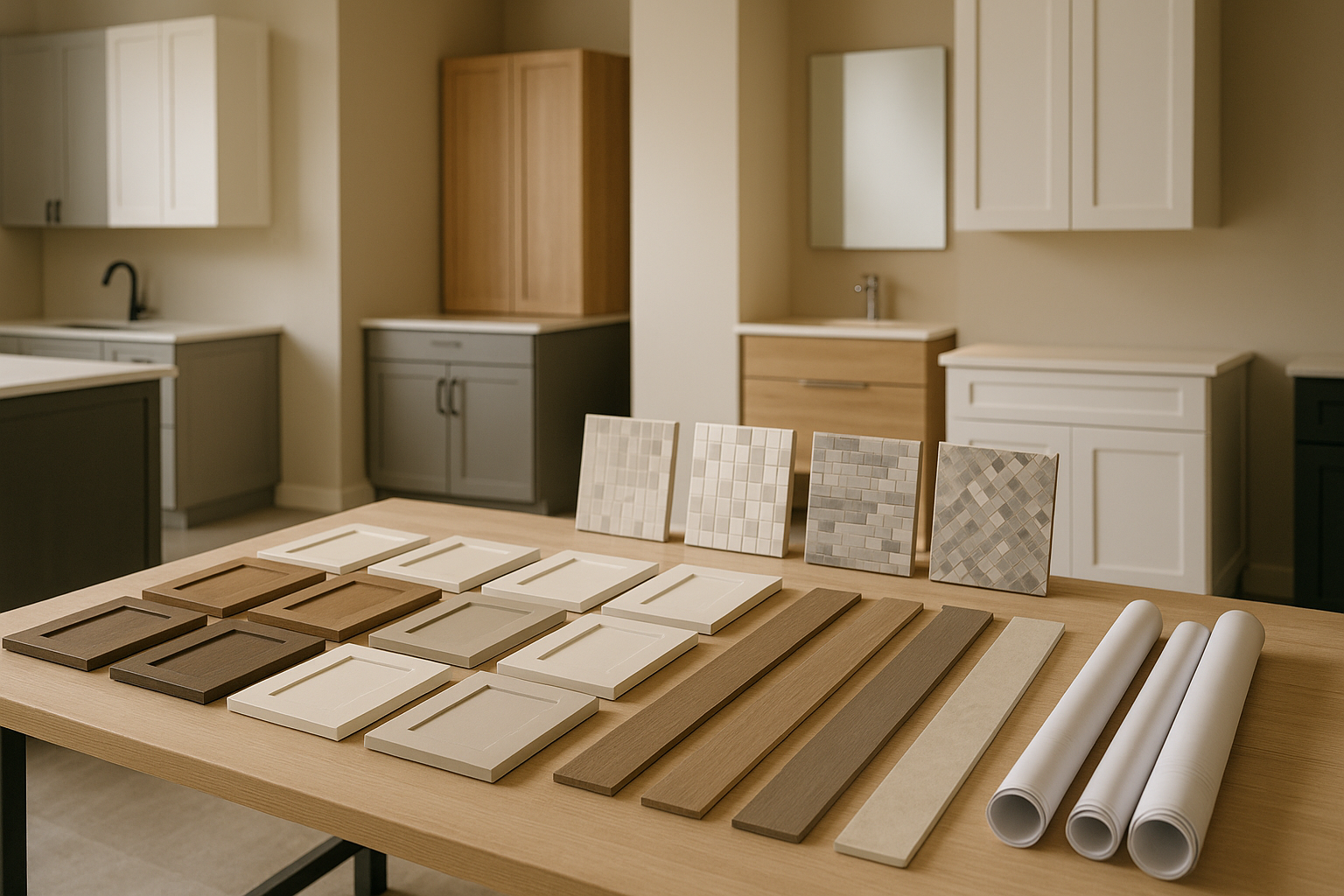
Caption: Cabinet finishes grouped by budget tier and project timeline
Know When to Choose In-Stock or Semi-Custom
Quick Takeaway: In-stock protects schedule; semi-custom protects design intent. The best choice depends on the risk you are managing.
In-stock materials are often the right move when the property is vacant, trades are already scheduled, or a deadline is tied to listing, leasing, or inspection. Semi-custom options make more sense when the layout needs better storage, finish coordination, or a cleaner fit for an owner-facing project.
Here is a contractor-friendly way to compare the two paths without overcomplicating the conversation:
- In-stock cabinets: best for faster turns, repeat layouts, rental units, flips, and budget-sensitive kitchens
- Semi-custom cabinets: best for improved storage, special sizes, finish control, and higher client involvement
- In-stock flooring and tile: useful for urgent repairs, occupied-home phases, and property management standards
- Special order selections: useful when a designer needs a specific format, tone, texture, or coordinated collection
The smartest workflow is not choosing one category for every job. It is knowing which scopes deserve speed and which deserve more specification time.
At Sincere Home Decor, our family-run team has supported Bay Area remodelers since 1988, with English, Spanish, and Mandarin-speaking staff available across our locations. That matters when field teams, owners, and design contacts need clear product information without extra back-and-forth.
Keep Flooring, Tile, and Cabinet Decisions in the Same Lane
Quick Takeaway: Finish coordination is faster when the main surfaces are selected together, not in separate errands.
Many schedule slips start with one innocent phrase: “We’ll pick the tile later.” Later becomes a second showroom trip, a delayed sample approval, or a mismatch between flooring undertone and cabinet finish.
For trade pros, the fix is to group decisions by visual relationship. Cabinets, waterproof flooring, tile, vanities, and countertop material samples should be reviewed together, even if they are ordered on different timelines.
- Cabinet finish and flooring undertone should be checked in the same light
- Bathroom vanity color should coordinate with floor tile and shower wall tile
- Backsplash tile should be reviewed with cabinet doors and countertop material samples
- Rental standards should use materials that can be reordered across multiple units
If waterproof surfaces are part of your standard scope, keep the Waterproof Flooring options handy when building packages. For bath and kitchen tile planning, the Tile page is a useful starting point before narrowing selections in person.
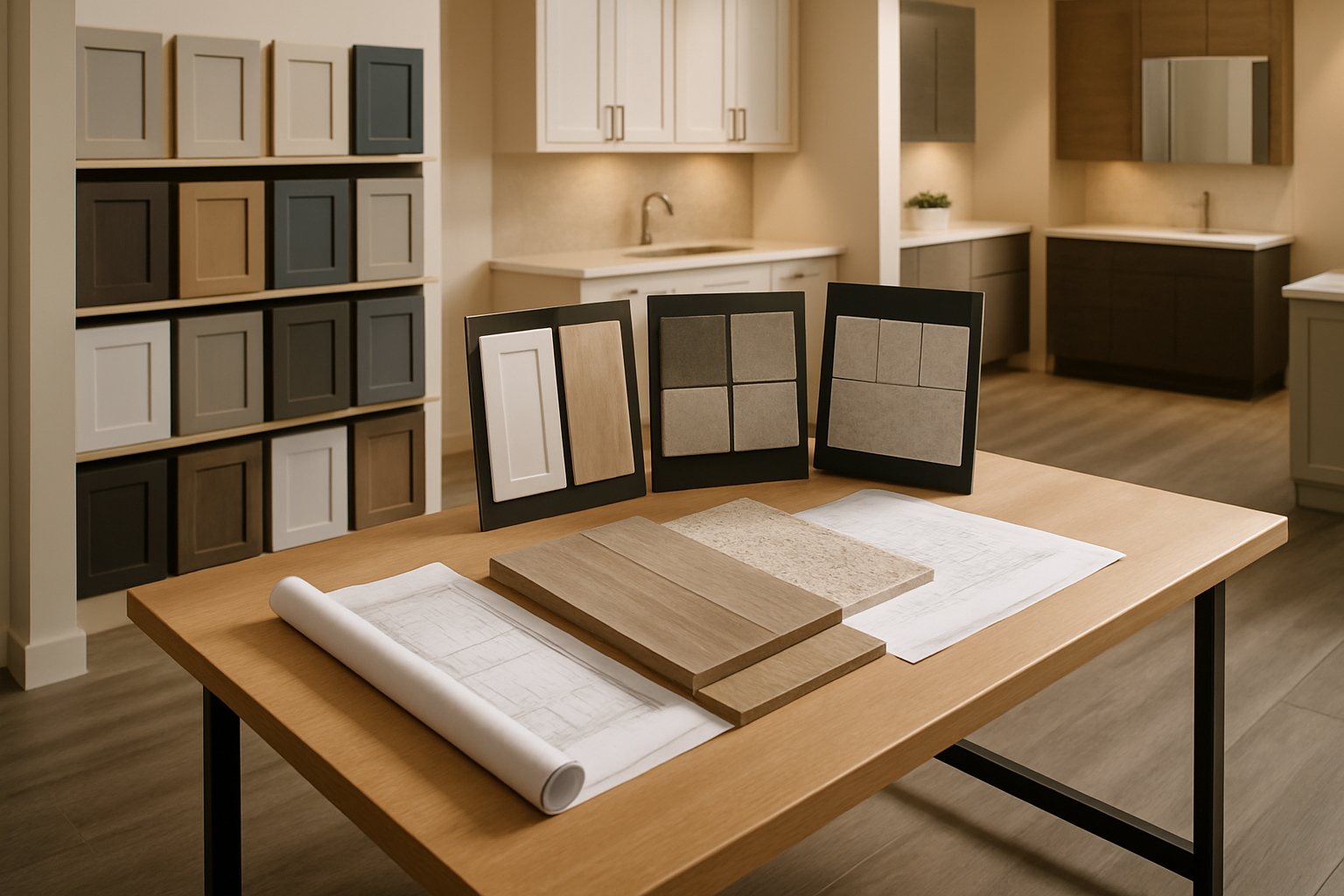
Caption: Flooring, tile, and cabinet tones checked together before ordering
Create a Repeatable Showroom Visit Checklist
Quick Takeaway: A 30-minute prepared visit usually beats a two-hour open-ended selection meeting.
Before sending a client, superintendent, or designer into the showroom, collect the information that helps staff guide the conversation. The goal is to leave with decisions, not just inspiration photos.
Bring or send these items ahead when possible:
- Rough measurements, drawings, or cabinet layout notes
- Photos of existing site conditions and natural light
- Target install window and any hard deadline
- Preferred finish direction or client inspiration images
- Budget range for cabinets, flooring, tile, vanities, or countertop materials
- Reorder requirements for multi-unit or property management work
For multi-person approvals, decide who has final sign-off before the visit. A designer may guide palette, a contractor may control schedule, and an owner may approve budget. When those roles are clear, the showroom team can help each person focus on the right decision.
You can also read more about location-sensitive finish planning in our related post on Bay Area renovation trends by location.
What to Standardize Across Recurring Jobs
Quick Takeaway: Standardization is not about making every project look the same. It is about reducing preventable decisions.
Contractors and property managers gain speed when they standardize the parts clients rarely notice but teams always need. That might include a preferred waterproof flooring category, a standard vanity size, a go-to cabinet interior, or two tile formats that work across multiple bathrooms.
Designers and flippers can standardize differently. Instead of one finish, build a controlled library of palettes: one warm, one cool, one transitional, and one higher-contrast option. The client still gets choice, but the choices are proven and manageable.
- Standard cabinet box and door style for rental or resale projects
- Two cabinet colors that pair with multiple flooring tones
- One durable waterproof flooring family for occupied units
- Two bathroom tile formats to simplify layout and ordering
- One vanity strategy for powder baths, hall baths, and primary baths
Standardization also helps your field crew. Fewer unknowns mean fewer calls from the jobsite, fewer mismatched samples, and more confidence when ordering replacement materials later.
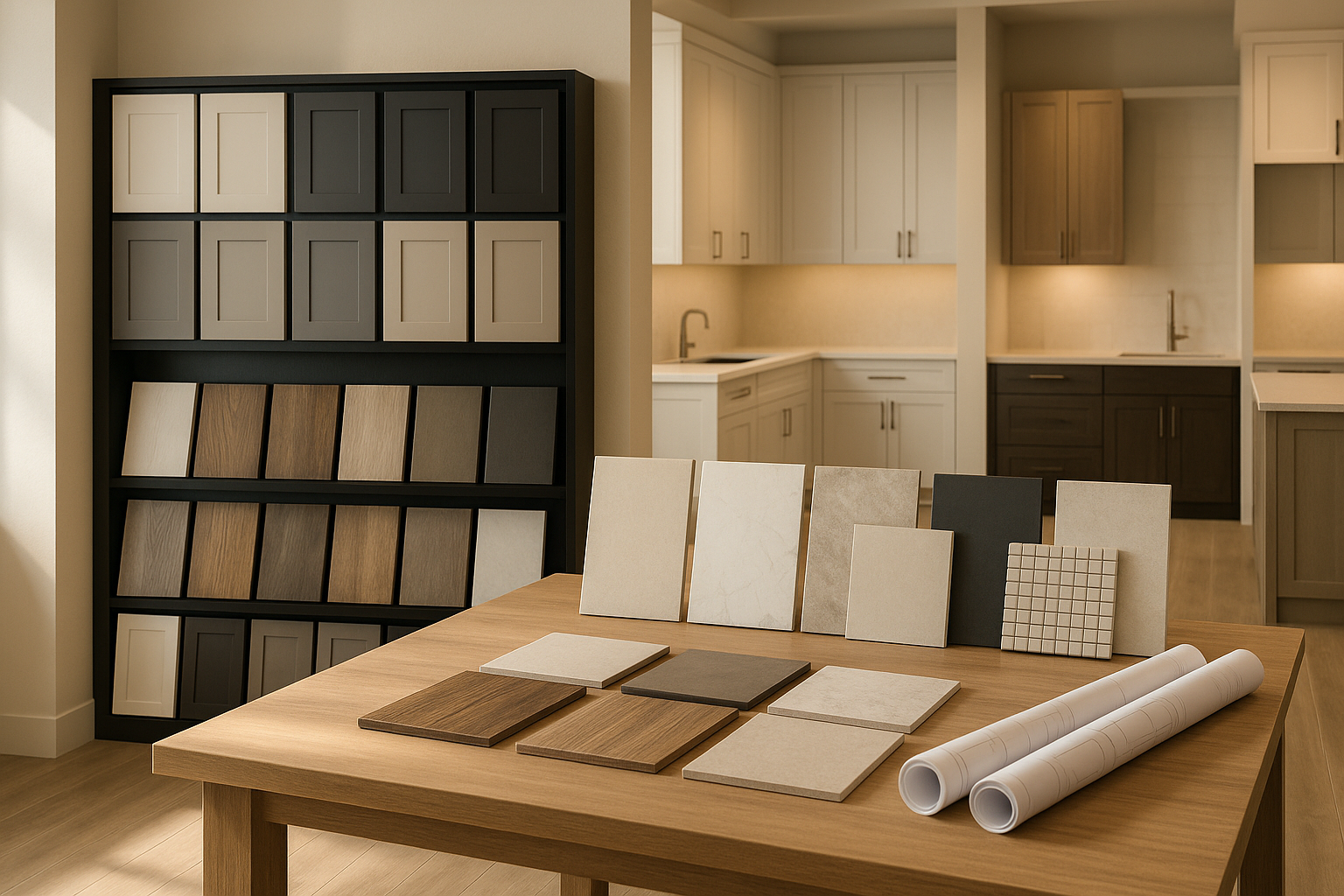
Caption: Repeatable finish palettes for flips, rentals, and owner remodels
FAQ
How should contractors prepare for a showroom visit?
Bring measurements, photos, schedule targets, budget range, and any finish direction from the client. If you are visiting the Oakland Pro warehouse with distribution center near Jack London Square, having job details ready helps the team point you toward practical in-stock and semi-custom options faster.
Can trade professionals set up repeatable product packages?
Yes. Many contractors, flippers, designers, and property managers benefit from creating standard cabinet, vanity, flooring, and tile packages for common project types. This makes quoting, client approvals, and reorders easier to manage.
Does Sincere Home Decor help with product selection for client-facing remodels?
Yes. Our showroom teams can help narrow selections for kitchens, bathrooms, flooring, tile, vanities, cabinets, and countertop materials. We do not provide countertop fabrication or installation, but we can help you review material options and coordinate selections with the rest of the project palette.
Bring the Next Project in With a Cleaner Workflow
Quick Takeaway: The best trade showroom visit ends with fewer open questions and a clearer path to ordering.
If your current selection process depends on long text threads, loose samples, and last-minute substitutions, it may be time to tighten the workflow. Visit your nearest Sincere Home Decor showroom, apply for trade pricing, or book a designer consultation to build a repeatable selection system for your next Bay Area renovation.