
Pick the right bathroom vanity before rough dimensions get locked, and the install gets cleaner: fewer filler surprises, better door swings, tighter tile transitions, and fewer client change requests. For contractors, designers, and property managers managing Bay Area bath projects, the vanity is not just a cabinet. It is the anchor that affects storage, sink placement, wall tile layout, flooring cuts, and daily usability.
At Sincere Home Decor’s Santa Clara Deluxe Showroom, trade pros often compare in-stock vanities, semi-custom cabinet options, and integrated tops side by side before finalizing a scope. That hands-on review is especially useful when the project has tight measurements, condo access limits, or a client who wants a cleaner finish without overcomplicating the order.
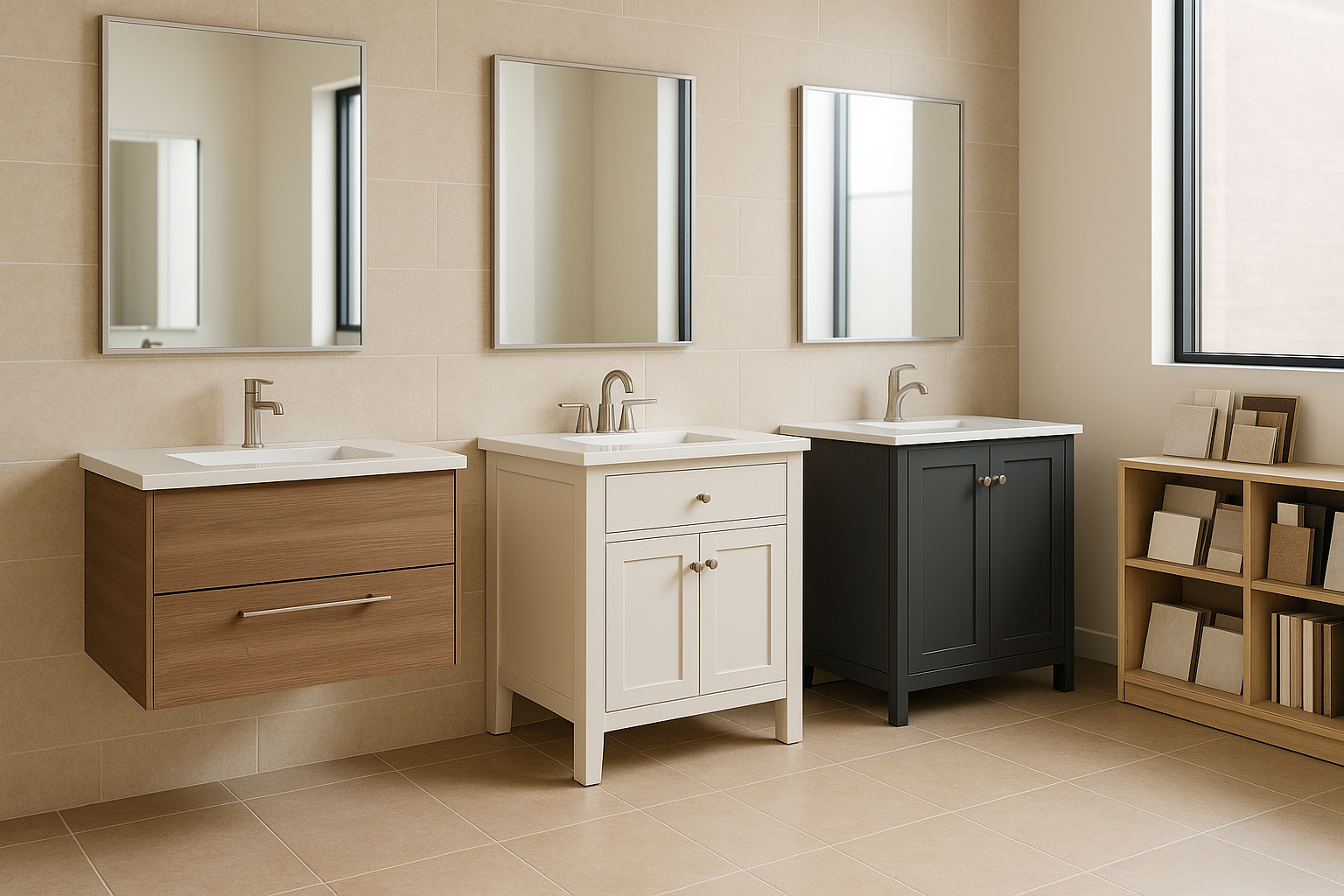
Caption: Compare vanity widths, finishes, and tops before field measurements are final.
Start With the Vanity Size, Not the Finish
Finish gets the client excited, but size keeps the job moving. Before discussing color, confirm the exact wall width, plumbing location, door clearance, toilet clearance, and any casing or baseboard returns that may affect the vanity footprint.
For remodels, do not assume the old vanity size is the best replacement size. Many older Bay Area bathrooms have oversized boxes with poor drawer access, or undersized vanities that leave awkward gaps at the wall.
Quick Takeaway: Measure the wall, the plumbing centerline, and the door swing before choosing the vanity style.
Common Bathroom Vanity Widths
- 24 inches: Best for powder rooms, ADUs, and compact rental baths.
- 30 inches: A practical small-bath size with better counter space.
- 36 inches: A strong single-sink choice for primary or hall baths.
- 48 inches: Good for wider single-sink layouts or extra drawers.
- 60 inches: Common for double sinks, but confirm plumbing and user clearance.
- 72 inches and up: Better handled as semi-custom or cabinet-based solutions.
If the bath will receive new flooring, coordinate the vanity footprint before installation. Floating vanities expose more floor, while freestanding vanities may hide cuts and transitions. For waterproof flooring options that pair well with bath remodels, review Sincere Home Decor’s waterproof flooring selections.
Match the Vanity Type to the Project Workflow
Bathroom vanities usually fall into three practical categories: freestanding, floating, and cabinet-built. Each can look polished, but they behave differently in the field. The right choice depends on wall conditions, storage needs, budget, and how much customization the project can support.
Quick Takeaway: The best vanity is the one that fits the wall condition, plumbing reality, and client storage habits.
Vanity Type Comparison
- Freestanding vanity | Field advantage: faster placement and familiar installation | Watch item: confirm baseboard cuts and wall gaps.
- Floating vanity | Field advantage: lighter visual profile and easier floor cleaning | Watch item: requires proper blocking and clean wall finish.
- Cabinet-built vanity | Field advantage: more sizing and storage flexibility | Watch item: lead time and design sign-off must be managed earlier.
- Integrated-top vanity | Field advantage: simplified sink and counter selection | Watch item: verify faucet spread, drain position, and backsplash details.
Freestanding vanities are often the easiest fit for rental turns, flips, and standard bath replacements. Floating vanities are popular in modern remodels, especially where a client wants a lighter footprint and a more open floor view. Cabinet-built vanities are useful when the room is wide, the layout is unusual, or the client wants coordinated cabinetry throughout the home.
For trade pros building repeatable scopes, it helps to keep a short list of go-to sizes and finishes. Sincere’s in-stock and semi-custom options under one roof can make that selection process easier, especially when you need to balance schedule, design, and budget.
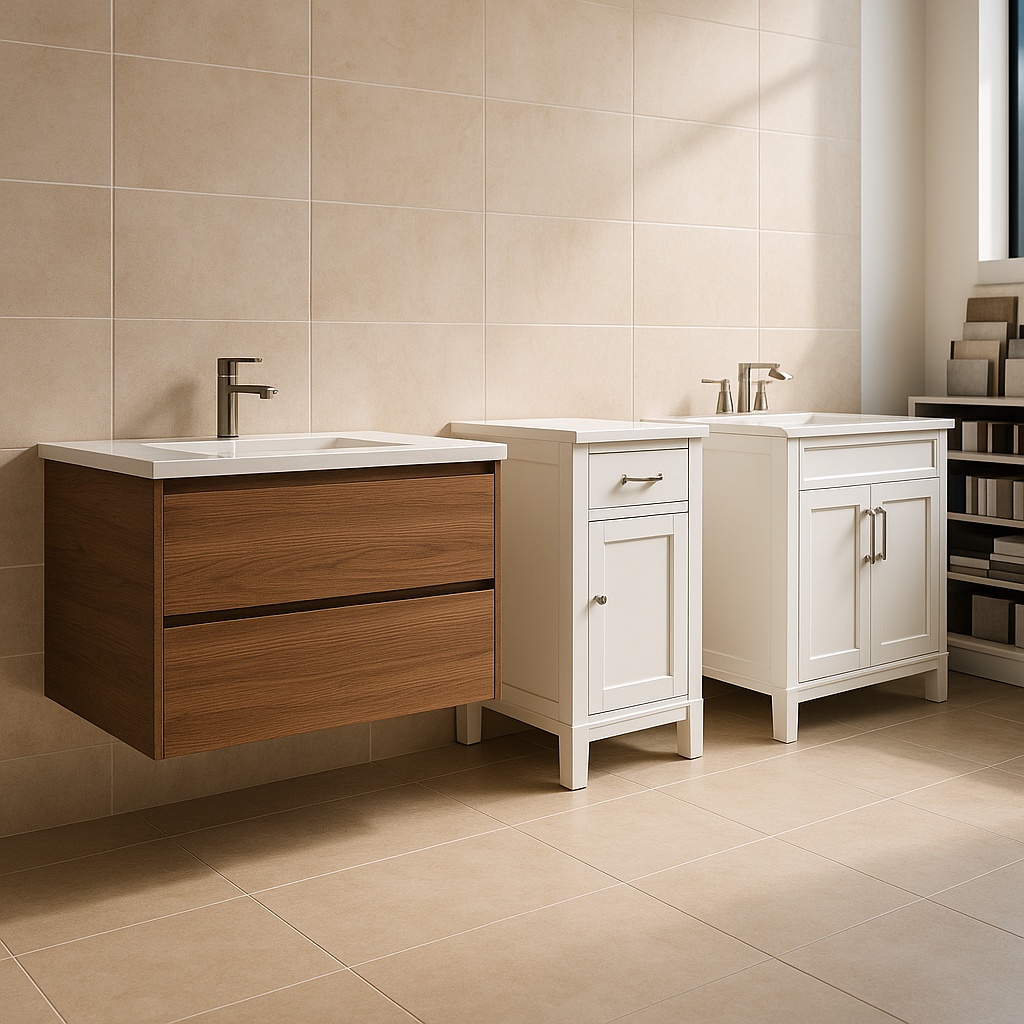
Caption: Floating vanities need wall blocking and clean flooring transitions.
Choose Materials Based on Moisture, Maintenance, and Client Use
Bathrooms are tough on cabinetry. Steam, splashes, cleaning products, and daily drawer use all matter. The right material choice depends on who will use the bath and how long the finish needs to perform before the next refresh.
Quick Takeaway: In baths, finish selection should be practical first and decorative second.
Material and Finish Considerations
- Painted finishes: Clean, versatile, and easy to coordinate with tile. They can show chips more visibly in heavy-use rentals or family baths.
- Wood-look finishes: Warm and forgiving, especially in mid-tone stains. They pair well with white, cream, gray, and concrete-look tile.
- Thermofoil or laminate-style surfaces: Useful for easy cleaning and consistent finish appearance. Confirm heat and moisture expectations by product line.
- Plywood or furniture-grade construction options: Often preferred for higher-use remodels where durability is a priority.
For client-facing projects, bring cabinet, tile, and flooring samples together early. A white vanity against warm white tile can read mismatched if the undertones fight. The same issue happens with gray: blue-gray, green-gray, and warm greige all behave differently under bathroom lighting.
Because Sincere Home Decor has multilingual staff in English, Spanish, and Mandarin, project teams can often review finish details clearly with homeowners, subcontractors, or property owners. That reduces miscommunication when the selection needs approval from more than one decision-maker.
Integrated Tops Can Simplify the Order, but Check the Details
Integrated tops are popular because they streamline the vanity package. The sink and top arrive as a coordinated unit, which can reduce selection time and simplify the finish conversation. For many hall baths, powder rooms, and rental upgrades, that convenience is a real advantage.
Quick Takeaway: Integrated tops save coordination time, but only if the faucet, drain, and backsplash details are confirmed first.
Integrated Top Checklist
- Confirm faucet hole configuration: single-hole, widespread, or centerset.
- Check sink placement: centered, offset left, or offset right.
- Verify drain alignment with existing plumbing before final approval.
- Ask whether the backsplash is included, optional, or separate.
- Review side splash needs for corner installations.
- Confirm top overhang and total installed depth.
Integrated tops are not the same as custom countertop fabrication. Sincere Home Decor offers countertop product selections, but does not provide countertop installation or fabrication. If a project needs a custom slab solution, coordinate fabrication and installation with the appropriate trade partner while using Sincere for material selection support.
For vanity product options, start with Sincere Home Decor’s bathroom vanity selection. If the remodel also includes kitchen or bath cabinet packages, review available cabinet lines to keep finishes coordinated across the project.
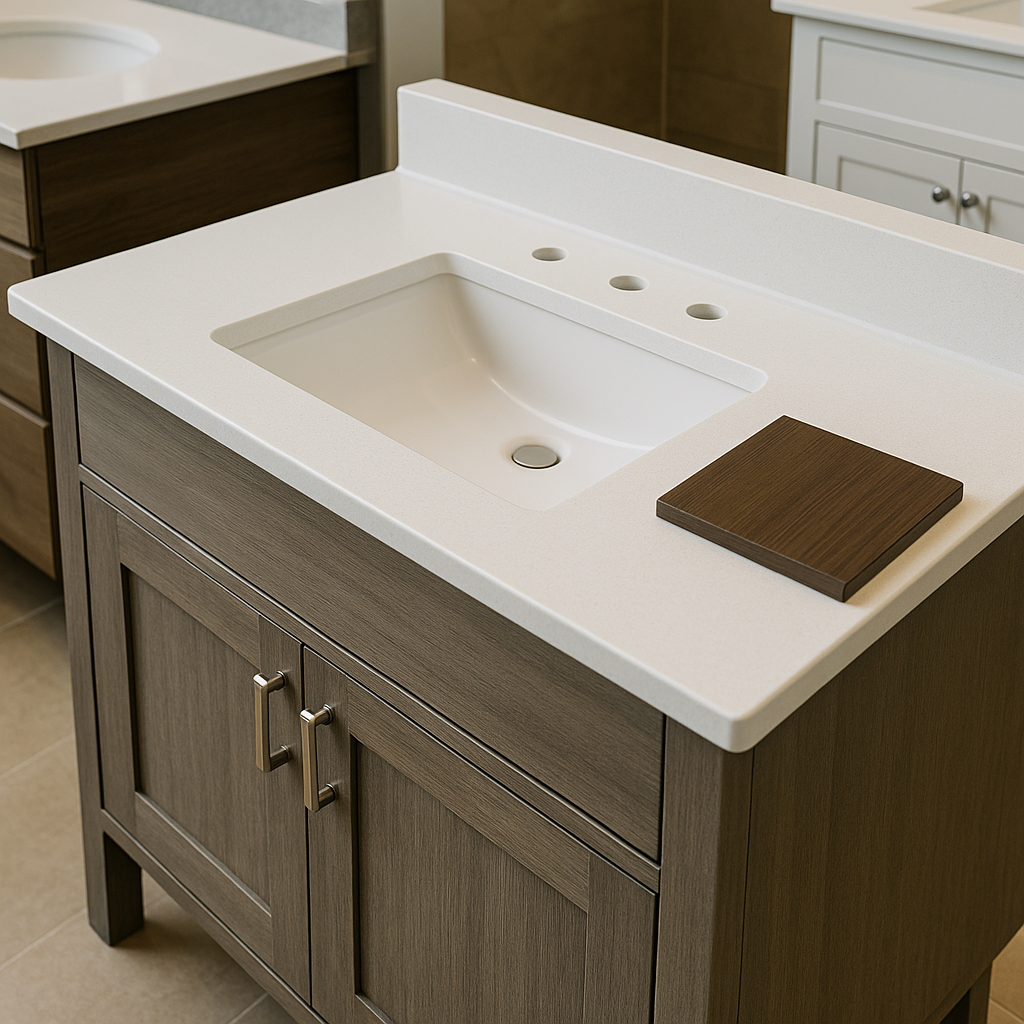
Caption: Integrated tops simplify selection when faucet and drain details are verified.
Trade Workflow Tips for Fewer Vanity Delays
The cleanest vanity installs usually come from a simple pre-order routine. Confirm the rough conditions, narrow the finish choices, and document the approval before demolition exposes surprises. This is especially important for occupied homes, multi-unit properties, and fast-turn remodels.
Quick Takeaway: A 10-minute vanity checklist can prevent a return trip, a filler issue, or a delayed finish decision.
Before You Place the Order
- Take photos of the existing vanity, plumbing wall, and adjacent clearances.
- Measure wall-to-wall width at the back and front of the vanity area.
- Note toilet location, door swing, casing, outlets, and floor transitions.
- Confirm if flooring will run under the vanity or stop at the toe area.
- Bring tile and flooring samples when selecting the vanity finish.
- Get written approval on size, finish, top, sink layout, and hardware direction.
Trade professionals can also ask about contractor workflow support and account options through Sincere Home Decor’s trade pricing and professional services. For busy remodelers, having a local showroom partner with in-stock and semi-custom choices helps reduce the time spent sourcing across multiple vendors.
Sincere has served Bay Area projects as a family-run business since 1988, with four locations supporting different job needs. The Santa Clara Deluxe Showroom is a strong stop for South Bay designers, contractors, and homeowners who want to compare bath selections in person before signing off.
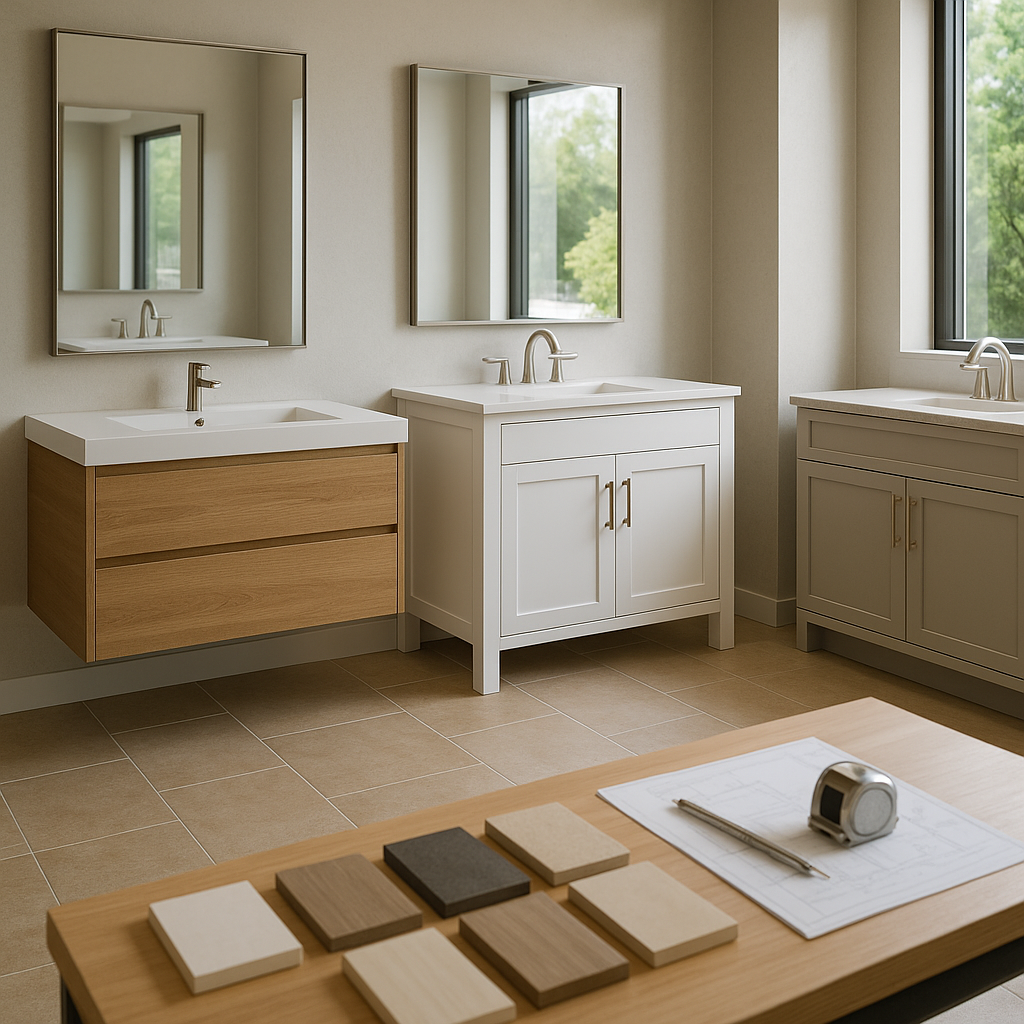
Caption: Bring field measurements and finish samples to speed up approvals.
FAQ: Bathroom Vanity Planning
What size vanity works best for a small bathroom?
A 24-inch or 30-inch vanity usually works best in compact baths, powder rooms, and ADUs. The right choice depends on door swing, toilet clearance, and how much counter space the user needs.
Are integrated vanity tops a good choice for rental or flip projects?
Yes, integrated tops can be a practical choice when the goal is a clean, coordinated package with fewer separate selections. Confirm faucet holes, drain position, backsplash needs, and total depth before ordering.
Should flooring be installed under the vanity?
It depends on the vanity style and project scope. Floating vanities expose the floor, so flooring should run underneath. Freestanding vanities may allow different approaches, but the flooring and vanity plan should be coordinated before installation begins.
Plan the Vanity Before the Bathroom Is Opened Up
A vanity decision made early can make the rest of the bath remodel easier to manage. Size, material, top style, and storage layout all affect the finished result, and they are much easier to adjust before demolition than after tile and flooring are underway.
Visit the Santa Clara Deluxe Showroom or your nearest Sincere Home Decor location to compare bathroom vanities in person. Trade professionals can apply for trade pricing, and homeowners planning a serious remodel can book a designer consultation for help narrowing the right vanity, flooring, tile, and cabinet selections.