Engineered for Endurance in Bay Area Environments
Choosing the right flooring for a high-traffic Bay Area renovation requires balancing aesthetic appeal with long-term durability. For trade professionals managing multi-unit developments in Oakland or property flippers in Santa Clara, the shift toward waterproof wood-look flooring has moved from a trend to a standard. This category, dominated by Luxury Vinyl Plank (LVP) and Stone Plastic Composite (SPC), provides the visual warmth of hardwood with the resilience needed for our coastal climate. Unlike natural timber, these engineered solutions resist the expansion and contraction caused by the fluctuating humidity levels found in microclimates from the San Francisco Peninsula to the East Bay.
At our Oakland Pro warehouse near Jack London Square, we frequently consult with contractors who need high-volume, in-stock solutions that minimize installation time. The choice between LVP and SPC often dictates the longevity of the project, especially in rental units where moisture resistance is non-negotiable. Understanding the structural differences between these two products is the first step in specifying a floor that survives both heavy foot traffic and the occasional plumbing mishap.
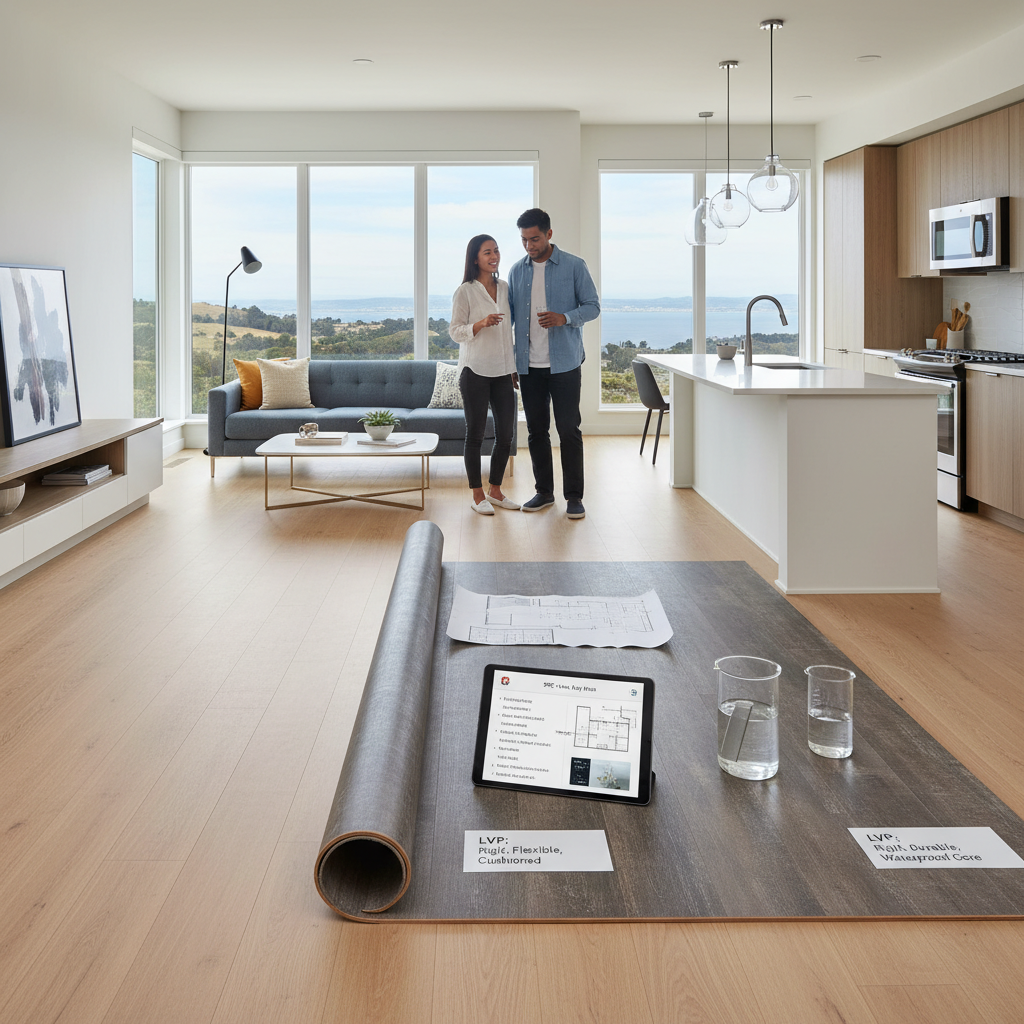
Quick Takeaway: SPC flooring offers a more rigid core than traditional LVP, making it more resistant to structural indentation and subfloor imperfections.
The Structural Difference: SPC vs. Traditional LVP
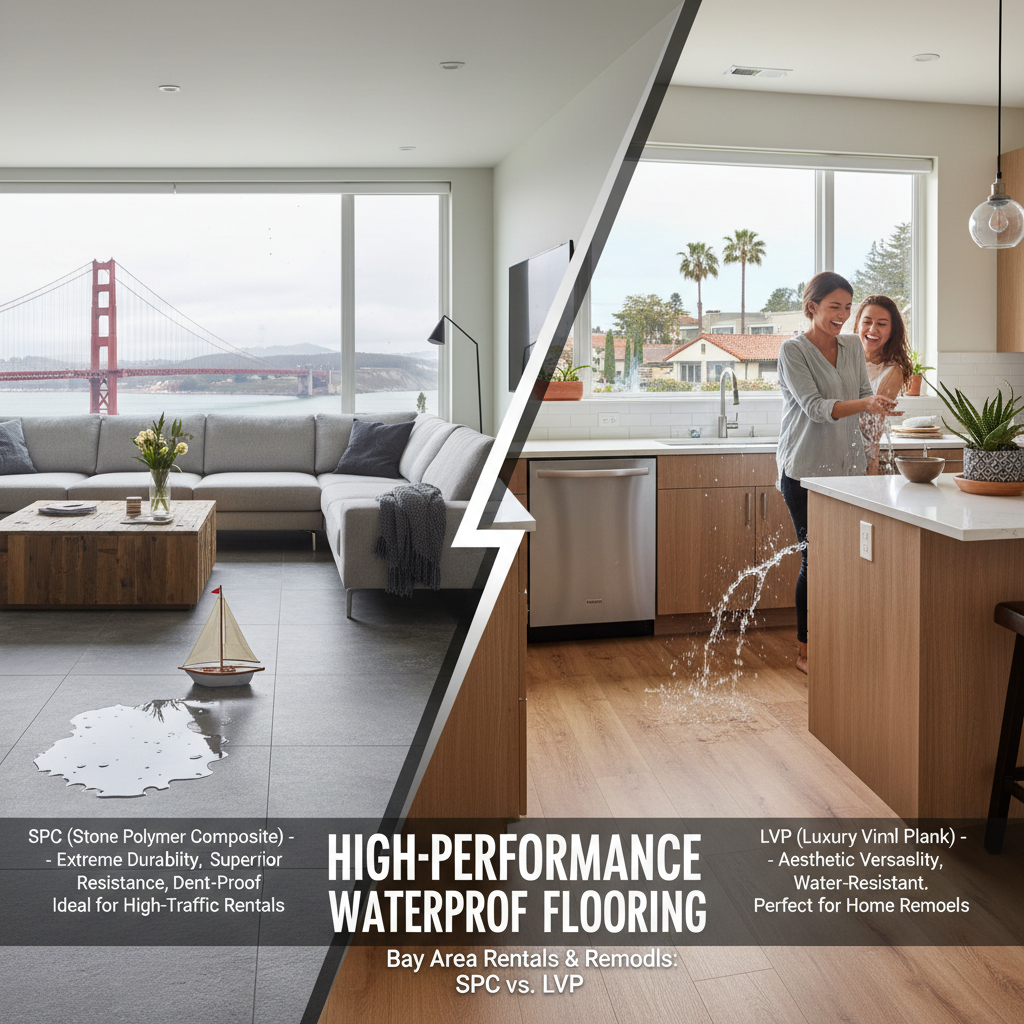
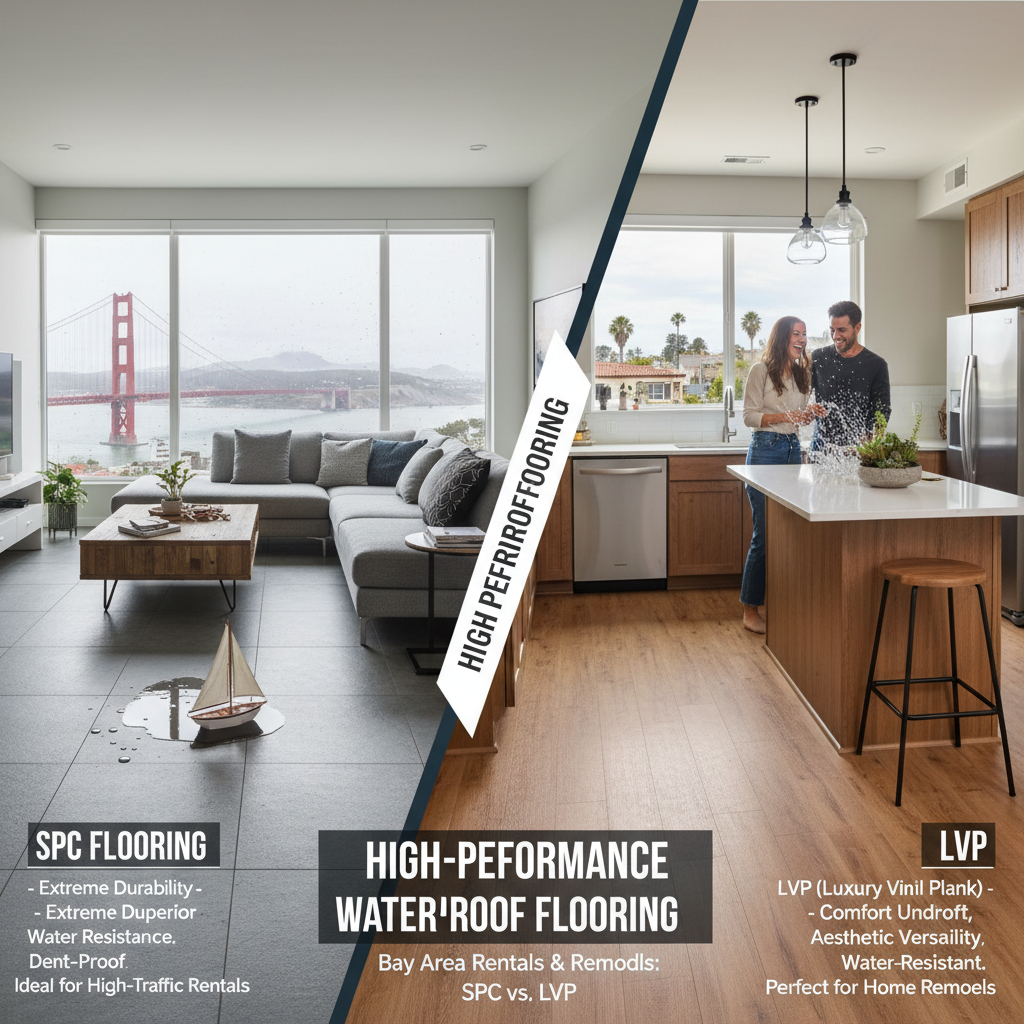
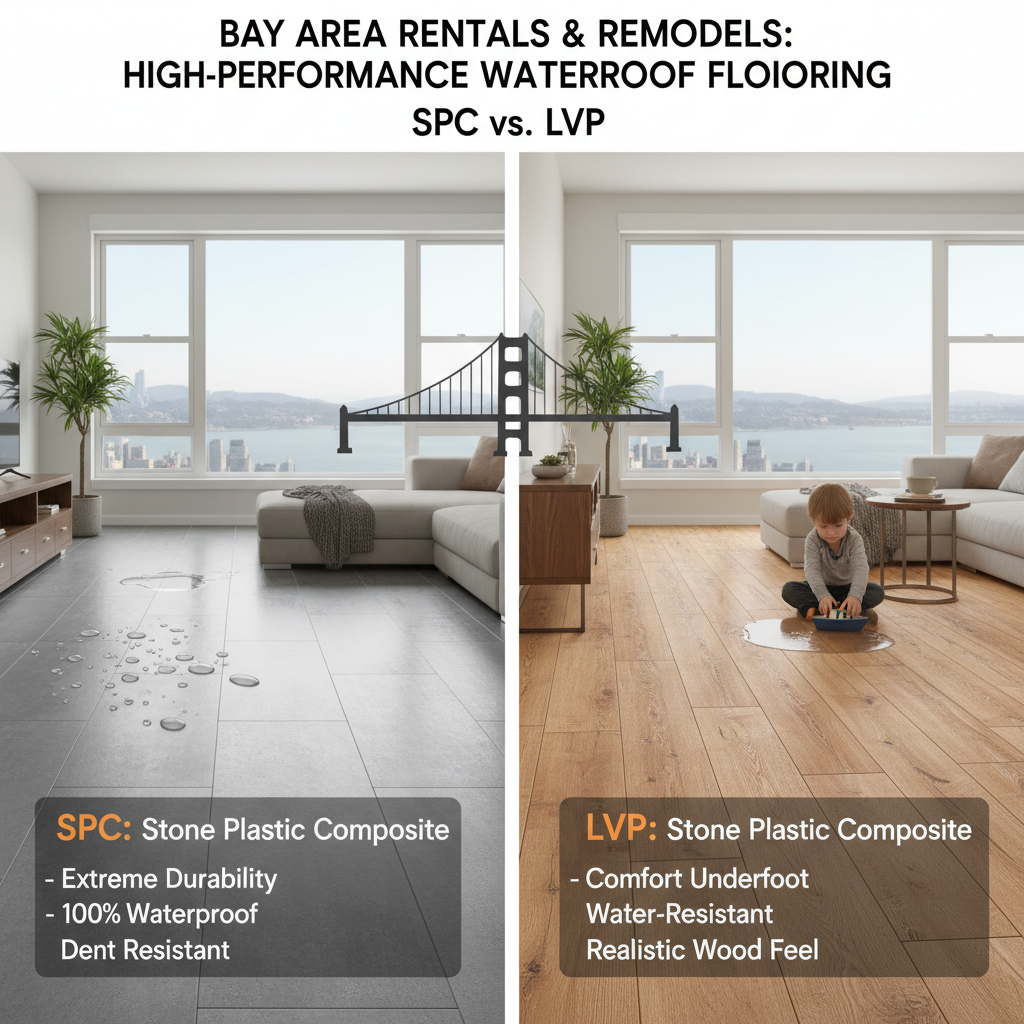
While both products fall under the waterproof vinyl umbrella, their core composition defines their performance. Traditional LVP typically utilizes a Wood Plastic Composite (WPC) or a flexible PVC core. This construction provides a softer feel underfoot and better sound dampening but can be susceptible to denting under heavy furniture. In contrast, SPC flooring features a core made of limestone powder and stabilizers, creating an incredibly dense, rigid board that does not telegraph subfloor unevenness as easily as flexible vinyl.
Comparing Core Technologies
- LVP (WPC Core): Features air agents in the core for comfort; best for low-traffic residential areas where foot fatigue is a concern.
- SPC (Stone Plastic Composite): Ultra-dense core with no air agents; ideal for commercial spaces, kitchens, and Bay Area rentals with high turnover.
- Wear Layer: Both options offer various wear layers, but a 20mil layer is the industry benchmark for trade-grade durability.
| Feature | Traditional LVP | SPC Rigid Core |
|---|---|---|
| Core Material | Vinyl/Wood dust composite | Limestone/Vinyl composite |
| Dent Resistance | Moderate | Excellent |
| Flexibility | Pliable | Rigid |
| Subfloor Prep | Needs perfectly flat surface | More forgiving of minor gaps |
Optimizing Installation Efficiency for Professionals
For contractors working on tight schedules, the installation method is as important as the material cost. Modern waterproof flooring utilizes advanced click-lock systems that eliminate the need for adhesives or specialized saws. This “floating floor” approach allows for rapid deployment across large floor plans. At Sincere Home Decor, we focus on stocking products that facilitate a fast workflow, ensuring your crew can move from one unit to the next without waiting for glues to cure.
Proper subfloor preparation remains the most critical phase of the process. Even though SPC is more forgiving, ensuring the surface is clean and level within 3/16 of an inch over a 10-foot radius is standard practice. Many of our SPC collections at the Santa Clara and South San Francisco showrooms come with pre-attached IXPE underlayment. This integrated padding saves the step of laying down separate rolls and provides superior sound reduction, which is essential for meeting HOA requirements in Bay Area condo complexes.
Quick Takeaway: Integrated underlayment reduces labor costs and ensures consistent acoustic performance across the entire floor plate.
Visual Trends: Replicating Natural Hardwood
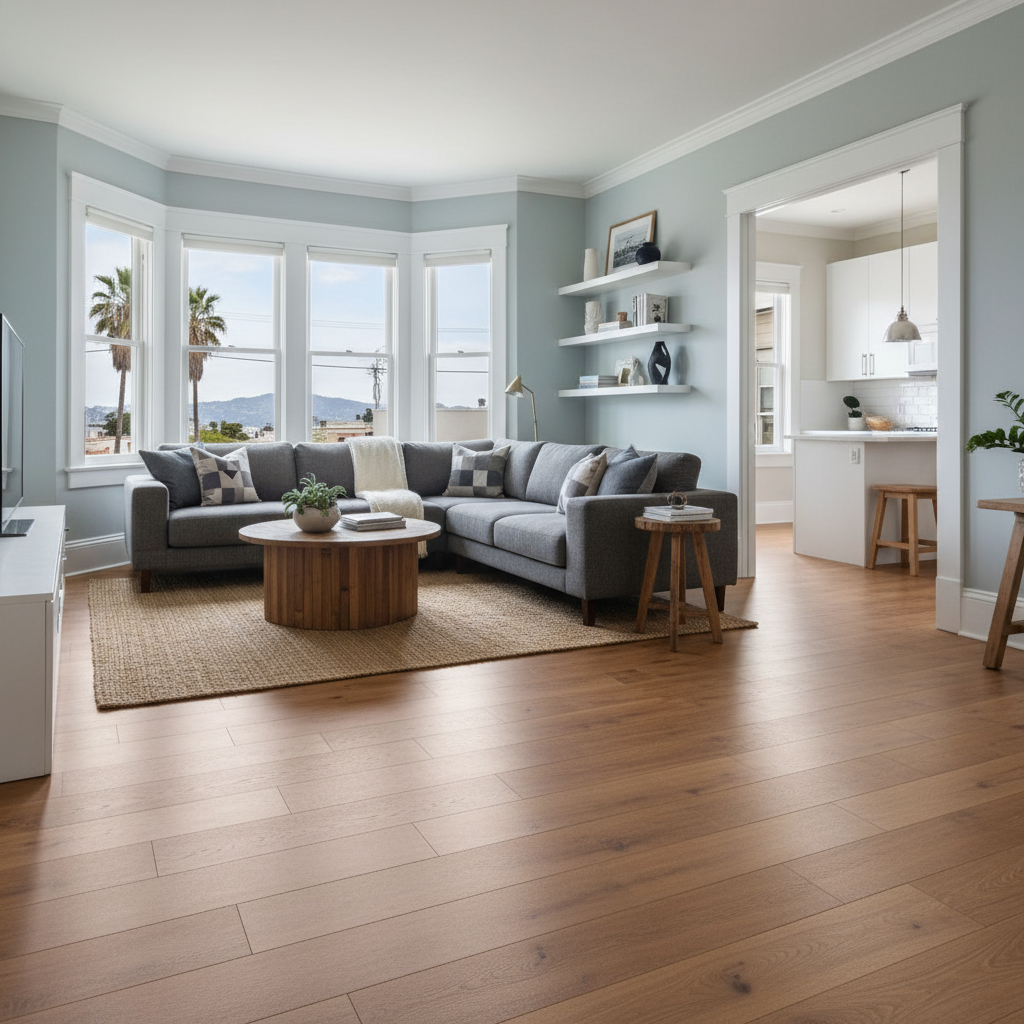
Today’s high-definition printing and EIR (Embossed in Register) technology have closed the visual gap between vinyl and real wood. EIR aligns the texture of the plank with the printed grain pattern, providing a tactile experience that mimics wire-brushed oak or reclaimed timber. For designers working on luxury flips, selecting a wide-plank format—typically 7 to 9 inches—creates a more spacious, modern aesthetic that appeals to Silicon Valley buyers.
Current color trends are shifting away from the cool grays of the last decade toward warmer, natural tones. Honey oaks, muted walnuts, and light sandy finishes are dominant in recent projects we have supplied in Oakland and South San Francisco. These versatile tones complement a wide range of kitchen cabinets, from matte black modern slabs to classic white Shaker doors. Choosing a neutral floor allows for greater flexibility in future design updates or tenant changes.
Waterproof Solutions Beyond the Living Room
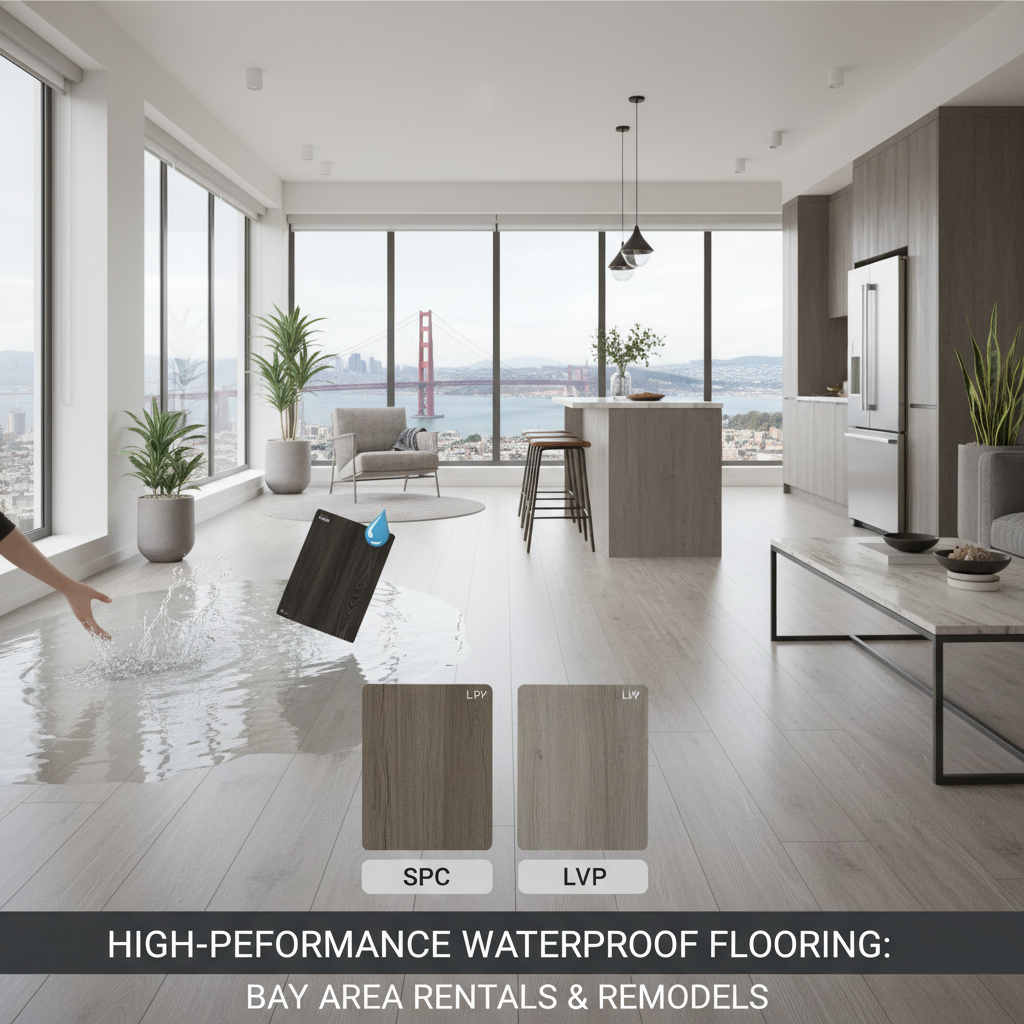
The primary advantage of SPC and LVP is their total immunity to moisture. This allows for a continuous flooring run from the front door through the kitchen and into the bathrooms, creating a seamless visual flow that makes smaller Bay Area floor plans feel significantly larger. Because the core does not absorb water, these floors will not warp, buckle, or delaminate when exposed to spills or bathroom humidity.
When coordinating these floors with bathroom vanities, consider the transition points. While the flooring is waterproof, the perimeter still needs proper sealing in wet areas. Using a color-matched silicone at the base of the vanity or along the tub line prevents moisture from seeping into the subfloor. This attention to detail is what separates a standard remodel from a professional-grade installation that lasts for decades.
Quick Takeaway: Continuous flooring without transition strips makes spaces look larger and reduces trip hazards in rental properties.
The Sincere Advantage for Trade Partners
As a 38-year family-run business, we understand the logistical challenges of Bay Area construction. Our four locations are strategically placed to serve the entire region, and our multilingual staff—fluent in English, Spanish, and Mandarin—ensures clear communication from the initial quote to final delivery. We maintain a deep inventory of waterproof flooring options, including semi-custom and in-stock selections that cater to different budget tiers.
Trade professionals benefit from our centralized distribution at the Oakland Pro warehouse, where large orders can be staged and picked up with ease. We don’t just sell products; we provide the technical knowledge needed to ensure your project stays on track. Whether you are a property manager in Oakland or a general contractor in Santa Clara, our team is equipped to help you select the right wear layer, core type, and aesthetic for your specific application.
Maintenance and Long-Term Value
The low-maintenance nature of SPC flooring is a significant selling point for property managers. Unlike hardwood, which requires periodic refinishing, or tile, which involves grout cleaning, waterproof vinyl only needs regular sweeping and occasional damp mopping with a pH-neutral cleaner. For trade professionals, this means fewer callbacks and a property that maintains its value over multiple tenancies.
In commercial settings or high-traffic corridors, the density of the stone-composite core prevents the “hollow” sound often associated with cheaper laminate floors. This adds a sense of quality and permanence to the renovation, reflecting well on the contractor’s choice of materials. Investing in a high-quality SPC floor today prevents the costly necessity of a full floor replacement five years down the line.

Quick Takeaway: SPC’s stone-based core provides superior sound dampening and a solid feel that mimics traditional permanent flooring.
Visit a Showroom Today
Ready to see the latest waterproof flooring collections in person? Visit any of our four Bay Area showrooms to compare samples, check stock levels, and discuss your project with our experienced staff. Whether you need a few hundred square feet for a bathroom refresh or several thousand for a multi-unit complex, Sincere Home Decor is your local partner for quality and service. Trade professionals are encouraged to inquire about our contractor pricing programs to maximize their project margins.
- South San Francisco: Full-service showroom serving the Peninsula.
- Oakland — Deluxe: Located near Downtown for design-heavy projects.
- Oakland — Pro Warehouse: Distribution center near Jack London Square for high-volume trade needs.
- Santa Clara: Serving the South Bay and Silicon Valley renovators.
Frequently Asked Questions
What is the difference between SPC and LVP?
SPC (Stone Plastic Composite) has a rigid core made of limestone and stabilizers, making it more durable and dent-resistant. Traditional LVP (Luxury Vinyl Plank) has a more flexible PVC or WPC core, which is softer underfoot but less resistant to heavy impacts.
Can waterproof flooring be installed over existing tile?
Yes, especially SPC flooring. Its rigid core allows it to be installed over existing hard surfaces like tile or hardwood, provided the existing floor is well-bonded and the grout lines are not excessively deep or wide.
Do I need an additional underlayment for SPC flooring?
Many high-quality SPC products come with a pre-attached underlayment. If your selected flooring does not have this, a separate vapor barrier or acoustic underlayment may be required depending on your subfloor type and local building codes.