Optimizing Durability with Waterproof Wood-Look Flooring
Reducing moisture-related callbacks begins with selecting the correct waterproof core for the specific humidity levels of the San Francisco Bay Area. For contractors and property managers, the shift from traditional laminate to high-performance Stone Plastic Composite (SPC) and Luxury Vinyl Plank (LVP) has redefined expectations for durability in high-traffic zones. These materials offer the aesthetic of hardwood without the susceptibility to warping or cupping in kitchens and bathrooms.
Since 1988, Sincere Home Decor has provided trade professionals with materials that balance cost-efficiency and long-term performance. Selecting a floor is no longer just about the visual pattern. It involves a technical understanding of core density, wear layer thickness, and attachment systems. This guide breaks down the specifications necessary to ensure a successful installation that lasts for decades.
Quick Takeaway: SPC flooring provides the highest level of dimensional stability for Bay Area environments with fluctuating humidity, making it the preferred choice for large-scale residential renovations.
Understanding the Core: SPC vs. LVP
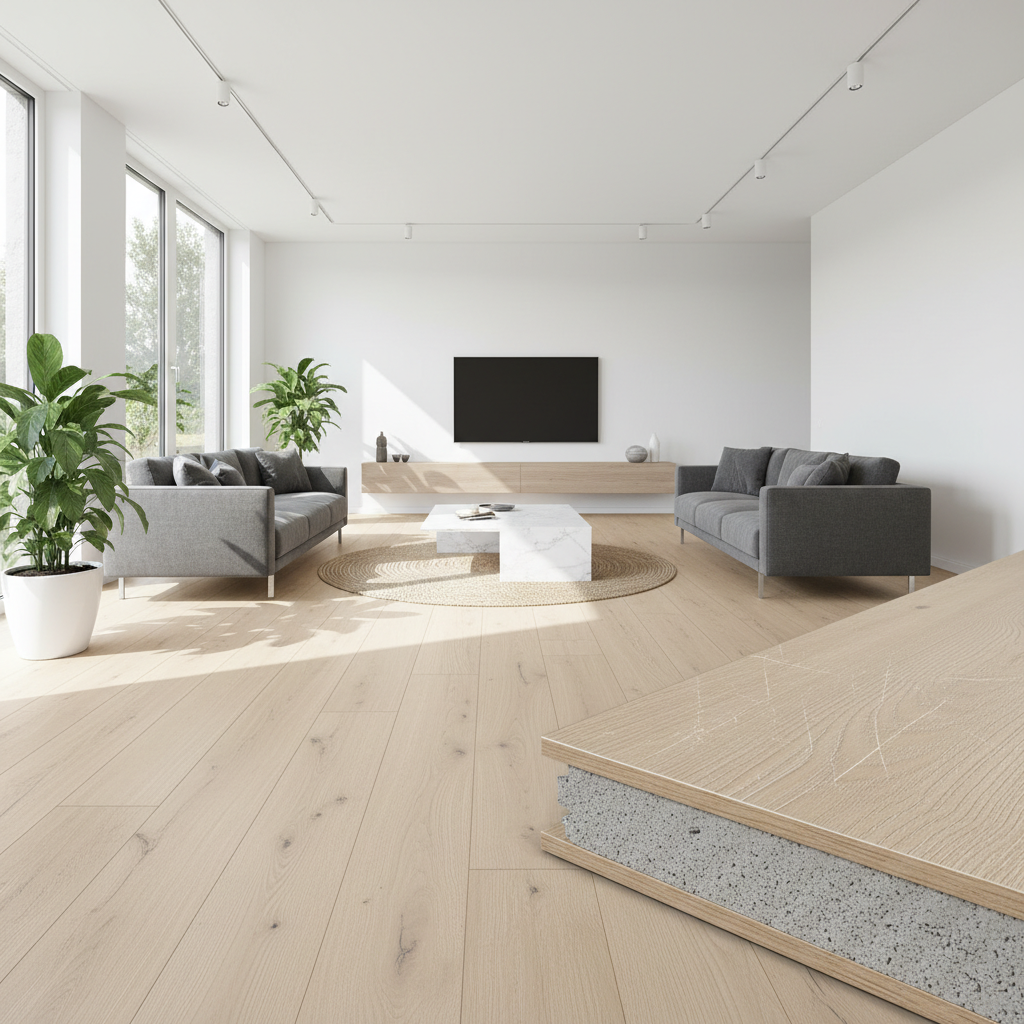
The primary difference between modern waterproof floors lies in the core construction. Standard Luxury Vinyl Plank (LVP) typically features a flexible PVC core. This flexibility makes the product comfortable underfoot but requires a nearly perfect subfloor to prevent telegraphing. Any imperfection in the plywood or concrete will eventually show through the surface of a flexible plank.
Stone Plastic Composite (SPC), often referred to as rigid core flooring, utilizes a mixture of limestone and stabilizers. This results in a dense, extremely stable plank that does not expand or contract significantly with temperature changes. For flippers and contractors working with older Bay Area homes where subfloors may not be perfectly level, SPC offers a more forgiving installation. The rigidity allows the floor to bridge minor gaps and dips that would cause flexible LVP to fail over time.
Comparison of Waterproof Flooring Cores
- LVP (Flexible): Best for budget-conscious projects and perfectly level subfloors. It offers a softer feel and better sound absorption naturally.
- SPC (Rigid Core): Ideal for high-traffic commercial spaces and residential rentals. It provides superior impact resistance against dropped heavy objects.
- WPC (Wood Plastic Composite): Features an aerated core that is thicker and softer, providing maximum comfort but slightly less dent resistance than SPC.
Quick Takeaway: Choose SPC for rental properties or multi-unit buildings to maximize dent resistance and minimize subfloor preparation costs.
Specifying the Right Wear Layer for Trade Projects
The longevity of a wood-look floor is determined by its wear layer, the clear top coating that protects the printed image. For residential applications, a 12-mil wear layer is often sufficient. However, for professional projects, property managers and designers should look for 20-mil or higher. A 20-mil wear layer provides the necessary protection against pet claws, moving furniture, and heavy foot traffic.
At our Oakland — Deluxe Showroom – Near Downtown, we stock a variety of 20-mil and 22-mil options specifically curated for the local trade. These specifications ensure that the flooring maintains its original appearance through multiple tenant cycles. Many of our professional-grade lines also include a ceramic bead finish, which adds an extra layer of scratch resistance beyond the standard urethane coating.
Visual Trends: The Modern Bay Area Aesthetic
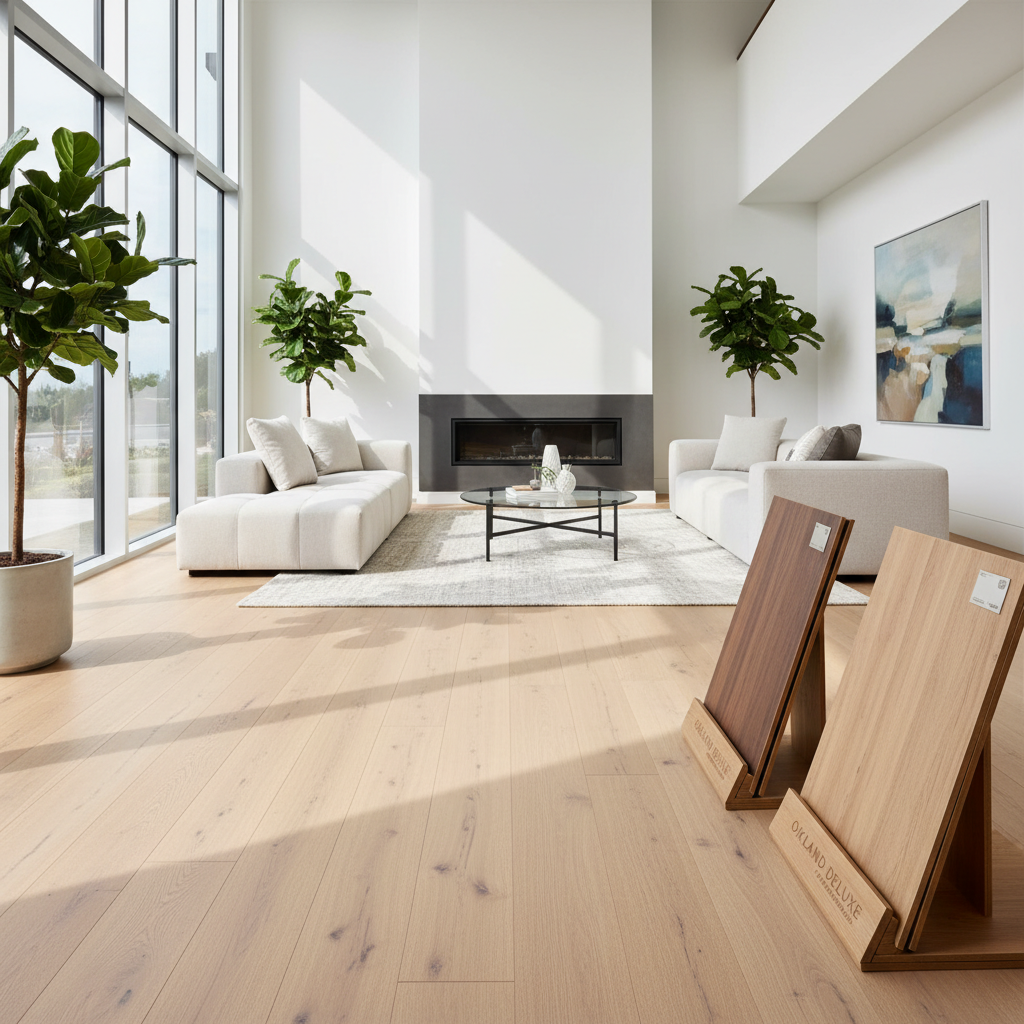
Current design trends in the San Francisco Bay Area lean heavily toward wide-plank European Oak visuals. Light, airy tones like sand, oatmeal, and weathered grey are frequently specified to make smaller urban footprints feel more expansive. These colors also excel at hiding dust and pet hair, a practical benefit for homeowners.
While aesthetics are vital, the texture of the plank is what creates the high-end feel seen in publications like Houzz. Embossed-in-Register (EIR) technology aligns the physical texture of the plank with the grain of the wood image. When light hits an EIR floor, it reflects off the grain patterns just as it would on natural timber. This level of detail is essential for serious-renovation homeowners who want the luxury look of Waterproof Flooring without the maintenance of real wood.
Quick Takeaway: Specify EIR (Embossed-in-Register) textures and wide planks to achieve a high-end designer look that commands higher resale value.
Streamlining the Installation Workflow
For contractors, time on-site is the most expensive variable. Modern waterproof flooring features advanced click-lock systems that eliminate the need for adhesives or heavy machinery. This allows for a “floating” installation that can be completed significantly faster than traditional Tile or hardwood. Many of our in-stock collections come with a pre-attached underlayment, which saves the step of rolling out separate padding and provides consistent sound dampening.
Our staff, who are fluent in English, Spanish, and Mandarin, can assist with technical installation questions and bulk ordering logistics. We understand that trade professionals need reliable lead times. By offering a mix of in-stock options and semi-custom selections, we help keep your project timelines on track. Whether you are picking up from our Oakland Pro warehouse or visiting the South San Francisco location, the workflow is designed for professional speed.
Integration with Kitchen and Bath Projects
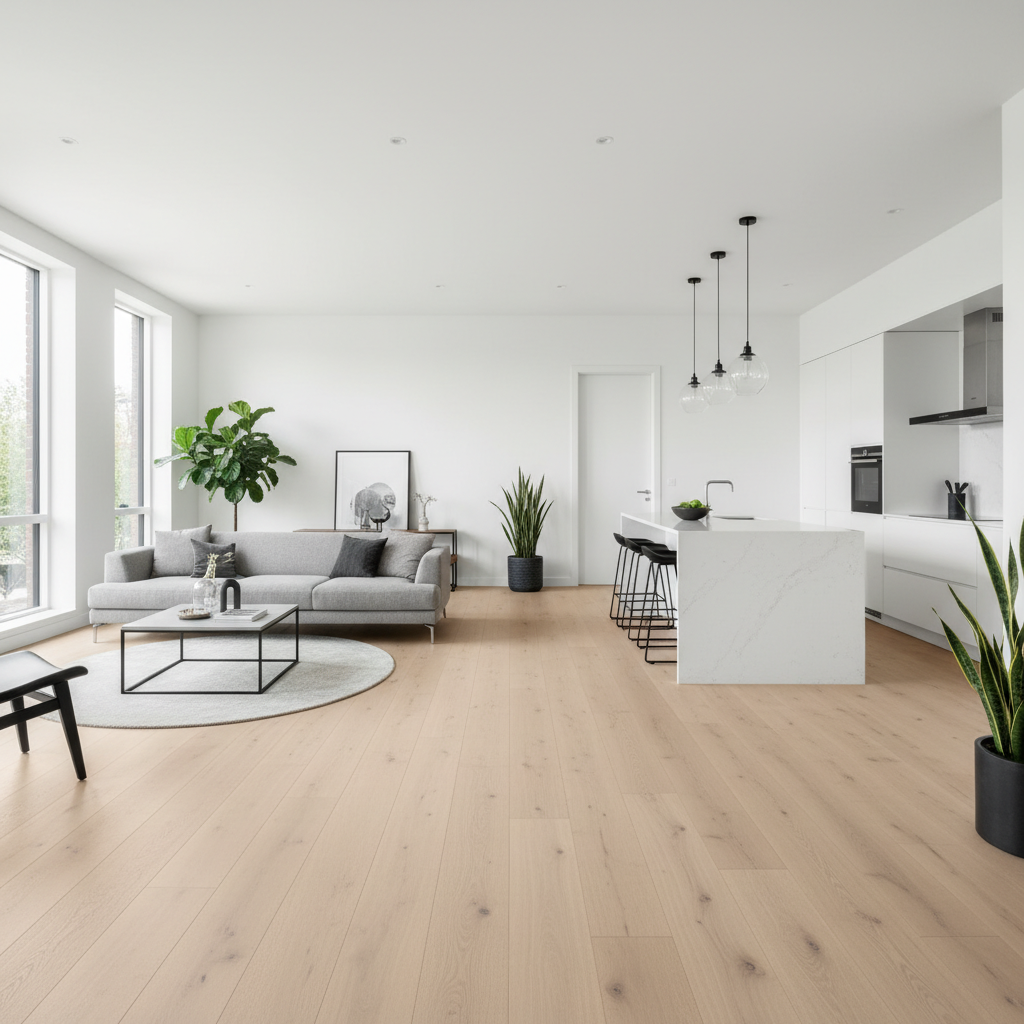
One of the greatest advantages of SPC flooring is its ability to run seamlessly from the living room into the kitchen and bathroom. This creates a cohesive visual flow that makes a home feel larger. Unlike hardwood, which risks damage from dishwasher leaks or bathroom humidity, SPC is 100% waterproof. It can be installed directly under Kitchen Cabinets in some scenarios, though many pros prefer to install the cabinets first and cut the flooring around them for easier future renovations.
When planning a full renovation, coordinating the flooring with the cabinetry and Countertops is crucial. Our showrooms allow you to pull flooring samples and place them directly against cabinet doors and stone slabs. This hands-on approach ensures that the undertones of the wood-look planks do not clash with the cabinetry finishes, a common pitfall in digital-only selection processes.
Quick Takeaway: Run your waterproof flooring continuously through the kitchen and hallways to create a modern, seamless floor plan that eliminates transition strips.
Maintenance and Long-Term ROI
From a property management perspective, the ROI of SPC flooring is found in its low maintenance requirements. There is no need for waxing, buffing, or refinishing. A simple damp mop with a pH-neutral cleaner is all that is required to maintain the warranty. This ease of care is a major selling point for tenants and homeowners alike.
The durability of the click-lock joints also means that if a single plank is severely damaged, it can often be replaced without tearing up the entire room. This repairability is a significant advantage over sheet vinyl or traditional laminate. By keeping a few extra cartons on-site, property managers can ensure their floors look pristine for years after the initial installation.
Frequently Asked Questions
Does waterproof flooring require an expansion gap?
Yes, even though the planks themselves are waterproof, the perimeter of the room still requires a 1/4 inch to 3/8 inch expansion gap. This allows the entire floor “island” to move slightly as the building settles or shifts, preventing buckling at the seams.
Can SPC flooring be installed over existing tile?
SPC can be installed over existing ceramic tile provided the tile is well-bonded and the grout lines are not excessively deep or wide. If grout lines are deep, they should be filled with a patching compound to prevent the flooring from telegraphing the grid pattern over time.
Is an underlayment necessary if the plank has one attached?
Generally, you should not add a second layer of underlayment if the plank already has one attached. Doing so can make the floor too soft, which puts excessive stress on the click-lock joints and may lead to breakage or squeaking. Always follow the specific manufacturer’s guidelines for the product you select.
Ready to select the flooring for your next project? Visit one of our four Bay Area locations in South San Francisco, Oakland, or Santa Clara. Trade professionals are invited to apply for trade pricing to access exclusive rates and dedicated account support.