
A well-sized bathroom vanity can prevent door conflicts, awkward plumbing adjustments, and last-minute countertop decisions that slow down a remodel. For contractors, designers, and serious homeowners, the right vanity choice starts with field measurements, material expectations, and a clear plan for the top, sink, and storage before demo begins.
At Sincere Home Decor’s Santa Clara Deluxe Showroom, trade pros often compare in-stock and semi-custom vanity options in person so they can confirm proportions, finishes, and lead-time fit before committing to a bath schedule.
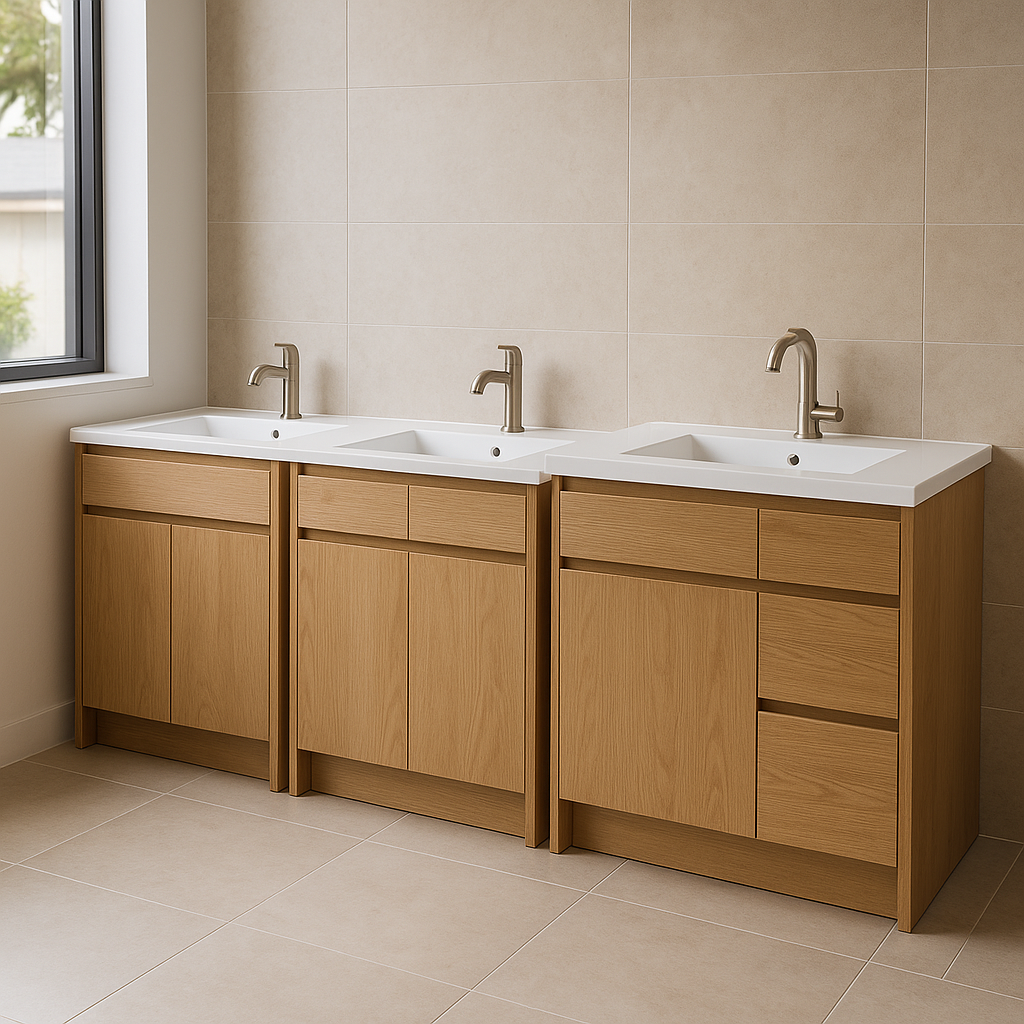
Caption: Compare vanity widths and tops before final bath layout decisions.
Start With the Vanity Footprint, Not the Finish
The most common mistake in bathroom vanity planning is choosing a finish first and measuring second. A vanity that looks right online may feel too large once you account for casing, shower glass, door swings, toilet clearance, and baseboard depth.
For trade projects, a quick pre-order measurement check can save a return trip. Measure wall-to-wall width, finished floor to drain center, water line locations, and any obstruction that affects drawers or doors.
Common vanity widths to evaluate
- 24 inches: best for powder rooms, narrow baths, and rental-unit refreshes.
- 30 to 36 inches: a practical single-sink range for hall baths and secondary suites.
- 48 inches: useful when storage matters but a double sink is not required.
- 60 inches and wider: often used for primary baths, with either single or double sinks.
Quick Takeaway: Confirm the finished opening and plumbing centerlines before selecting a vanity style. The right size is the one that fits the room after trim, tile, and clearance are counted.
Choose Materials Based on Use, Not Just Appearance
Bathroom vanities live in a tougher environment than many homeowners expect. Steam, splashing, cleaning products, and daily drawer use all affect how a cabinet performs over time.
For rental turns and flip projects, the goal is usually durable, clean, and repeatable. For designer-led remodels, the goal may be a more tailored finish, deeper storage, or a coordinated cabinet line that ties into the kitchen or laundry area.
Vanity material comparison
- Painted wood or wood veneer | Best for elevated primary baths | Check humidity exposure and cleaning habits before specifying.
- Laminate or thermofoil finishes | Best for budget-conscious refreshes | Good for consistent color and easy wipe-down maintenance.
- Plywood cabinet boxes | Best for long-term remodels | Often preferred by trade pros for strength and screw-holding performance.
- MDF components | Best for smooth painted fronts | Works well when properly finished and protected from standing water.
For projects that also include cabinets elsewhere in the home, review Sincere’s kitchen cabinets and vanity lines together. Coordinating door style and finish across rooms can make a remodel feel intentional without overcomplicating the order.
Quick Takeaway: Match vanity construction to the room’s daily use. A powder room, rental bath, and primary suite do not always need the same cabinet specification.
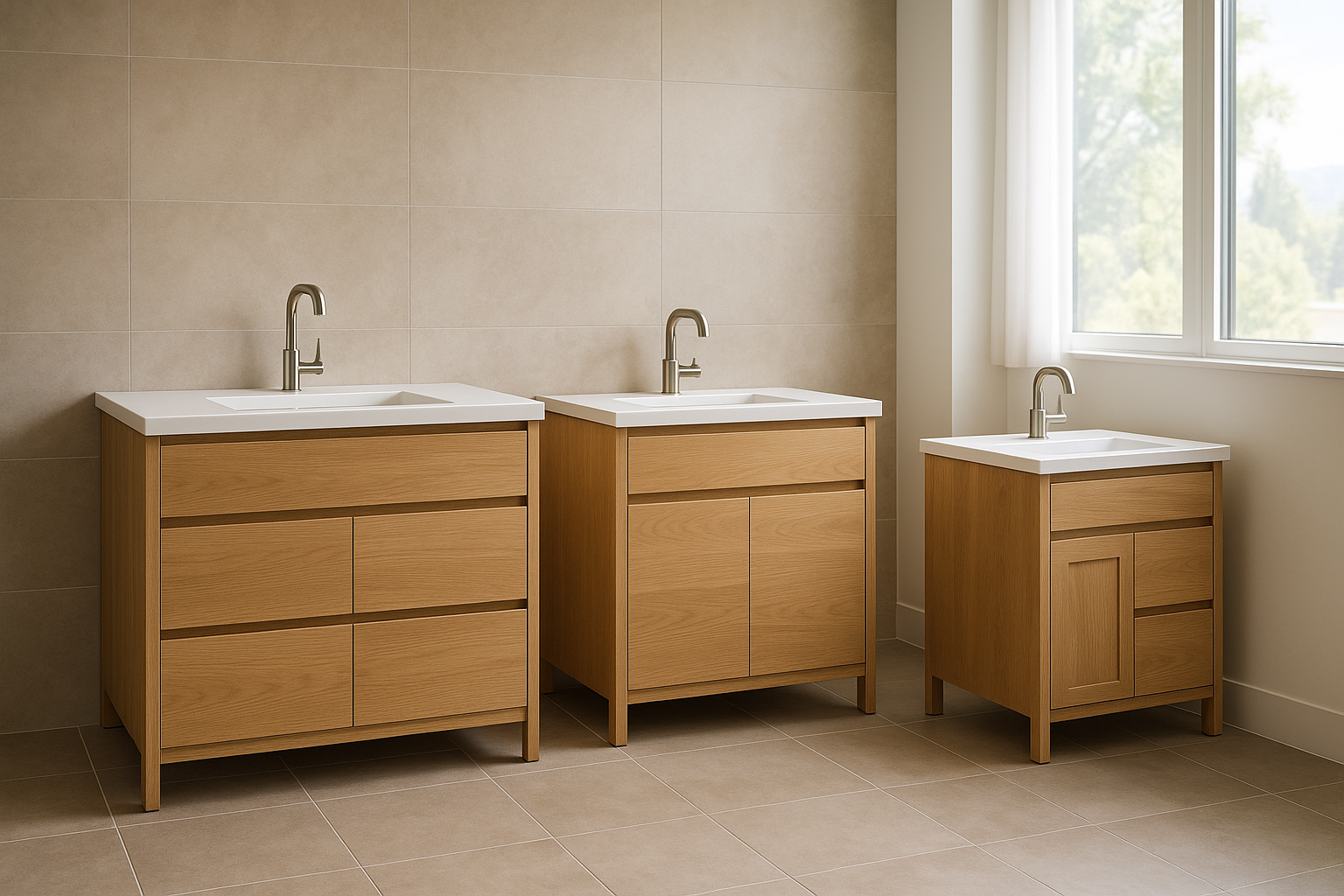
Caption: Review cabinet construction and finish samples under showroom lighting.
Integrated Tops Can Simplify the Schedule
Integrated vanity tops combine the counter and sink into one unit, which can make bath remodel planning more straightforward. They reduce the number of selections, avoid separate sink cutout decisions, and help keep small-bath projects moving.
That said, integrated tops are not always the right answer. If the room needs an unusual size, a specific edge profile, or a material match with other surfaces, a separate countertop selection may give the design team more flexibility.
Integrated top versus separate top
- Integrated vanity top | Best for speed and simple specification | Sink position, bowl shape, and size are predetermined.
- Separate countertop and sink | Best for custom layouts | More flexibility, but coordination and fabrication details need to be handled separately.
- Pre-drilled faucet holes | Best for predictable installs | Confirm widespread or centerset spacing before ordering faucets.
- No-drill or custom-drill top | Best for designer specifications | Requires more planning and coordination before install day.
Sincere Home Decor offers vanity and countertop selections under one roof, including options shown on the bathroom vanities page. For custom countertop work, your installer or fabricator should verify templates, cutouts, and field conditions.
Quick Takeaway: Integrated tops are efficient for standard baths. Separate tops are better when the design depends on custom size, sink placement, or a specific surface material.
Storage Details Matter More Than They Look
A vanity can fit the wall and still fail the user if storage is poorly planned. Deep drawers, U-shaped plumbing drawers, open shelves, and door cabinets all solve different problems.
For property managers and flippers, simple door-and-drawer layouts are often easier to maintain and replace across multiple units. For custom residential projects, drawers are usually preferred because they make daily products easier to access.
Questions to ask before ordering
- Will the drain and P-trap interfere with the top drawer?
- Does the homeowner need hidden storage for toiletries or open storage for towels?
- Will the vanity sit tight to a side wall, requiring filler or scribe planning?
- Are drawer pulls, cabinet hardware, and door swings compatible with nearby walls?
- Is the flooring already installed, or will the vanity need to cover old floor lines?
Quick Takeaway: A vanity layout should be checked against plumbing, flooring, and daily storage needs. Good storage planning is what makes the finished bath easier to live with.
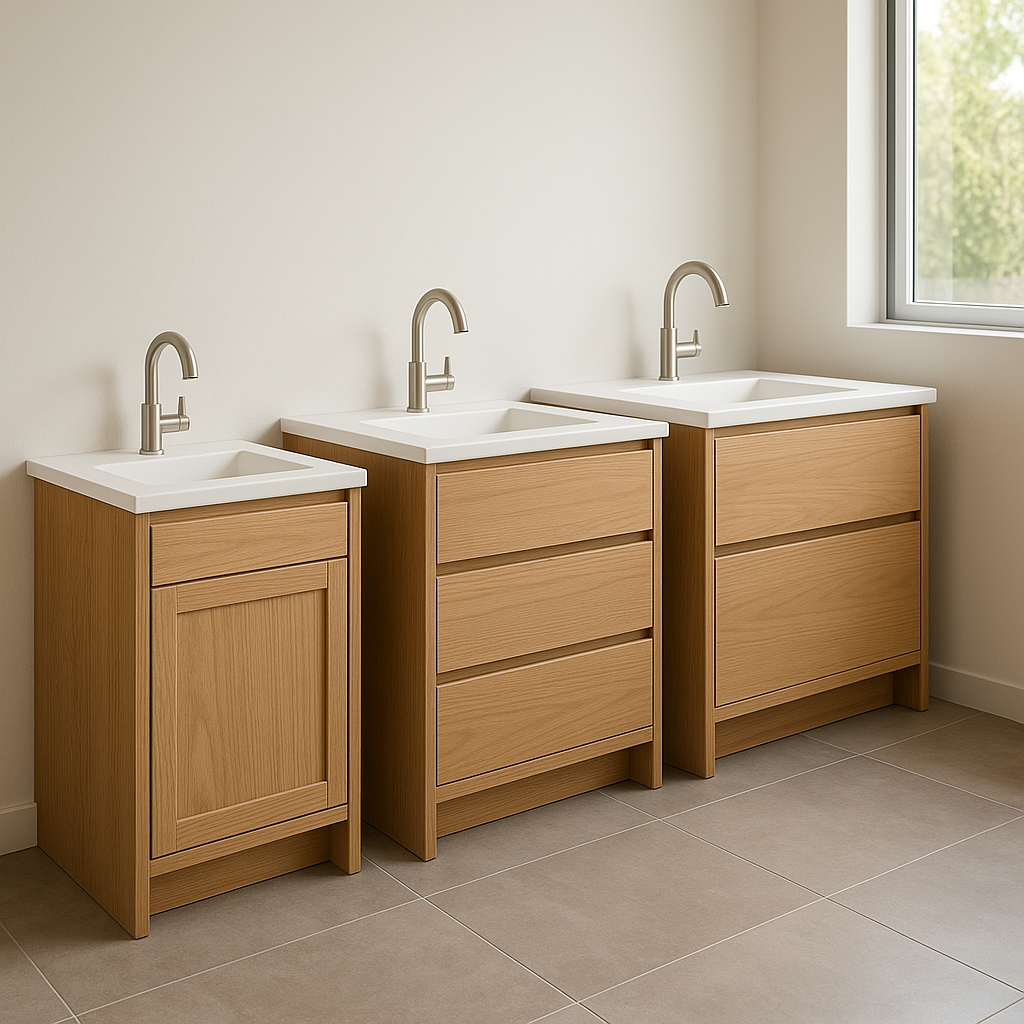
Caption: Check drawer clearance around plumbing before the vanity is ordered.
A Trade-Friendly Workflow for Vanity Selection
For contractors and designers, the cleanest vanity workflow is simple: measure, shortlist, verify stock or lead time, confirm the top, then document all related dimensions. This keeps the selection process from spilling into installation week.
At the Santa Clara Deluxe Showroom, teams can review vanity displays, cabinet samples, flooring, tile, and countertop options in one visit. Sincere Home Decor has served Bay Area remodelers since 1988, with multilingual staff available in English, Spanish, and Mandarin.
Recommended order of decisions
- Confirm finished vanity width and depth.
- Select cabinet style, finish, and storage layout.
- Confirm integrated top or separate countertop direction.
- Check faucet-hole spacing and sink configuration.
- Coordinate backsplash, side splash, wall tile, and flooring transitions.
- Document lead times and pickup or delivery needs.
Trade professionals can also review program details through Sincere’s trade pricing and contractor support page. If the bath remodel includes moisture-prone floors, this related guide to waterproof wood-look flooring can help coordinate the vanity footprint with the finished floor.
Quick Takeaway: The best vanity orders are not rushed. A short showroom visit can align size, finish, top, flooring, and schedule before the crew is waiting on answers.
Where to See Vanity Options in the Bay Area
Seeing a vanity in person helps clients understand scale, finish tone, drawer feel, and countertop color much faster than a screen can. This is especially useful when a homeowner is choosing between two similar widths or when a designer needs to coordinate several finish samples at once.
Visit the Santa Clara Deluxe Showroom for South Bay projects, or compare options at South San Francisco and Oakland showrooms when the job site is closer to the Peninsula or East Bay. Across four Bay Area locations, Sincere Home Decor brings in-stock and semi-custom options together for faster project planning.
Quick Takeaway: A showroom visit is most productive when you bring measurements, photos, plumbing notes, and finish samples. The more field information you bring, the faster the vanity shortlist gets built.
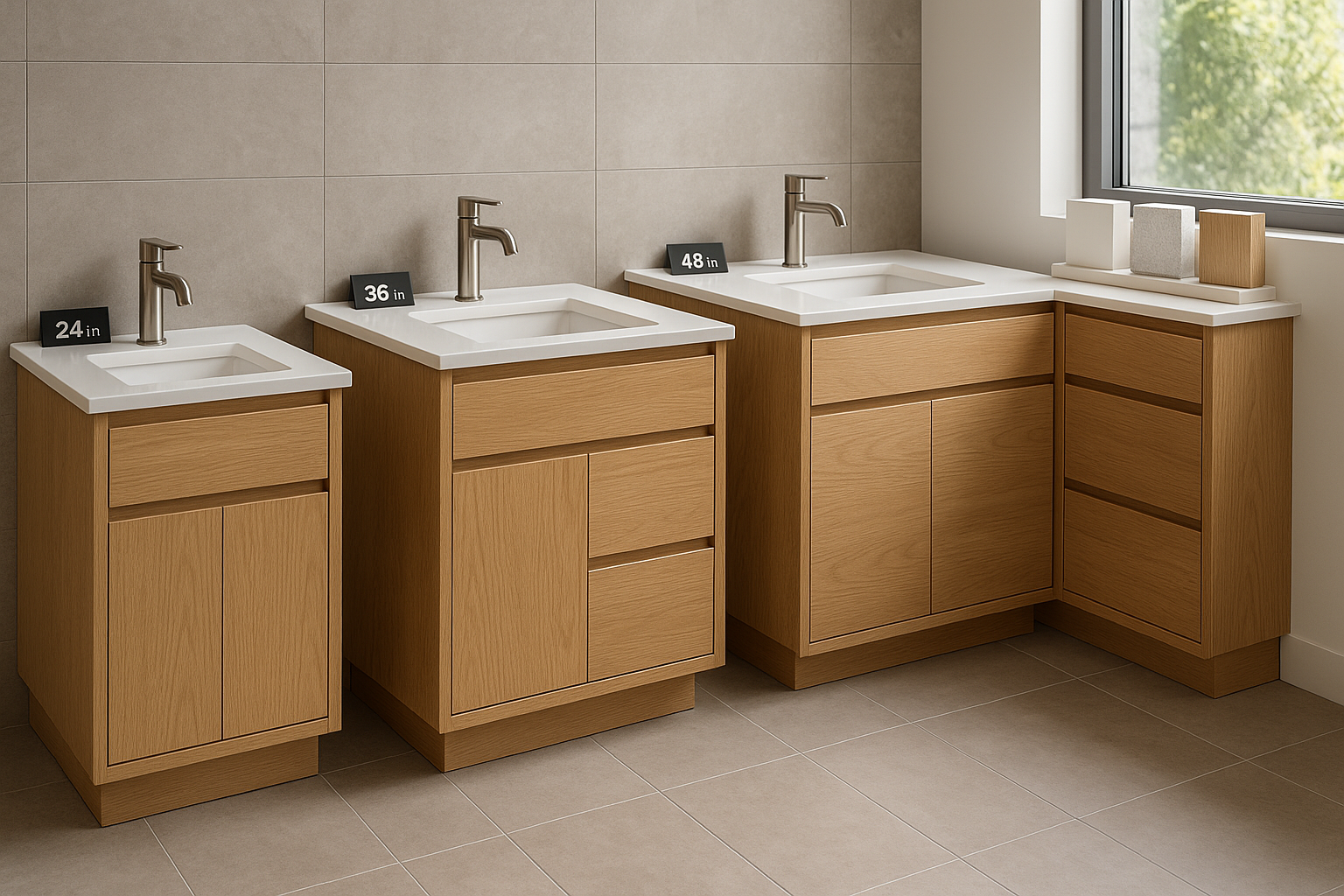
Caption: Bring measurements and samples to narrow vanity choices faster.
Bathroom Vanity FAQ
What vanity size works best for a small bathroom?
For many small bathrooms, a 24-inch to 36-inch vanity is the most practical range. The best size depends on door swings, toilet clearance, wall depth, and plumbing position, so field measurements should come before product selection.
Are integrated vanity tops better than separate countertops?
Integrated tops are useful when the project needs a simple, efficient specification. Separate countertops are better when the bath requires a custom size, specific surface material, unique sink placement, or a more tailored design.
Should flooring go under the bathroom vanity?
In many remodels, installing finished flooring under the vanity gives future flexibility and avoids visible floor gaps. For floating vanities or layout changes, flooring continuity is especially important. Always coordinate with the installer before final scheduling.
Ready to narrow the vanity list for your next bath remodel? Visit your nearest Sincere Home Decor showroom, apply for trade pricing, or book a designer consultation to compare sizes, finishes, tops, tile, and flooring in one place.