
Keep cabinet orders moving by tightening the handoff between field measurements, selections, quoting, and delivery planning. For contractors, designers, and flippers working across the Peninsula and East Bay, a clear workflow can prevent the most common cabinet delays: missing specs, late finish decisions, and jobsite readiness issues.
Sincere Home Decor’s South San Francisco — Deluxe Showroom is set up for this kind of practical planning, with in-stock and semi-custom options under one roof. Teams can review door styles, finishes, vanities, flooring, tile, and countertop materials in one visit, then coordinate next steps with staff who understand trade timelines.
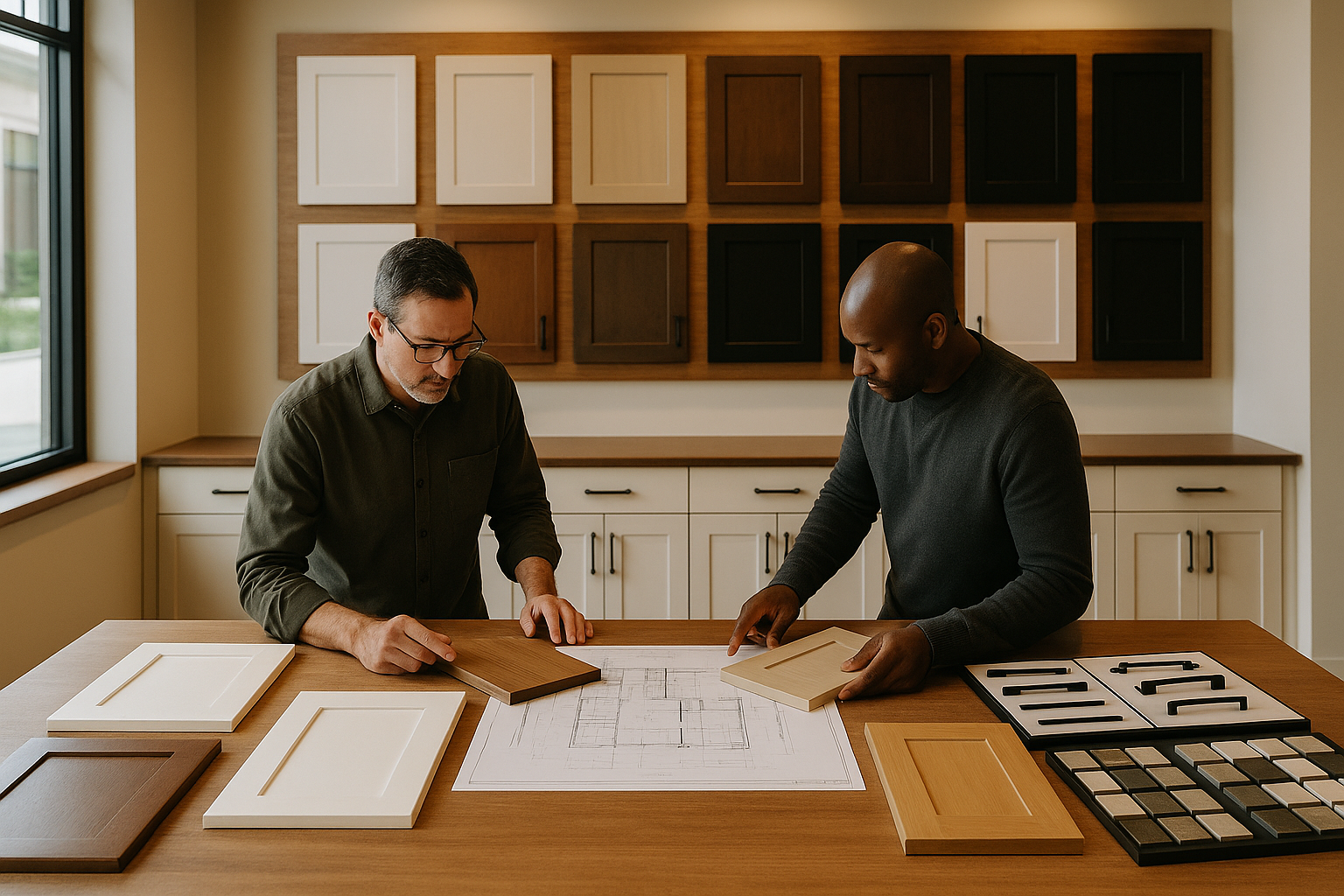
Caption: Contractor-friendly cabinet planning station with samples and floor plans.
Start With the Cabinet Path Before the Client Chooses a Door
A polished cabinet order starts before anyone falls in love with a finish. The first decision is the cabinet path: in-stock, semi-custom, or a blended approach that uses both to balance schedule, budget, and design flexibility.
For trade pros, this is where expectations get set. A rental refresh, a flip, and a long-term owner kitchen do not need the same level of customization. Defining the path early helps you quote accurately and avoid redesigning the same kitchen three times.
Quick Takeaway: Choose the cabinet path first, then guide the style conversation around what the schedule and budget can actually support.
Use This Fast Field Comparison
- In-stock cabinets: Best for tight schedules, straightforward layouts, rental units, and budget-sensitive projects.
- Semi-custom cabinets: Best for design-driven kitchens, unusual dimensions, specialty storage, and finish flexibility.
- Mixed approach: Best when the main kitchen needs a clean semi-custom look but secondary areas need fast, economical cabinetry.
For current cabinet categories and styles, review Sincere Home Decor kitchen cabinets before bringing a client into the showroom. It gives everyone a shared starting point for language, finishes, and layout expectations.
Build a Measurement Packet That a Cabinet Team Can Quote From
Cabinet quotes move faster when the measurement packet is complete. A sketch alone is often not enough, especially when walls are out of square, ceiling heights change, or the project includes tall pantry storage.
For remodels in older Bay Area homes, note the field conditions that affect cabinet fit. Soffits, uneven floors, existing window locations, and casing thickness can change the cabinet plan. The more clearly those details are captured, the fewer assumptions the quoting team has to make.
Quick Takeaway: A clean measurement packet saves more time than a rushed showroom visit.
What to Bring to the Showroom
- Wall-to-wall dimensions for every cabinet run.
- Ceiling height and any soffit or beam locations.
- Window and door measurements, including casing if it remains.
- Appliance dimensions if appliances are already selected.
- Photos of each wall, corners, flooring transitions, and ceiling conditions.
- Notes on plumbing locations for sinks, vanities, and wet walls.
Sincere Home Decor does not sell rough plumbing, electrical, lighting, HVAC, or appliances, so those specifications should come from the appropriate vendors or trades. Bringing those dimensions into the cabinet conversation still helps the cabinet plan land correctly.
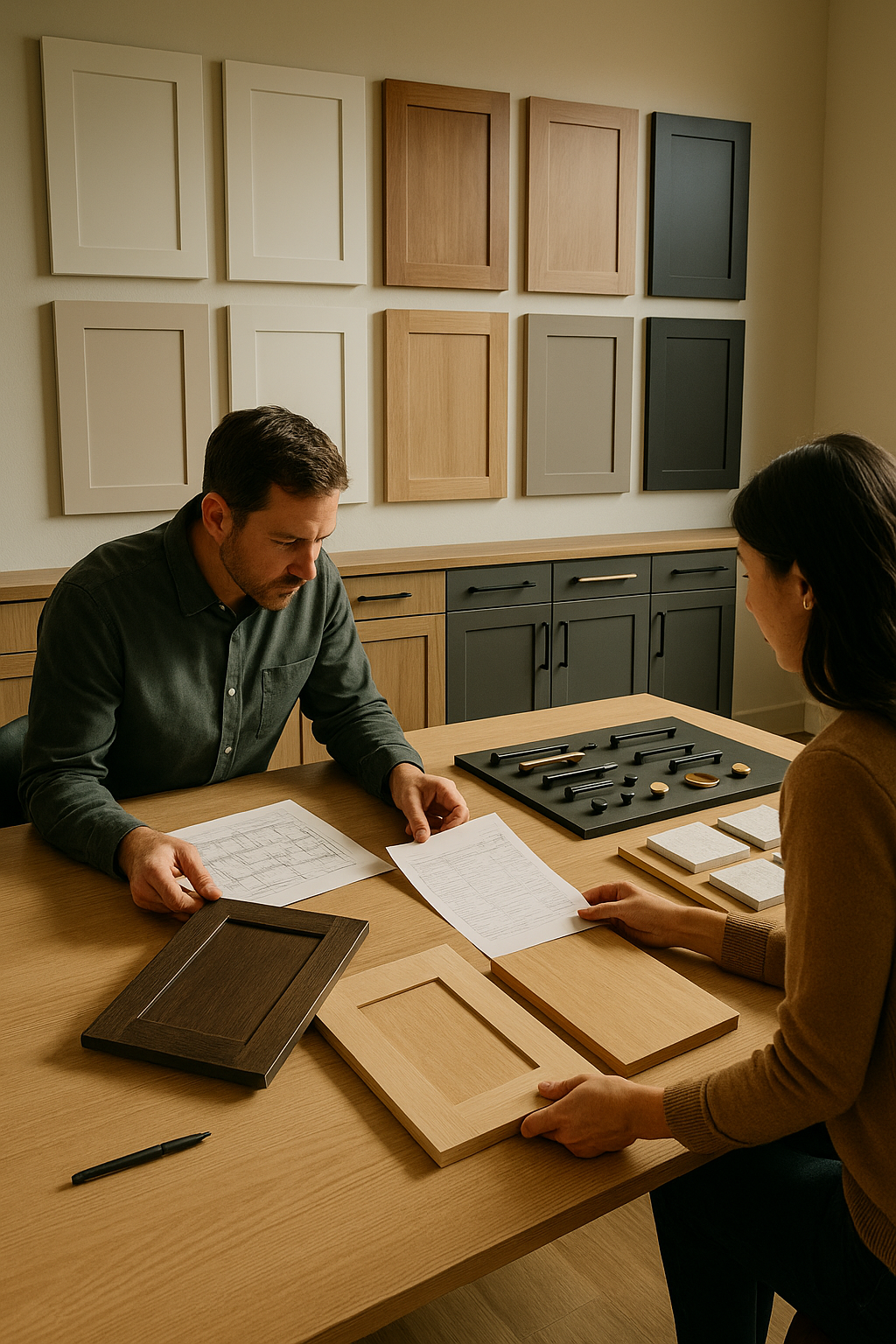
Caption: Measurement packet essentials for faster cabinet quoting and review.
Sequence Selections So the Quote Does Not Stall
Most cabinet quote delays come from open decisions, not complicated layouts. Door style, finish, box configuration, trim, and accessory choices all affect pricing and lead time. If those items are still floating, the quote cannot be tightened.
A practical showroom sequence keeps the meeting focused. Start with layout and cabinet type, then door style, finish, storage accessories, and finally coordinating surfaces such as flooring, tile, vanities, and countertop material selection.
Quick Takeaway: Put decisions in the order that affects the quote, not the order the client wants to browse.
A Trade-Friendly Selection Order
- Confirm project type: rental, flip, design-build, owner-occupied remodel, or multi-unit work.
- Choose cabinet category: in-stock, semi-custom, or mixed.
- Select door profile: shaker, slim shaker, raised panel, slab, or transitional style.
- Narrow finish family: white, off-white, warm wood, gray, espresso, or painted color.
- Confirm storage: drawers, trays, pantry pullouts, trash pullouts, spice storage, and corner solutions.
- Coordinate adjacent materials: flooring, backsplash tile, vanity style, and countertop material selection.
When a kitchen connects to a bath or laundry refresh, it can help to review bathroom vanities during the same appointment. Consistent door profiles and finish families can make multi-room projects feel more cohesive without overcomplicating the order.
Plan Around Jobsite Readiness, Not Just Product Availability
Cabinets can arrive on time and still cause a schedule problem if the jobsite is not ready. Before delivery, the space needs safe access, dry conditions, finished framing corrections, and a clear staging area.
This is especially important for dense Bay Area jobsites with shared driveways, condo loading rules, or limited parking. Trade teams should confirm delivery windows, elevator access, unit numbers, and crew availability before the order reaches the final coordination stage.
Quick Takeaway: Cabinet timing only works when product readiness and jobsite readiness line up.
Pre-Delivery Checklist for Contractors
- Confirm the delivery address, access notes, gate codes, and contact person.
- Verify the cabinet count against the approved order before scheduling installation labor.
- Make sure the flooring or subfloor condition matches the installation plan.
- Clear a clean, dry staging area away from active demolition or wet trades.
- Confirm walls are ready for cabinet installation, especially tall cabinet runs.
- Photograph any visible shipping or handling concerns before moving items around the site.
If the project includes new flooring, review waterproof flooring early enough to coordinate height transitions and installation sequence. Cabinet and flooring decisions affect each other more than many clients expect.
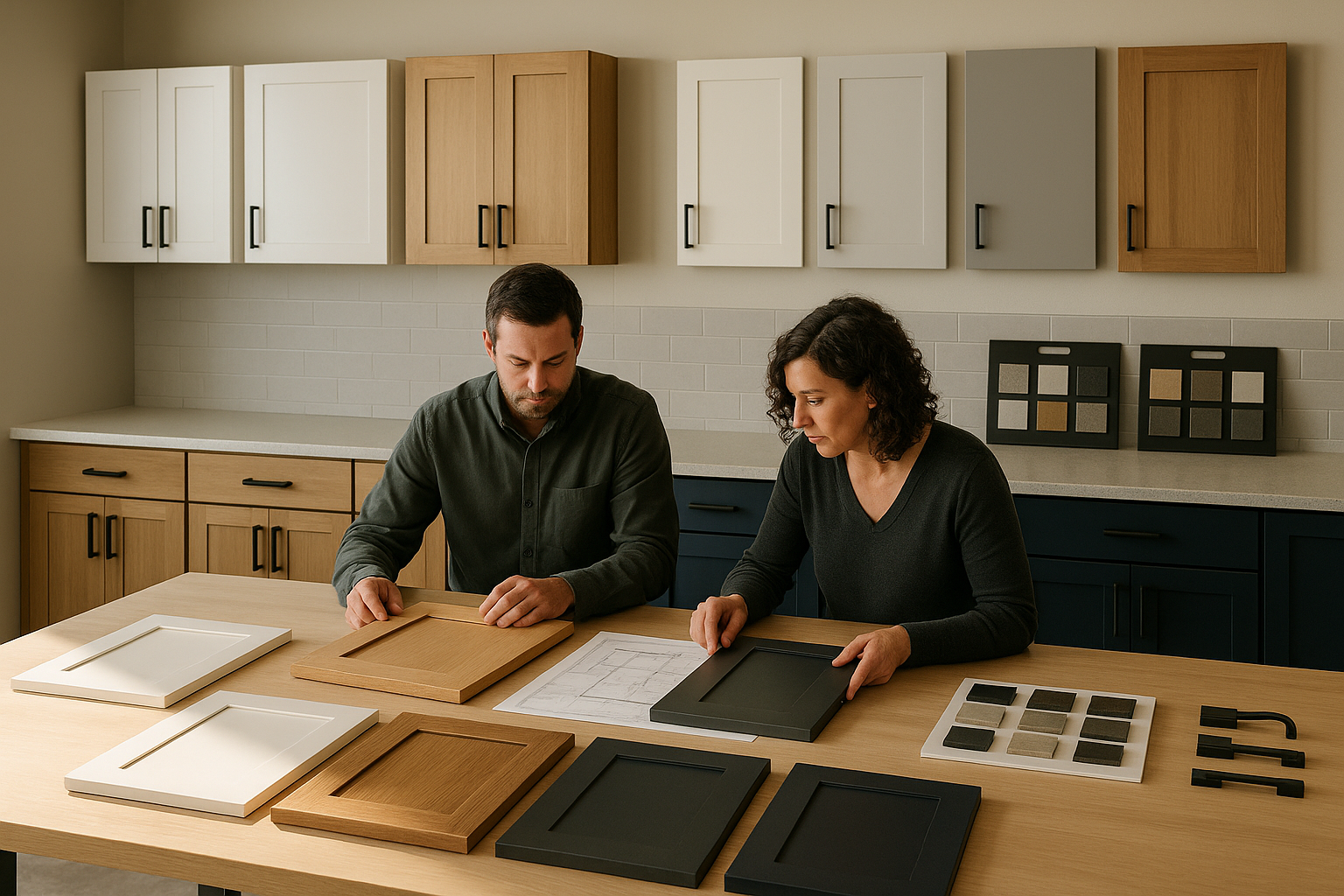
Caption: Clean cabinet staging area before installation begins on a remodel.
Use the Showroom Visit as a Working Meeting
A showroom visit should not feel like a browsing session when a project is on a trade timeline. Bring the measurement packet, budget range, target install window, and any client must-haves. That allows the team to narrow options quickly instead of opening every possible direction.
At the South San Francisco — Deluxe Showroom, contractors can walk clients through visible product choices while keeping the conversation grounded in availability, cost, and order requirements. Sincere Home Decor has been family-run since 1988, and the team works with trade customers who need clear answers, not vague design language.
Quick Takeaway: Treat the showroom appointment like a preconstruction meeting with samples.
How to Keep Clients Decisive
- Limit the first cabinet review to two or three door styles.
- Show finish families, not every finish at once.
- Explain which choices affect lead time before the client gets attached.
- Keep countertop material selection separate from fabrication or installation expectations.
- Document every approved choice before leaving the showroom.
The multilingual staff can support customers in English, Spanish, and Mandarin, which helps when owners, family decision-makers, and field teams all need to align. For contractors handling multiple jobs, ask about trade pricing and contractor support before your next bid package goes out.
Where This Workflow Helps Most
This process is useful for single kitchens, multi-unit turns, bath refreshes, and investor properties where decisions need to move without sacrificing finish quality. It also helps designers and design-build teams keep cabinet selections organized before drawings are finalized.
The biggest advantage is fewer loose ends. When measurements, cabinet path, selections, and delivery conditions are documented early, the project team has fewer reasons to pause during ordering.
Quick Takeaway: The best cabinet workflow is simple enough for every project manager, installer, and client to follow.
Good Fits for This Process
- Kitchen remodels with a firm target install date.
- Property manager unit turns with repeatable cabinet standards.
- Flip projects balancing finish appeal and schedule control.
- Designer-led projects that need organized showroom selections.
- Bathroom and laundry projects using coordinated vanities and cabinetry.
For more planning perspective, read the related post on Bay Area renovation trends by location. It can help trade teams match cabinet, flooring, and tile decisions to neighborhood expectations.

Caption: Finished cabinet and flooring palette suited for Bay Area remodels.
FAQ
What should contractors bring for a cabinet quote?
Bring wall measurements, ceiling height, appliance dimensions, photos of each wall, notes on windows and doors, and any client-approved style direction. A complete packet helps the showroom team quote faster and with fewer assumptions.
Can in-stock and semi-custom cabinets be used on the same project?
Yes, many trade projects benefit from a blended approach. Semi-custom cabinets can support the main kitchen design, while in-stock options may work well for laundry areas, rentals, secondary baths, or budget-sensitive spaces.
Does Sincere Home Decor support trade customers?
Yes. Trade professionals can visit the nearest showroom, ask about trade pricing, and coordinate product selections across cabinets, vanities, flooring, tile, and countertop materials. Start with the South San Francisco — Deluxe Showroom or choose the location closest to your active jobs.
Plan Your Next Cabinet Order With Fewer Delays
Bring your measurement packet, project timeline, and client priorities to Sincere Home Decor’s South San Francisco — Deluxe Showroom, or visit one of the four Bay Area locations. Contractors, designers, flippers, and property managers can also apply for trade pricing or book a designer consultation before the next bid package goes out.