The Foundations of a High-ROI Vanity Choice
Specifying the right bathroom vanity is a balancing act between aesthetic appeal and the harsh realities of a high-moisture environment. For contractors and property managers, the goal is often to find a piece that looks custom but is available for immediate pickup to keep a project on schedule. Since 1988, Sincere Home Decor has served the Bay Area trade by bridging the gap between designer aesthetics and warehouse availability.
The vanity is the workhorse of the bathroom. It endures daily humidity, chemical exposure from cleaning agents, and the physical weight of stone countertops. Selecting a unit based on appearance alone often leads to delamination or hardware failure within a few years. Professional-grade specifications prioritize structural integrity and material composition over trendy finishes.
Quick Takeaway: Prioritize plywood construction over particle board for long-term moisture resistance and structural stability under heavy stone tops.
Sizing and Clearance Constraints in Bay Area Bathrooms
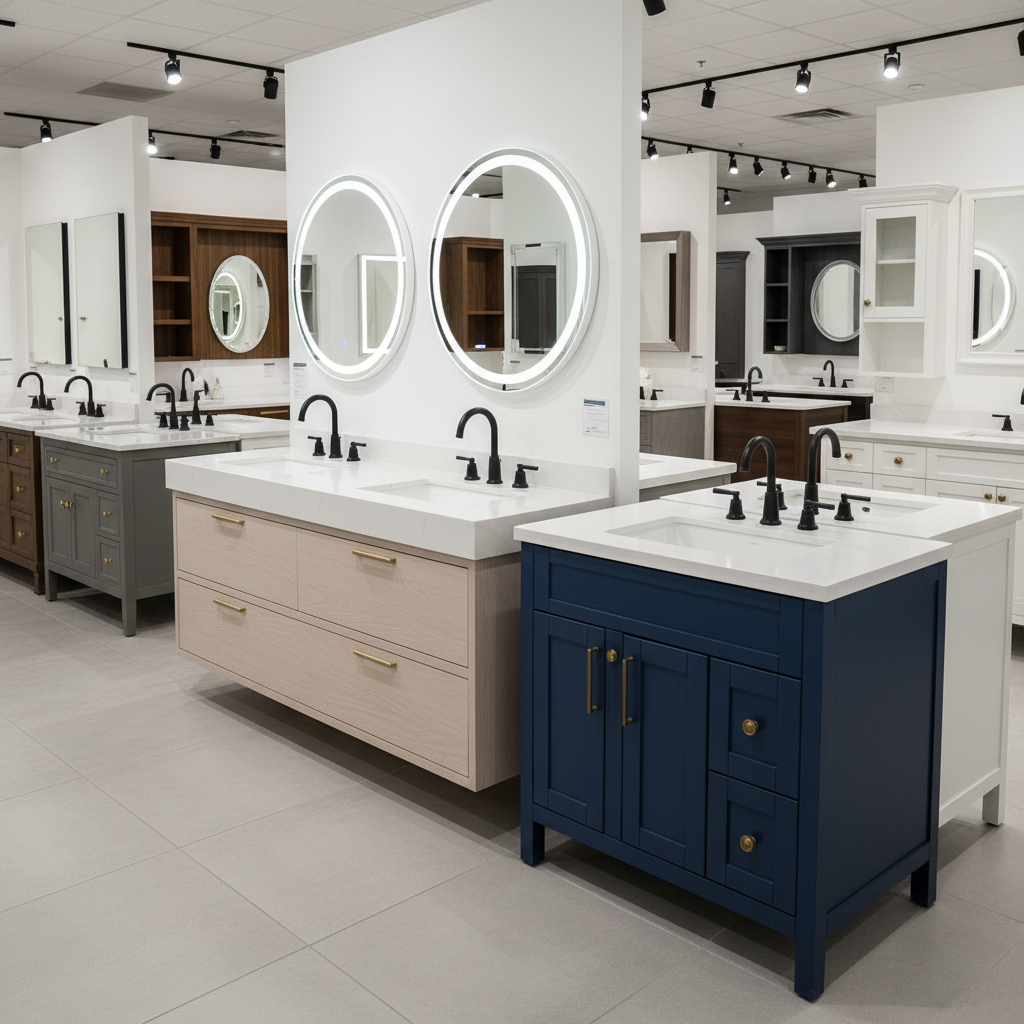
Standard vanity widths range from 24 to 72 inches, but the footprint on the floor is only one part of the equation. Professional installers must account for the overhang of the countertop, which typically adds an extra inch to the width and depth. In tight San Francisco or Oakland bathrooms, this half-inch on either side can interfere with door casings or toilet clearances.
Depth is equally critical. While the industry standard is 21 inches, many modern European-style vanities are narrower, around 18 inches. These slim profiles are ideal for powder rooms or small primary baths where every inch of floor space counts. Always verify the rough-in plumbing height before purchasing, especially when transitioning from a floor-mounted vanity to a wall-hung floating model.
Common Vanity Sizes and Applications
- 24” to 30”: Ideal for guest baths and powder rooms.
- 36” to 48”: The standard for small to mid-sized primary suites.
- 60” to 72”: Necessary for double-sink configurations in shared bathrooms.
Material Science: Plywood vs. MDF in Moist Environments
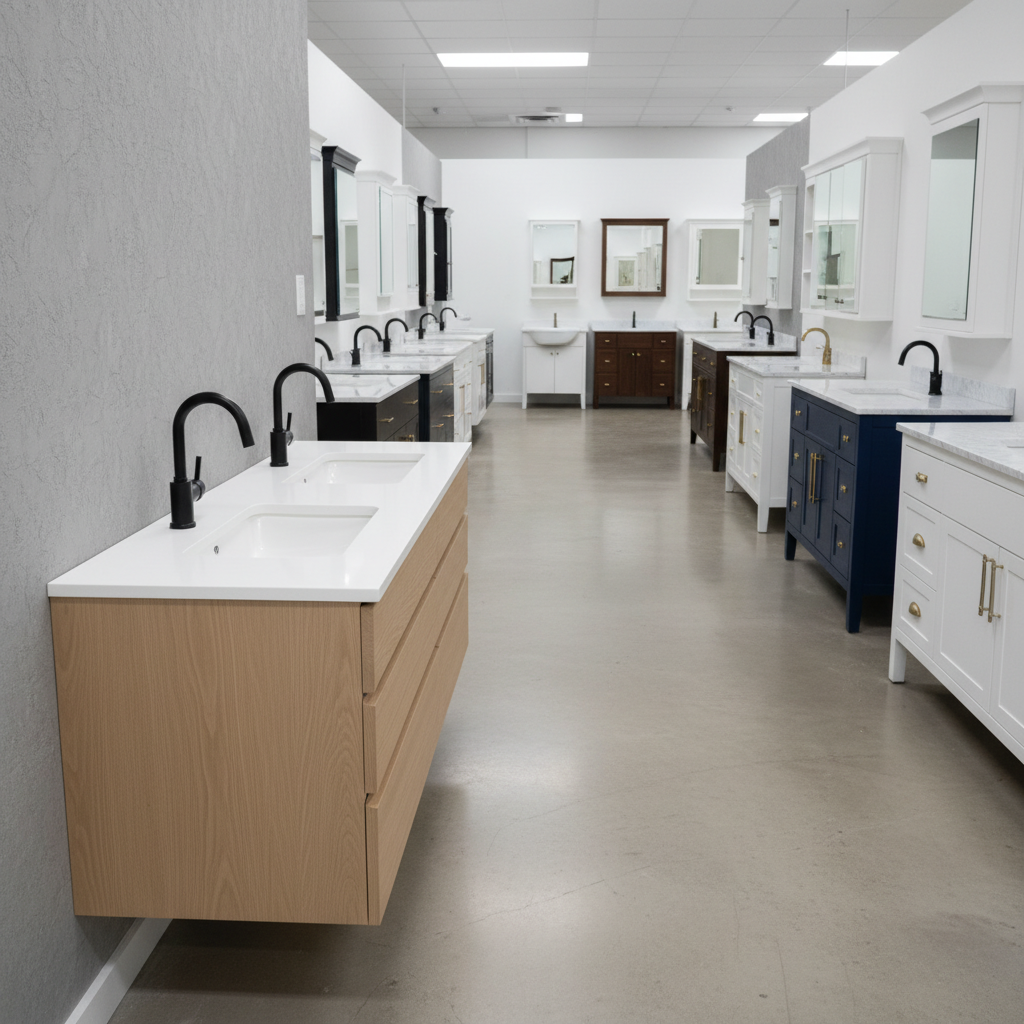
The core material of a vanity determines its lifespan. Most entry-level products use Medium Density Fiberboard (MDF) or particle board. While MDF provides a smooth surface for painted finishes, it acts as a sponge if the protective coating is breached. Once water penetrates the core, the material swells and cannot be repaired.
For trade professionals, multi-layer furniture-grade plywood is the gold standard. It provides superior screw-holding power and resists the natural expansion and contraction caused by steam. Our Oakland — Pro warehouse with distribution center near Jack London Square stocks a wide variety of plywood-core vanities specifically for contractors who require longevity in their rental or flip projects.
Quick Takeaway: For rental properties, always specify solid wood or plywood frames to ensure the hinges don’t pull out of the cabinet box over time.
Comparing Vanity Construction Types
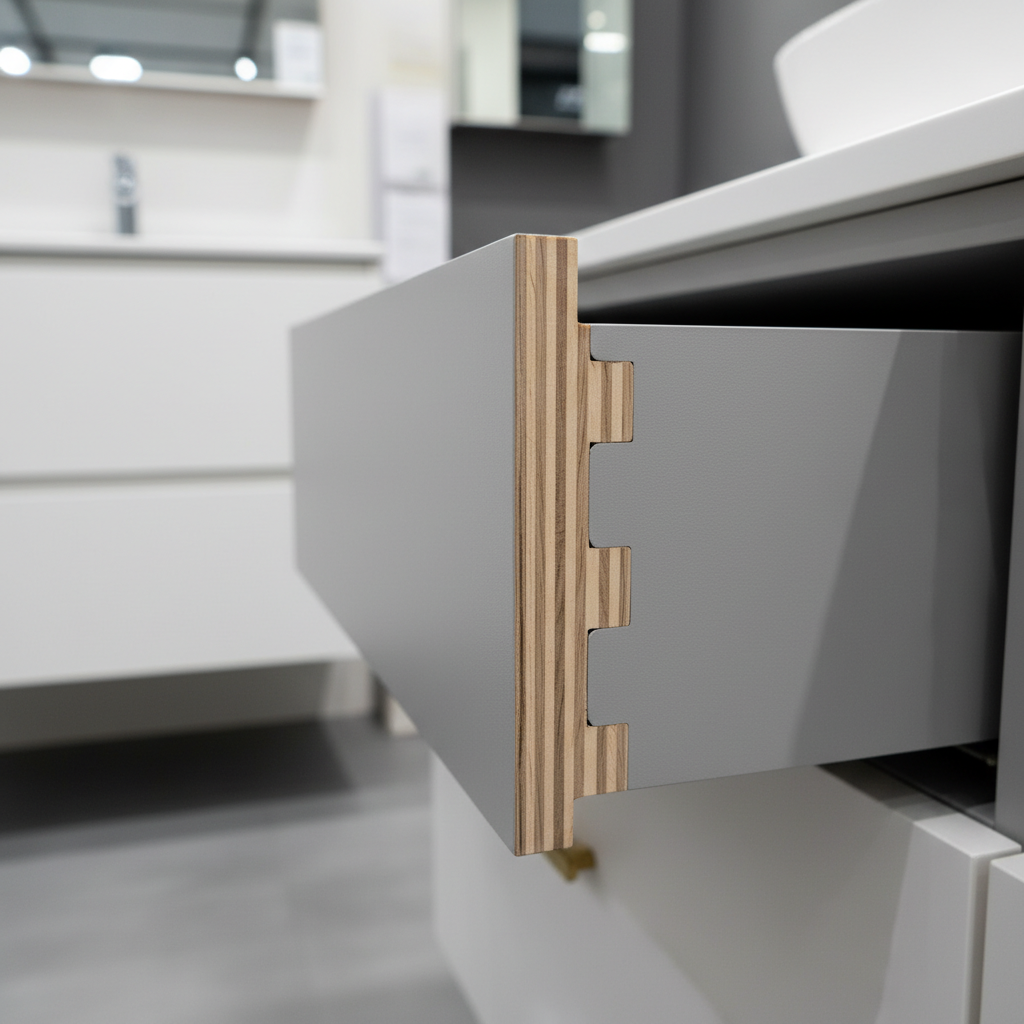
Choosing between material types requires understanding the trade-offs in cost and durability. Use the table below to guide your clients during the selection process at any of our four Bay Area locations, including our Santa Clara deluxe showroom.
| Material | Pros | Cons | Best Use Case |
|---|---|---|---|
| Solid Wood | Highest durability, repairable | Higher price point, can warp | High-end primary baths |
| Plywood | Excellent moisture resistance | Visible edges if not veneered | All-around professional standard |
| MDF | Cost-effective, smooth finish | Poor moisture resistance | Dry powder rooms |
Integrated Tops vs. Custom Quartz Surfaces
An integrated top—where the sink and countertop are one piece or pre-attached—is the most efficient solution for fast-paced renovations. These sets often include the bathroom vanity, top, and backsplash in a single box. This eliminates the need for a separate template-and-install process for the countertops, saving the contractor days of downtime.
However, custom-designed bathrooms may require a unique stone slab or a specific sink placement. In these cases, purchasing the vanity base alone allows for total creative control. When choosing this route, ensure the cabinet is rated to support the weight of a heavy marble or quartz slab. Adding backsplash tiles can further customize the look while protecting the drywall from water damage.
Streamlining the Trade Workflow in Oakland
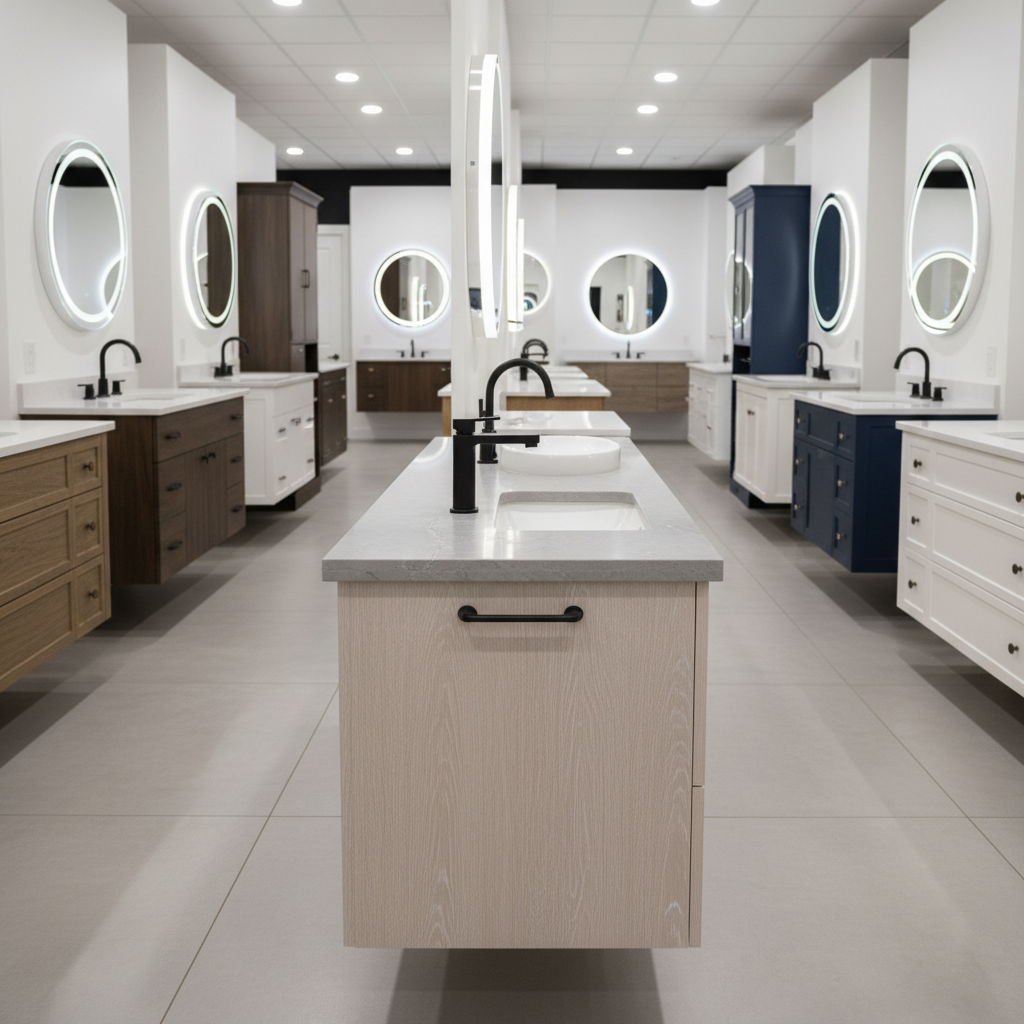
Efficiency is the difference between a profitable job and one that drags on. Our Oakland — Pro warehouse location is designed for speed, offering a distribution center layout that allows for rapid loading of in-stock vanity sets. This is particularly beneficial for property managers and flippers who need to replace units across multiple apartments quickly.
Our multilingual staff (fluent in English, Spanish, and Mandarin) is available at all locations to assist with technical specifications and bulk ordering. We maintain a deep inventory of both modern and traditional styles, ensuring that you don’t have to wait 6-8 weeks for a semi-custom look. Whether you are visiting our South San Francisco deluxe showroom or the Jack London Square pro center, you get the same family-run service that has defined us for over three decades.
Quick Takeaway: Utilize our trade-only pricing and dedicated warehouse pickup to shave days off your project timeline.
Frequently Asked Questions
Can I use a kitchen cabinet for a bathroom vanity?
While possible, it is not recommended. Kitchen cabinets are typically 34.5 inches tall and 24 inches deep, whereas bathroom vanities are often 30-32 inches tall and 21 inches deep. Using a kitchen cabinet may lead to clearance issues in a small bathroom and an uncomfortably high counter for some users.
What is the difference between an integrated sink and an undermount sink?
An integrated sink is made of the same material as the countertop (like porcelain or acrylic) and is formed as one piece. An undermount sink is a separate bowl (usually ceramic or stainless steel) attached beneath a hole cut into a stone countertop, offering a more premium look and easier replacement if the sink chips.
Are wall-mounted floating vanities secure enough for stone tops?
Yes, provided they are installed correctly. Floating vanities require heavy-duty structural blocking behind the drywall. If you plan to install a heavy quartz or marble top, ensure your contractor has reinforced the wall studs to handle the cantilevered weight.
Visit your nearest Sincere Home Decor showroom in South San Francisco, Oakland, or Santa Clara today to browse our in-stock collections. Trade professionals are encouraged to apply for trade pricing to access exclusive rates and expedited service.